

How can you help a visitor understand a product before they have it in their hands? A short demonstration makes its use, size or workings visible. To structure this stage, our UGC video production for e-commerce covers the creative process, from script to delivery.
The term UGC refers to content linked to users’ experiences or to the spontaneous style of creator videos. For an online shop, the challenge is to choose the right message and the right placement, rather than adding a video everywhere. A useful clip answers a real question, such as the texture of a skincare product or how to assemble an accessory. It complements photos, descriptions and reviews without replacing them.
What Are UGC Videos Used For on an Online Shop?
On a product page, a video can show what a still image struggles to explain: the gesture, how it looks in motion or its actual scale. A testimonial can also clarify what use the product is designed for. The video then becomes visual proof that helps the visitor picture the purchase.
The same content can be used in several places, provided its presentation is adapted. On a product page, favour a clear demonstration that is easy to find. In an ad, start with a familiar situation or a specific question. On social media, a more spontaneous story can support brand discovery.
In its Retail 2026 survey, Cloudinary reports that UGC accounts for 48% of videos hosted on the websites of the retailers surveyed. This benchmark describes the survey respondents, not a conversion rule that applies to every shop.
Which Format Should You Choose for Each Purchase Barrier?
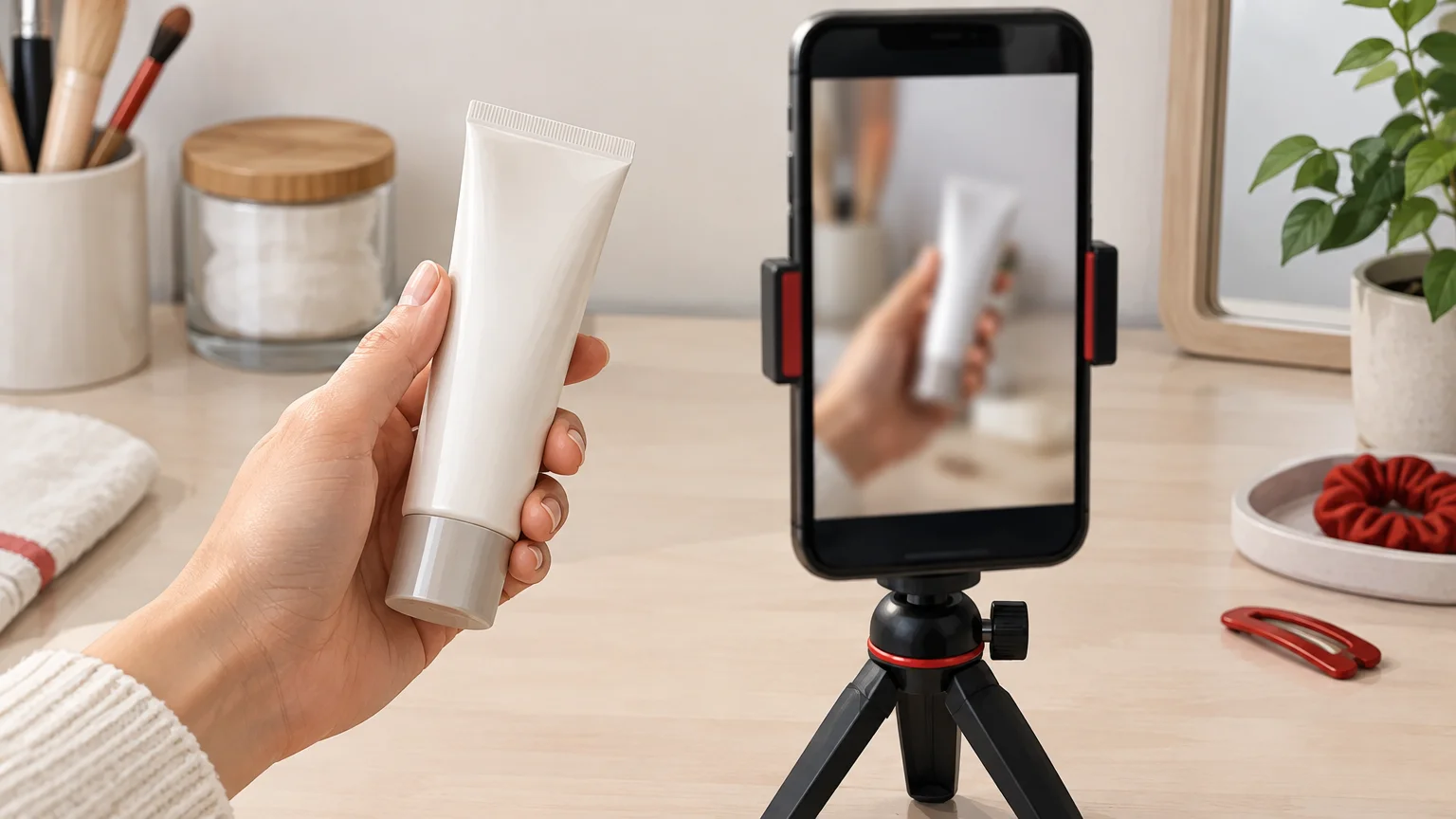
Imagine a visitor who hesitates because they don’t know how to use a product. A tutorial video can show the essential steps, while a testimonial addresses a specific objection. For an item sold in its packaging, an unboxing showcases delivery and discovery. The choice therefore depends on the question to be answered, not on a format trend.
A demonstration suits products whose workings deserve an explanation. A testimonial is more relevant when comfort, finish or the user experience play a part in the decision. An unboxing can show what’s in a parcel, but it doesn’t replace practical information on dimensions, delivery times or return conditions.
To find an angle suited to your catalogue, start from the questions your customer service receives and the hesitations observed on your product pages. You can also browse our UGC video examples to spot different ways of presenting a product.
How Do You Create a Useful, Credible Video?
Start with a single idea: demonstrate a gesture, explain a concrete benefit or answer an objection. Write a simple script, then show the product in use. A precise hook is better than a general introduction to the brand.
Plan a vertical frame for mobile use and make sure the product stays visible. Add subtitles if the message needs to be understood without sound. For a product page, place the useful information early in the video. For an ad, test several hooks or angles without changing every element at once.
Emplifi reports 6.7 times higher conversions associated with UGC in a publication covering the first quarter of 2026. This figure depends on the scope of its data and does not predict the results of any particular shop. Use it as a signal to test, not as a promise.
Credibility also relies on the transparency of the message. Avoid attributing to the creator an experience they haven’t had, and check that every product claim is accurate. Our strategy and production work covers scripts, the shoot and editing, with variations adapted to each platform.
Which Rights Should You Check Before Publishing the Content?
A filming authorisation does not necessarily define every possible use. Before production, specify the channels concerned, the duration of use, the territories and any advertising use. Also determine who can edit the video and whether variations are planned.
Clarify these points in the agreement made with the creator or the service provider. Also check the rights relating to music, images and identifiable people in the video. These checks avoid having to withdraw a creative or renegotiate its use after delivery.
The production budget depends in particular on the number of videos, the shoot and the level of support required. To compare quotes, distinguish the creative cost from the media budget and check which rights are included. See our page on e-commerce product video pricing to examine the factors that affect the cost.
How Do You Measure Results and Decide on Your Next Tests?
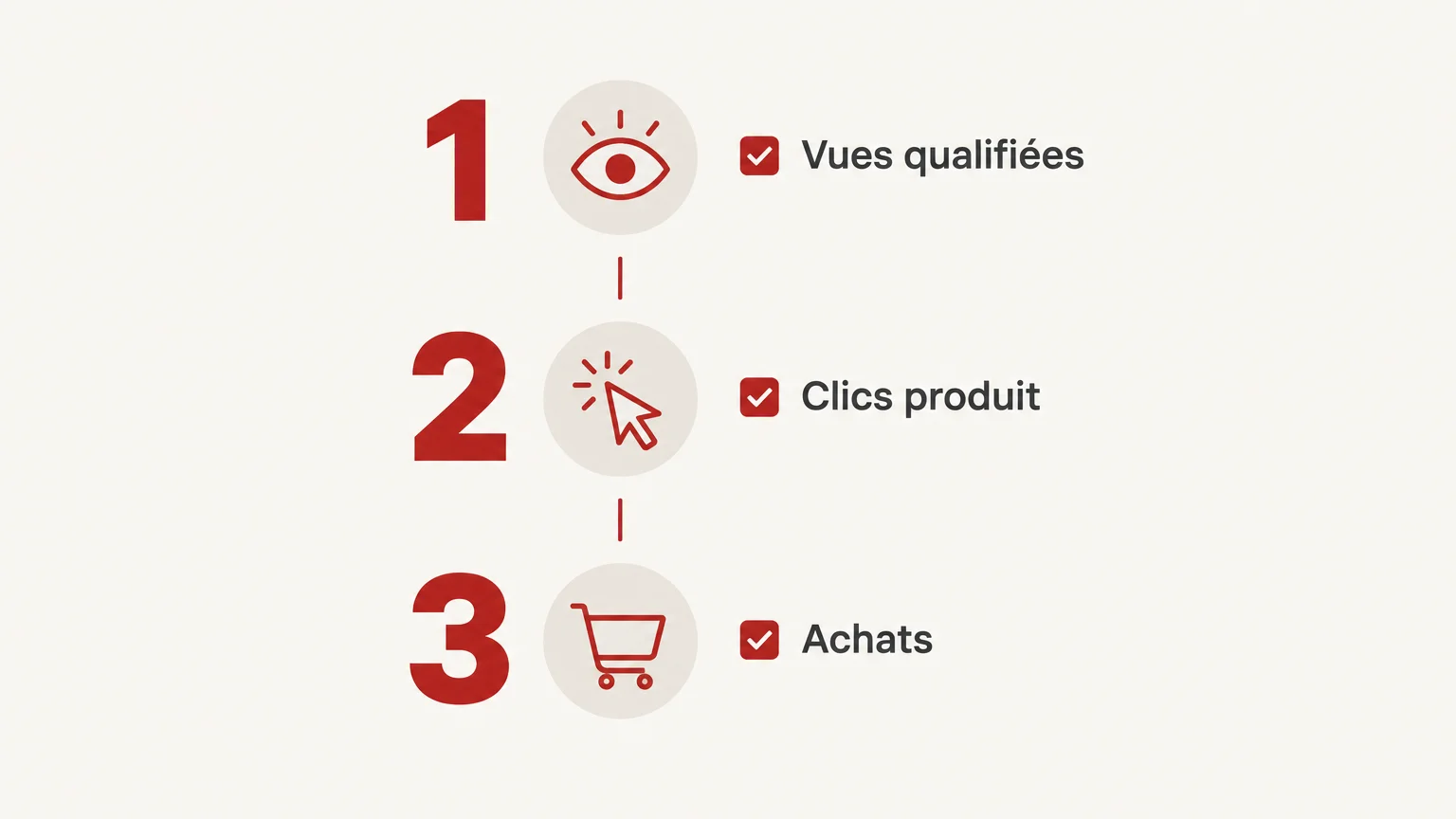
A video with lots of views doesn’t necessarily lead to useful visits or purchases. First choose the objective: capturing attention, generating clicks or supporting sales. Then compare each creative with other content run under similar conditions.
For a product page, look at video views, clicks through to purchase and the associated orders. In advertising, also track click-through rate and cost per acquisition. Analyse these metrics together: a video can spark interest without removing the objection that prevents the purchase.
An analysis published by MediaLabs Research on TikTok Shop in the United States, from 19 September to 18 October 2026, associates testimonial videos with 1.2 times the baseline sales per view. This is an observation drawn from a sample, not proof of causation. Test this format against a demonstration with a comparable product, audience and period.
Record results by concept and keep the creatives that meet your objective. A readable test changes one element at a time, such as the hook or the type of testimonial. To structure this analysis, find out how to measure the performance of your UGC videos.
Key Takeaways for Your Shop
UGC videos for e-commerce are useful when they shed light on a concrete decision, from discovery to the product page. Choose the format according to the objection, define the rights before publishing and measure the clicks or purchases linked to your objective. Results observed elsewhere offer leads, but your own tests determine which creatives to keep.
Build Your Next Product Videos
To produce content consistent with your catalogue and your objectives, link topic selection, scriptwriting and distribution from the outset. The right support depends on the volume you want and the role you give your team or a service provider.
At Esekai, we handle strategy, scripts, the shoot and editing, then adapt the creatives to each platform’s usage. Our team has worked with more than 350 brands, from SMEs to major accounts, across various sectors including e-commerce. Discover our UGC agency for your e-commerce business and let’s talk about the right content for your shop.
Frequently Asked Questions
What is a UGC video for an online shop?
It’s a video that presents a product through a demonstration, a testimonial or a real-life scenario in the style of creator content. It can be used on a product page, on social media or in advertising.
Which video formats should you test first?
Choose according to the question holding back the purchase: a demonstration to explain how it’s used, a testimonial to convey an experience or an unboxing to show the parcel being opened. Test one format at a time on a relevant product.
Can you reuse a UGC video in advertising?
Yes, if the agreement specifies that advertising use is authorised on the agreed channels and for the agreed period. Also check the rights relating to music, images and the people shown.
How can you tell whether a video contributes to sales?
Link the metrics to the objective: qualified views for attention, clicks for traffic, orders for sales. Compare creatives run under similar conditions and keep a record of their results.
How can Esekai support an e-commerce brand?
We can work on strategy, scriptwriting, the shoot and the editing of vertical content. The production scope and media support are defined according to the project’s needs.