

An e-commerce UGC agency designs, produces and manages vertical videos shot by creators for brands that sell online: casting, brief, shoot, editing, ad variations and usage-rights management. In France in 2026, a video costs between €150 and €500 depending on experience and rights. The difference with a platform: the agency is judged on the performance of the ad account, not on delivering the file. So what you are buying is not a €200 video, it is a monthly flow of new creatives. Here is how to cost it, put it in a contract and check it. According to the annual review from Fevad, relayed by Ecommerce Mag in February 2026, French e-commerce generated €196.4 billion in revenue in 2025, up 7% year on year.
Short answer. An e-commerce UGC agency designs, produces and manages vertical videos shot by creators for brands that sell online: casting, brief, shoot, editing, ad variations and usage-rights management. In France in 2026, a video costs between €150 and €500 depending on experience and rights. The difference with a platform: the agency is judged on the performance of the ad account, not on delivering the file.
The market talks in unit prices. Buyers, on the other hand, consume a flow. A Meta account spending €15,000 a month burns through its creative angles in three to five weeks, and has to be restocked. Almost nobody quantifies this mechanic publicly, yet it is what decides your real cost. Médiamétrie's Observatoire des réseaux sociaux 2026 also shows that users leave a social network first because the content seems uninteresting or repetitive.
What is an e-commerce UGC agency, and how does it differ from a creator platform?
A platform connects you with creators and stops at the delivered file; an e-commerce UGC agency takes responsibility for the angle, the ad edit and what happens next in the ad account. That is the only line that matters when buying. Everything else, number of creators in the catalogue, a slick interface, the advertised lead time, is negotiable.
Four models coexist in France: the self-service SaaS platform, the freelance marketplace, the UGC agency that orchestrates external creators, and the integrated production studio that shoots and edits in-house. Each has a different economic break-even point, and none is right everywhere. We broke down how they work in the 4 UGC agency models explained; here we are talking about buying, not definitions.
The test that settles it with one question, to ask in the meeting: “Creative number 7 in the last batch didn't take off, who can tell me why?” A platform will answer that it delivered according to the brief. A production studio will open the ad account, look at the 3-second hold rate, the placement breakdown and the outbound click-through rate, then propose three hook variations on the same master video. These are two different jobs, not two price levels.
The context favours structure. According to Tanke (11 March 2026), 93% of marketers consider UGC more effective than branded content, but only 16% have a dedicated strategy. In other words: almost everyone buys it, almost nobody manages it.
How much does an e-commerce UGC agency really cost in 2026, per month rather than per video?
Expect €150 to €500 per video depending on the creator's experience and the scope of rights, which puts an e-commerce setup at steady state between €2,500 and €8,000 per month for 10 to 20 new creatives, editing and variations included. The face-value price of a video tells you nothing about this monthly bill, because it ignores variations, paid rights and re-shoots.
| Source (and date) | Quoted range | What it covers |
|---|---|---|
| Takema Studio, 2026 | €75-100 beginner, ~€150 experienced, €200-400 expert | One video, excluding amplification |
| CollabScene, 26 May 2026 | ~€100 simple, €250-500 with scripting | Writing + creator shoot |
| Cindy Steenkeste, 1 March 2026 | €80-600, median €150-350 | Freelance, variable rights |
| Plateya, 30 May 2026 | Day rate €280-900, video €150-500 | Shoot day or unit |
| Moggo blog, 2026 | “an agency often charges €500+ per video” | Argument from a competing platform |
| Roads.social, 21 April 2026 | €500-800 entry budget | 2-3 videos + €200-300 of media |
The last two lines deserve to be read side by side. Moggo, a platform, positions the agency at €500+ per video to sell its own unit ticket. Roads, an agency, quotes an entry ticket of €500-800 all-in. Both are telling the truth. And both are talking about month 1.
Month 6 looks different. An e-commerce account running all year consumes, from what we observe on our client accounts, between 8 and 20 genuinely new creatives per month as soon as it passes €10,000 of monthly media spend. At €200 per master video, not counting variations, that is already €1,600 to €4,000 of production. Add the ad edit, subtitles, the 9:16 and 4:5 formats, paid rights extended to 12 months: the realistic bill is between €2,500 and €8,000 a month. That is the figure to set against your media budget, not the price of one video. For the detail of the grids by format and by rights duration, see our detailed price grid by format and by rights.
A rule of thumb we use in meetings: on our accounts, €10,000 of media absorbs 8 to 15 new creatives. At €150-500 per master video, production is more like €1,600 to €4,000, i.e. 15 to 30% of the media budget: adjust the volume accordingly. Below 10%, you will be scaling tired creatives. Above 35%, you are producing more than your budget can statistically test.
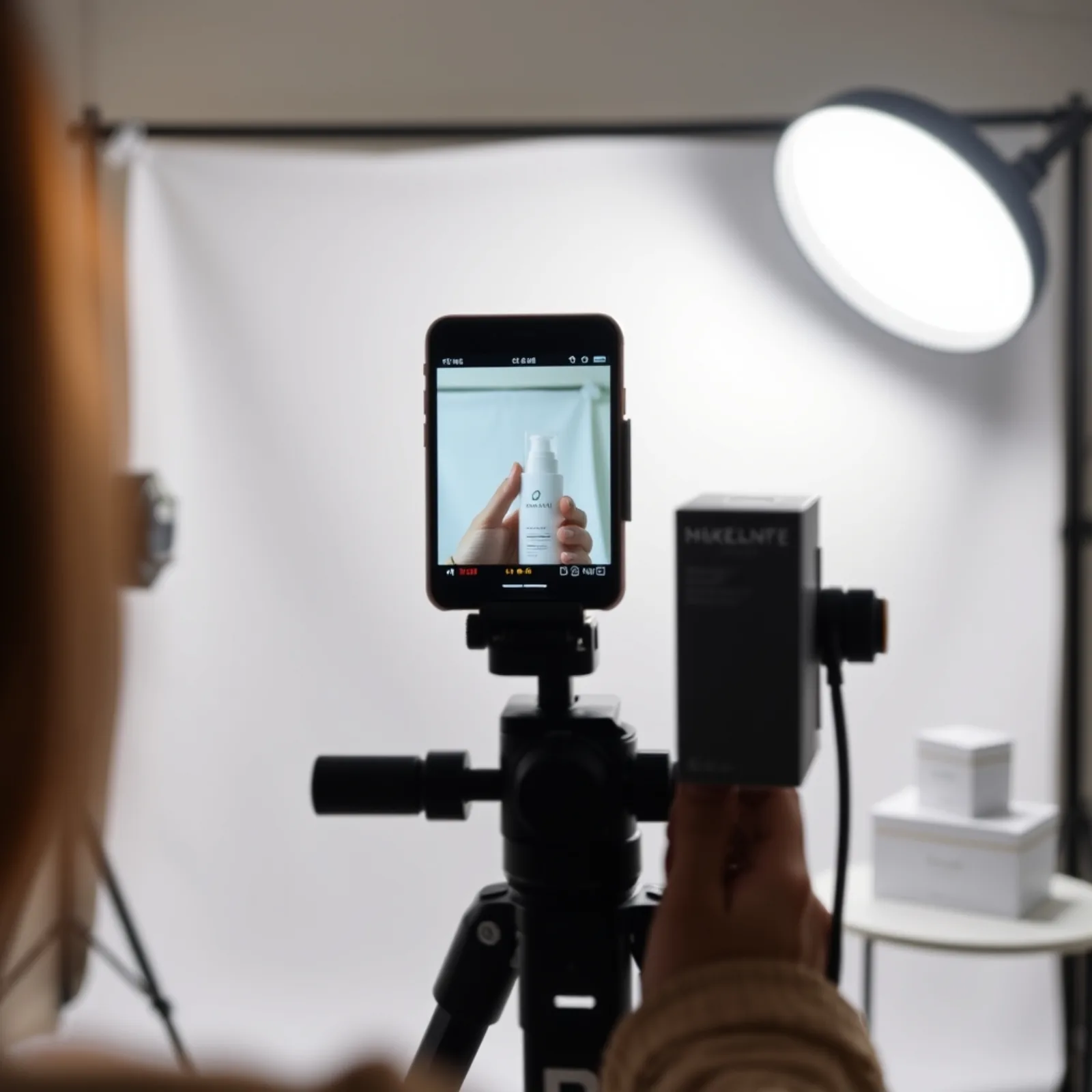
Why is the price per video the wrong metric: what is the cost per winning creative?
The cost per winning creative (CPWC) divides the total cost of a batch by the number of videos that crossed your scale threshold, not by the number of files delivered. It is the only metric that makes two quotes comparable, because it includes the waste that everyone pays for and nobody names.
Define the scale threshold first, otherwise the measure means nothing. For us, a creative counts as a winner when it has spent at least €500 and held for 7 consecutive days above the account's target ROAS, excluding warm retargeting. You can choose another threshold. Choose one, and write it into the contract.
Then, the ratio. Over our last twelve months of e-commerce production, the share of master videos that become lasting winners runs between one in four and one in eight depending on the vertical: more like one in four in food and supplements, one in five in beauty, one in seven in fashion, one in eight on high-basket technical products where the decision cycle blurs the reading. These are our internal observations, on a sample of a few dozen accounts, neither a study nor a guarantee. They shift from one quarter to the next.
Do the maths, it is brutal. A batch of 10 videos at €150 costs €1,500. With a ratio of one winner in eight, you get 1.25 winners: the CPWC climbs to €1,200. A batch of 6 videos at €350, better briefed, produced with 3 hook variations each and a ratio of one in four, costs €2,100 and yields 1.5 winners: CPWC at €1,400. Now look at what happens in the third month, when the winner's variations extend its life by three weeks: the CPWC of the second batch collapses, the first stays flat. The quote that is most expensive per unit wins once lifespan enters the equation.
The number one lever on this ratio is not the creator, it is the brief. A bad brief produces unusable rushes that you pay full price for: the 7 brief mistakes that produce unusable rushes cover most of what we see.
Why you should be wary of “400% ROI” and “CPA divided by 2”
These two formulas are everywhere. Tanke announces an average ROI of 400% (11 March 2026); UGC Factory, relayed by Youdji (25 January 2026), promises a CPA divided by two. These are sales promises, not measurements. Neither specifies the account, the baseline, the period or the attribution method. A CPA divided by two on an account that has just launched its retargeting says nothing about UGC.
Market data exists and is more interesting because it is bounded. A press release relayed by Morningstar (29 April 2026) measures UGC-driven conversions at 4.27x in Q4 2025 then 6.73x in Q1 2026, i.e. +57% in one quarter, with e-commerce brands at 42.1% of Facebook interactions against 35.8% the previous quarter. Archive.com and Influee document a +161% conversion-rate lift on product pages that include UGC; Loop.fans (29 June 2026) puts the lift between 161% and 270% depending on the category, and at +91% for customer photos alone. That gives a direction. It does not replace your own measurement.
So demand three things from any provider quoting a figure: the name of the account, or its sector and size, the measurement window, and the attribution tool. If all three are missing, the figure is a sales pitch.
What are the best UGC platforms, and at what budget should you move away from them?
The most widely used platforms in France in 2026 are Moggo, Vogz, Influee and the TikTok Creator Marketplace; they remain the right choice below €5,000 of monthly media budget, and become expensive beyond 8 to 10 new creatives per month. The tipping point is not a question of quality, it is a question of who absorbs the management work.
Moggo positions itself as the number one platform in France with around 4,000 creators claimed. Vogz announces 20,000 creators, with a €499/month plan that includes a single video and delivery in around 15 days according to the comparison published on the Moggo blog. Influee plays the editorial card with global statistics: 79% of consumers say UGC strongly influences their purchase decision, 81% of e-merchants find it more effective than professional photography (page updated on 3 July 2026). The TikTok Creator Marketplace, for its part, has the advantage of being backed by the platform's data.
What these tools do very well: sourcing quickly, at a known price, with no commitment. For a brand that wants to validate an angle before investing, they are unbeatable. We send clients their way when their media budget does not exceed a few thousand euros; getting them to sign a studio subscription would be selling them capacity they will not use.
What they do not do: write the angle from a reading of your ad account, edit the hook variations of a winner, decide on a re-shoot, handle whitelisting and Spark Ads, decide what to reshoot next month. That work still exists. On a platform, it falls to your team. Count on 4 to 8 hours a week of internal management from around ten videos a month: it is a disguised half-time job, and it is the hidden cost of the self-service model.
Three signals indicate it is time to change model: you chase creators yourself to get retakes, your best creatives die without being iterated on, and nobody on the team can say which angle produced the last winner. All three usually show up between the third and the sixth month.
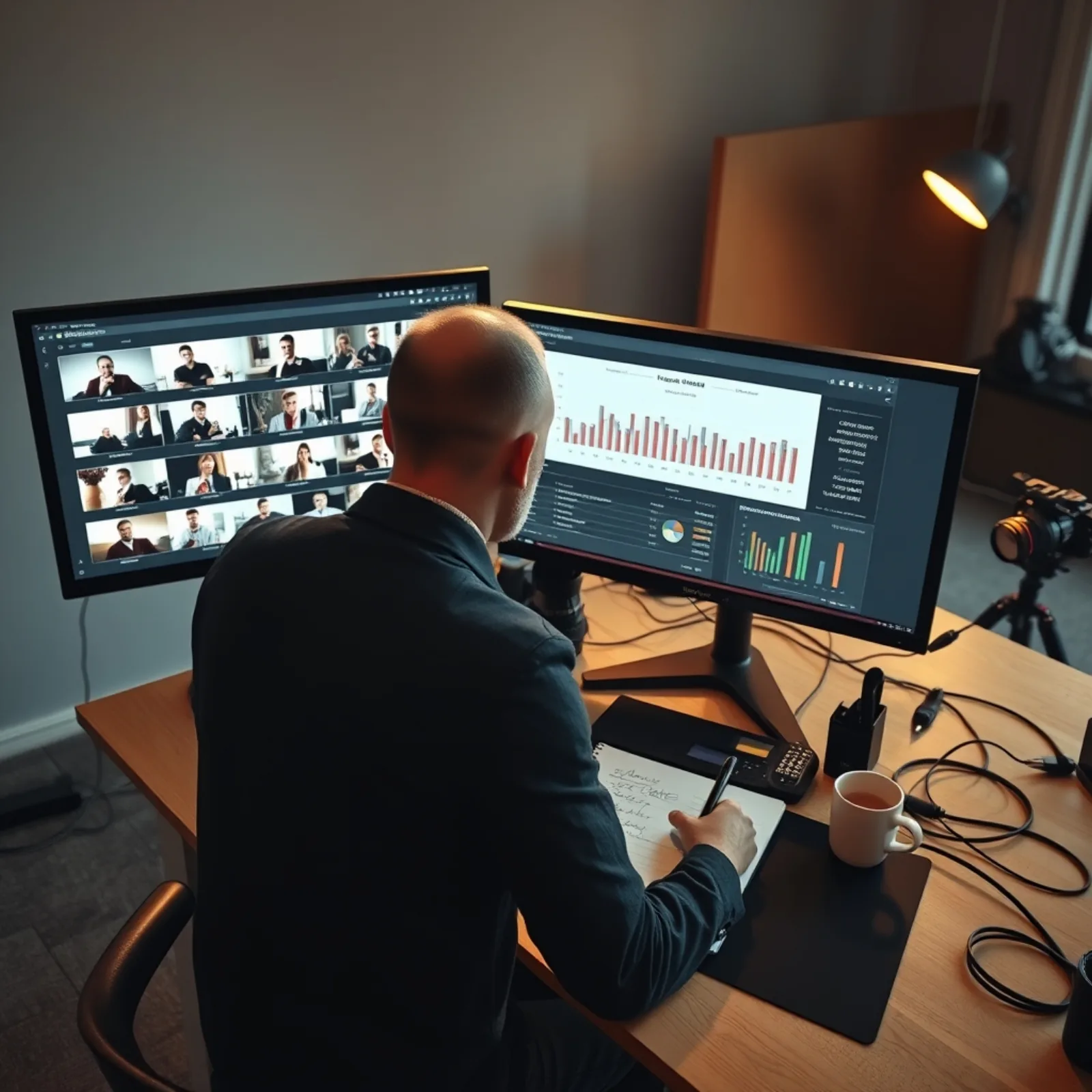
What should the contract contain: usage rights, whitelisting, exclusivity, ownership of the rushes?
Six clauses make the difference between a video you can use for a year across all your accounts and a video you will have to pay for again after 90 days: duration of rights, geographic scope, paid media usage, whitelisting, competitive exclusivity and ownership of the rushes. This is where UGC bills explode, and it is the subject that neither the platforms nor the “top 10 agencies” rankings cover.
- Duration. The freelance standard is 3 to 6 months. For an ad account that is running, aim for 12 months minimum, otherwise your best creatives switch off just when they perform best. The extra cost is generally negotiated between +20 and +50% of the video price.
- Scope. France, French-speaking countries, worldwide. A brand that opens Belgium and Switzerland the following quarter should anticipate it at signature.
- Paid media. Many contracts cover organic and not paid distribution. It is the most frequent trap on low prices.
- Whitelisting and Spark Ads. Running ads from the creator's account often changes performance. It requires delegated access, a defined duration, and a fee separate from production.
- Exclusivity. Forbidding the creator from shooting for a direct competitor for X months costs money. On sensitive products, supplements, active cosmetics, it is worth the cost.
- Rushes. Who owns the source files? Without them, you cannot rebuild a variation six months later, and you are held captive by the provider.
Add a retake clause. With us, a re-shoot is included at no extra cost when the delivered video does not respect the approved brief; we see roughly one video in ten affected, most often for a silly reason: lighting, product framing, pronunciation of a brand name. An agency that refuses to write this mechanism down will make you pay for its own approximations.
What does a UGC creator do for a living, and what is the average salary in France?
A UGC creator is a freelancer who shoots and edits vertical videos for brands, without selling their audience: they are paid to produce advertising content, not to distribute it to their followers. No public body publishes an average salary for this job in France, there is no dedicated occupation code, and almost all creators invoice as sole traders (micro-entreprise).
The order of magnitude can be rebuilt from prices. Taking the €150 to €350 per video median recorded by Cindy Steenkeste (1 March 2026) and a realistic pace of 10 to 15 videos a month for an active creator, you get €1,500 to €5,250 of gross monthly revenue. Deduct micro-entrepreneur contributions, equipment purchases, unpaid prospecting and invoicing time: net income is most often in the lower part of this range. It is a reconstruction, not a published statistic, and should be read as such.
Why should a buyer care? Because a quote of €60 per video, paid rights included, worldwide, twelve months, is structurally untenable. The creator will rush it, refuse the rights extension, or disappear after two deliveries. In 2025 we stopped sourcing on the cheapest offers for this reason: the rate of unusable rushes ate up the savings, and the lead time stretched by two weeks.
The market, for its part, is professionalising fast. Plateya estimates the French UGC creator ecosystem at around €180M in 2026, growing about 38%, based on a consolidation of Kolsquare and IAB France 2024-2025 estimates; Tanke projects €830M by 2028. These figures are estimates from private players, with the reservations that implies, but the trend is consistent with what we see on rates, which have gone up a notch for experienced profiles over the past year. According to the 35th SRI e-advertising Observatory, published in 2026, Social grew 15% in France in 2025 to reach €4.18 billion, i.e. 34% of the digital advertising market, driven by the rise of video.
How do you audit an e-commerce UGC agency in 30 minutes: the 7 proofs to demand?
Seven proofs are enough to sort an e-commerce UGC agency in half an hour: winner ratio, median lead time, number of variations per master video, ad account reading, rights grid, re-shoot policy, and the name of the person who decides what gets reshot. None requires a document: they are spoken, quantified, immediate answers.
- 1. The winning-creative ratio. “Over your last 12 months, how many of your videos pass the scale threshold, and how do you define that threshold?” An agency that has never measured it will talk to you about views.
- 2. The median lead time from brief to delivery. Our median is between 8 and 12 working days on a standard batch. Beyond three weeks, the advertising cadence cannot keep up.
- 3. The number of variations per master video. We produce 3 to 4 as a median: different hooks, sequence order, subtitling. An agency that delivers one version per shoot is selling you a cost per winner twice as high without telling you.
- 4. The reading of the account. Ask to see an anonymised weekly report. If none exists, nobody is managing.
- 5. The written rights grid. Duration, scope, paid, whitelisting, with the surcharges. A grid improvised in the meeting heralds an improvised bill.
- 6. The re-shoot policy. In which cases, within what timeframe, at what price.
- 7. The name of the creative lead. Not “a dedicated team”. A first name, a role, an availability. On our accounts it is a single Creative Strategist from brief to decision-making.
If you want to push the conversation further, particularly on contractual aspects and ownership of deliverables, the 12 questions to ask before signing complete this list.
Agency, freelancer or in-house production: which model for your volume and your stage?
Below €5,000 of monthly media budget, the platform or the freelancer wins; between €5,000 and €30,000, the agency or the integrated studio delivers the best cost per winning creative; beyond that, partial in-housing becomes defensible if you accept hiring two to three people. The threshold depends above all on your capacity to manage internally, not on your revenue.
First table: the economics.
| Criterion | SaaS platform | Freelancer / marketplace | UGC agency | Integrated studio | In-house |
|---|---|---|---|---|---|
| Cost per video | €80-250 (or €499/month subscription, 1 video) | 150-350 € | 300-500 €+ | €250-450 on a cadence package | Low marginal cost, high fixed cost |
| 12 creatives/month, realistic cost | €1,200-3,000 + internal management | €2,000-4,200 with 2-3 creators | 3 600-6 000 € | €3,000-5,500 variations included | €8,000-12,000 of payroll |
| Sustainable new creatives/month | 4 à 8 | 3 à 10 | 10 à 25 | 12 to 40 with variations | 15 to 30 after 6 months of bedding in |
| Lead time brief → delivery | 10-20 days | 7-21 days, highly variable | 10-15 days | 8-12 working days (our median) | 3-7 days once up and running |
| Media budget at which the model is profitable | < €5,000/month | €2,000-8,000/month | €8,000-40,000/month | €5,000-50,000/month | > €50,000/month |
| Estimated CPWC (our observations) | 800-1 800 € | 700-1 600 € | 900-1 700 € | 600-1 200 € | €400-900 at full pace |
Second table: who does what. This is the column that quotes forget.
| Responsibility | Platform | Freelancer | UGC agency | Integrated studio | In-house |
|---|---|---|---|---|---|
| Writing the brief and the script | You | You or the creator | The agency | Dedicated Creative Strategist | Your team |
| Editing hook variations | No | Rarely | Optional | Included (3-4 per master video) | Yes if in-house editor |
| Paid rights and duration | Standardised, often short | To negotiate every time | Set by contract | Set, extendable | You own them |
| Whitelisting / Spark Ads | Rare | Case by case | Yes | Yes, with code tracking | Yes |
| Reading the ad account | You | You | Shared with the media agency | Weekly, studio side | You |
| Management required on the client side | 4-8 h/week | 5-10 h/week | 2-3 h/week | 1-2 h/week | Full time |
In-housing remains the best cost per winning creative at full pace, and the worst for six months. Hiring a video creative, an editor and sourcing creators is an HR project before it is a creative project. The agency vs in-house team decision grid details the tipping thresholds. The hybrid model that works best for our clients beyond €40,000 of media: an in-house creative strategist who defines the angles, an external studio that produces the cadence.
A concrete case, spring 2026
A French haircare brand, spending around €18,000 a month on Meta and TikTok, came to us in February 2026 with 4 new creatives a month bought one at a time on a platform and a CPA that had been rising for eight weeks. We moved to 12 master videos a month with 3 hook variations each, with an account review on Mondays. By May, the number of creatives crossing the scale threshold had tripled and the cost per winning creative had dropped below €900, against about €1,600 in February. In the interest of honesty: the brand also widened its catalogue and changed its campaign structure over the period. We cannot attribute the whole gain to production. What we can say is that the number of winners follows the number of angles tested, and we find that link on almost every account.
One last position, which works against an easy sale: if your product cannot be demonstrated on screen, UGC will not save your ad account. We have turned down clients for this. A long-cycle B2B offer, a service with no visible benefit in fifteen seconds, a product whose price is the only argument: there, vertical video will only speed up the discovery of an offer problem. A serious e-commerce UGC agency will tell you before invoicing the first batch, not in the third month.
Frequently asked questions
- How do you find UGC contracts as a creator?
- Three channels work in 2026: matchmaking platforms such as Moggo, Vogz, Influee or the TikTok Creator Marketplace, direct outreach to brands you are already a customer of, and the creator pools of production studios, which offer regular volume rather than a one-off assignment. A portfolio of 5 to 8 videos produced in a single vertical converts better than a generalist catalogue.
- Is a UGC agency in Paris more expensive than one in Lyon?
- On UGC production, the geographic gap is small: creators shoot at home, editing is done remotely, and the ranges of €150 to €500 per video recorded in 2026 by CollabScene, Plateya or Cindy Steenkeste do not vary significantly by city. The difference comes from studio shoots and the level of management included, not from the address.
- Are there free UGC platforms?
- Some platforms offer free access to the creator catalogue, but the content is always paid for, in euros or in products sent. So-called free plans most often rely on short usage rights, limited to organic, with no paid distribution. Always check the duration, scope and paid media authorisation before considering a video usable in advertising.
- How many UGC videos a month do you need for a €10,000 media budget?
- On our e-commerce accounts, a monthly budget of €10,000 absorbs between 8 and 15 genuinely new creatives, plus the hook variations of the winners. Below 8, you are scaling tired creatives; above 15, each test gets too little budget to be readable. Plan for 12 to 20% of media in creative production, i.e. €1,200 to €2,000.
- Does AI-generated UGC replace creators in 2026?
- Not on the conversion creatives we measure: synthetic avatars handle product demonstration and unboxing poorly, where real embodiment drives performance. AI is mostly useful for producing variations, subtitling and localising. The transparency framework applicable to generated content in Europe is still evolving; we systematically flag the use of AI in the relevant deliverables.
- How do you calculate the cost per winning creative of a UGC batch?
- Divide the total cost of the batch, rights and editing included, by the number of videos that crossed your scale threshold, for example €500 spent and 7 consecutive days above the target ROAS. Ten videos at €150 with one winner give a cost per winning creative of €1,500, whatever the unit price shown on the quote.
Let's audit your creative account
You now know that the real metric is the cost per winning creative, not the price of a video. Esekai is a vertical video production studio: creative ads, UGC and organic content for TikTok, Reels and Shorts, with a dedicated Creative Strategist, in-house shooting and editing, fast iterations. In 30 minutes, we look at your active creatives, your cadence and your budget, and you leave with an action plan. No agency pitch deck.
Book a call →30 minutes to talk formats, budget and action plan.