

Briefing a UGC creator means placing an order, not inspiring an artist. A useful brief comes down to four locks: the unit of purchase (1 angle × N hooks, never “3 videos”), the legal lock (advertising disclosure, duration and scope of rights, exclusivity), the technical lock (ratio, length, raw footage, subtitles not burned in) and the acceptance lock (acceptance criteria, number of revisions included). Everything else, tone, setting, phrasing, remains the creator’s freedom. The only indicator that matters afterwards: the percentage of deliverables usable in advertising from the first delivery. In its creative tips published by TikTok For Business, the platform points out that most of its users watch in portrait mode and that shooting in 9:16 lets you fill the whole screen.
What are you really ordering when you brief a UGC creator?
You are not ordering “three videos”: you are ordering one angle, split into several hooks, delivered in a form that can be edited straight away. As long as the order is written as a number of videos, the creator optimises for the number of videos. They will deliver three complete, polished films that all say the same thing with the same opening. The result in ads: one real test, not three.
The right unit of order is written differently. One angle, meaning one reason to buy, expressed from the customer’s point of view. Three to five different hooks on that angle, shot back to back, same clothes, same lighting. One video body. One or two CTAs. You are not paying for three films: you are paying for a matrix. That is exactly what we call creative iteration as the real unit of purchase, and it is the first line to put in the brief, before even talking about the product.
On a sleep food-supplement account (a €29 product sold on subscription) that we supported in spring 2025, moving from “4 videos per creator” to “1 angle × 4 hooks per creator” tripled the number of testable combinations at the same production cost. Same creator budget, same number of shoot days. The difference came down to six lines of brief.
The second element of the order, and the one brands forget most often: the raw footage. A creator who delivers only an edited MP4 with their own music, transitions and burned-in subtitles is handing you a dead end. You will be able neither to change the hook, nor to recut for a 4:5 placement, nor to replace the audio. Asking for raw footage costs zero euros when it is written in the brief, and costs a complete redelivery when it is not.
A word of honesty on market figures: the estimates in circulation (a UGC market worth $7.6 billion in 2025, growing by 69%) come from secondary sources that we have not managed to trace back to the original study. We do not use them to justify a budget decision, and neither should you.
Why do failing briefs not tend to be the shortest, but the least locked down?
The length of a brief has no correlation with the quality of the deliverables: what matters is the number of decisions it makes impossible to get wrong. We have seen nine-page briefs produce unusable videos, and a page-and-a-half brief produce creatives that went live the day they were received. The short-versus-detailed debate is a false debate; we have covered it elsewhere, it is settled here, and we move on.
What sets apart a brief that works: it locks four things and leaves everything else open. The unit of purchase. The legal framework. The technical specs. The acceptance criteria. A nine-page brief that describes the brand’s history, values and positioning but does not say how long you have the right to sponsor the video is an unlocked brief. It will produce a beautiful video that your media buyer will not dare to push.
Here is what we observe in our own files, by type of brief. These figures come from our 2025 campaigns and from tracking creator deliveries; they are not published data, and they shift depending on the product vertical.
| Brief level | What you order | Writing effort on the brand side | Usable in ads, 1st pass | Main hidden cost |
|---|---|---|---|---|
| The three-line email | “2 TikTok videos, natural tone” | 5 minutes | 10 à 25 % | 2 to 3 weeks of unbillable back-and-forth |
| The generic downloaded template | Videos that are “on-brand” | 45 to 90 minutes | 30 à 45 % | A feeling of security: specs and acceptance always missing |
| The angle brief | 1 angle × 3-5 hooks + raw footage | 20 to 30 minutes (framework already set) | 60 à 75 % | Requires someone who knows how to write an angle |
| The iteration brief | 1 variable changed on a winner | 10 minutes | 70 à 85 % | Unusable without clean performance data |
| The AI-UGC / avatar brief | Prompt + legal guardrails | 15 minutes | Variable, weak on proof of use | AI disclosures and credibility of the testimonial |
The row that surprises brands is the second one. The generic seven-section template, context, deliverables, creative instructions, references, profile, legal notices, deadlines, is what everyone publishes and downloads. It gives the writer comfort, not production yield. It talks a lot about the brand and little about what will be done with the file.

Adjusting the level of detail to the creator × product pairing
The four locks stay identical in every case. What varies is the amount of context around them. Two variables decide: what the creator already knows about your world, and what they know about the product.
- First collaboration: full brief, with the context, the audience, the main objection to overcome and the references, whatever the creator’s experience. If a revision is included, add a checkpoint: a first hook shot and sent ahead of the rest avoids discovering a misunderstanding on the final file.
- Returning creator, new product: short brief, enriched with the audience and the angle. The rest is already in place.
- Returning creator, known product: the four locks and the angle are enough.
- Video series: full brief for the first, short briefs for the following ones, which refer back to the first.
Before sending, run the cold-read test: give the brief to someone who knows neither the brand nor the product, and ask them to describe the video they would shoot. If they have to ask a question, the creator will ask it too, or worse, answer it alone. The vague areas are almost always the same: tone, hook and CTA.
Finally, a written brief benefits from being presented in person. A short call before the shoot brings up the questions the creator would not have written down, and lets you check that they have understood the angle, not just the specs.
What must you put in black and white for legal reasons in France?
Four elements must appear in the brief, not only in the contract: the advertising disclosure, the duration of the rights, the scope of use and competitor exclusivity. The creator reads the brief before shooting. They do not reread the contract.
The advertising disclosure first. Since the law of 9 June 2023 regulating commercial influence in France, any paid communication must be identified as such, clearly and legibly throughout the video. In a UGC brief, that translates into an operational instruction: if the video is published on the creator’s account, a legible overlay reading “Publicité” or “Collaboration commerciale”. If the video runs as paid on your ad accounts, it is the Ad format that carries the disclosure, but the creator must know, because it changes what they say on screen. A UGC creator is not an influencer: they publish nothing, they sell you a file. The difference is first of all contractual. According to the analysis of the law published by Centre Inffo, breaching the provisions on the “Publicité” or “Collaboration commerciale” disclosure is punishable by two years’ imprisonment and a fine of €300,000.
Then the rights. Three variables, and each one moves the price. The duration. The media scope. The exclusivity. The usual trade-offs we see on the European market break down as follows (in-house observations, not a published study):
| Duration of rights | Typical scope | Real use | Risk if not written down |
|---|---|---|---|
| 2 weeks | Organic only | A drop, an event | The creative dies before the end of the learning phase |
| 1 month | Paid Meta + TikTok | Short creative test | A winner that has to be pulled at the worst moment |
| 6 months | Paid + organic + newsletter | The e-commerce standard | Renegotiation under pressure, from a weak position |
| 12 months | All digital media | Evergreen catalogue | You pay twice for the same asset |
| Unlimited + OOH/TV | All media, broad assignment | Rare, justified for a recurring face | Dispute over image rights, forced takedown |
Competitor exclusivity is the worst-managed variable. Writing “the creator shall not shoot for a competing brand” with no period and no definition of “competitor” protects nothing and pushes the quote up for no reason. Keep it short: a precise category, a duration aligned with the duration of the rights, nothing more. For orders of magnitude in euros, we have detailed the real prices and usage rights of a UGC video in France; here what interests us is that these three variables are written in the brief, with figures, before the shoot.
One last legal block, often skipped: the list of prohibited claims. Food supplements, cosmetics, medical equipment, finance: a creator acting in good faith will say “it cured me” if they do not have the list in front of them. Two columns in the brief: what can be said, what will never be said. Five lines each are enough.
Which technical specs prevent most redeliveries?
Six written specs, ratio, length, raw footage, audio, subtitles, file naming, eliminate the vast majority of the redeliveries we see on unlocked briefs. That is six lines. They take four minutes to write and save days.
Ratio and length, by placement
Shoot in full-frame 9:16 with a safe zone, then crop to 4:5 yourself for the feed. Asking the creator to deliver two edits doubles their post-production time and gets billed to you. On length, TikTok itself recommends a range of 21 to 34 seconds for ad videos; the other lengths we use are observed orders of magnitude, not a sourced study: Meta placements tend to cap at 15 seconds, and the spread zone of a Reel sits between 7 and 15 seconds. Write the target length per placement, not a single length.
| Destination | Ratio to shoot | Target length | Extra requirement |
|---|---|---|---|
| TikTok Ads | 9:16, 1080×1920 | 21 to 34 s (TikTok recommendation) | 3 alternative hooks at the head of the raw footage |
| Meta (Advantage+ / feed) | 9:16 croppable to 4:5 | 15 s or less | Top and bottom safe zones respected |
| Organic Reels | 9:16 | 7 à 15 s | Royalty-free audio or voice only |
| All placements | , | , | Raw footage + separate voice track, no burned-in subtitles |
Audio decides more than the image
A badly framed UGC video gets through. A video with bathroom sound does not. Write: lavalier mic or separate voice recording on the phone, no background music added by the creator, no music from the TikTok library (it is not cleared for paid use). We reject more deliverables for audio than for everything else combined. The TikTok for Business help centre, in its page on the Commercial Music Library updated in July 2025, states that businesses cannot use the general music library for commercial purposes and must go through the Commercial Music Library for all their commercial activity on TikTok.
Subtitles and file naming
No burned-in subtitles from the creator. Ever. You will redo them in your own style anyway, and a hard-subtitled file becomes unusable for an English version or for another hook. On naming, impose a versioned convention; InfluenceFlow recommended in 2025 a format along the lines of Campaign_Product_Creator_Hook_V2. It seems bureaucratic. Once you reach 40 files, it is the only thing that tells you which variant won. For the full list of what we require at delivery, the 12-line acceptance appendix can be reused directly in a creator brief.
A brief without an acceptance appendix is an order without a delivery note. You discover the problem the day you want to launch, not the day you can still fix it.
How do you frame the creative part without erasing the creator’s voice?
Fix what is non-negotiable, the benefit, the proof points, the CTA, the prohibited claims, and leave free everything to do with phrasing, setting and rhythm. Mysocial put it in 2025 as an 80/20 rule: 80% brand framing, 20% freedom. On our shoots, the dial sits closer to 70/30, because a creator who recites loses exactly what you are paying them for.
What gets locked:
- The hero benefit, in customer language. “Clear skin in 14 days” beats “multifunctional skincare innovation”. The example comes from Studioverse (2025), and we confirm it in every test: internal marketing wording produces flat videos.
- The persona, in a situation. “Active 30-year-old mums who can’t be late for school” beats “women 25-44”. A creator knows how to play a situation, not an age bracket.
- Two to four proof points: ingredient, figure, guarantee, delivery time. The creator picks two.
- The exact CTA, word for word, because it has to match the landing page.
- Three suggested hooks, worded as suggestions, with a clear instruction: “shoot these three, plus a fourth of your own”. The fourth wins roughly one time in three in our tests. If you want to understand what we measure behind that word, see what a hook is and how it is measured.
What stays free: the exact words, the location, the outfit, the time of day, the order of the arguments, the hesitations. A creator who says “wait, let me start again” and keeps it in the edit often produces better retention than a perfect take. We do not put that in the brief as an instruction, we explicitly allow it, which is not the same thing.
One practice that changes everything and that almost nobody applies: paste three raw customer verbatims into the brief. Not reworked reviews. Trustpilot reviews or replies to a post-purchase email, typos included. The creator picks up turns of phrase that no copywriter would have written. On a small-appliance brand we supported in late 2024, the winning hook of the quarter was a word-for-word reuse of a customer review: “I almost sent it back on the first day”.
What we do not know, and must own up to: the right freedom/control dial depends on the creator. With someone who has shot forty videos for e-commerce brands, we go down to 60/40 and save time. With a new profile, tighter framing avoids rejects. You adjust on the second brief, not the first.
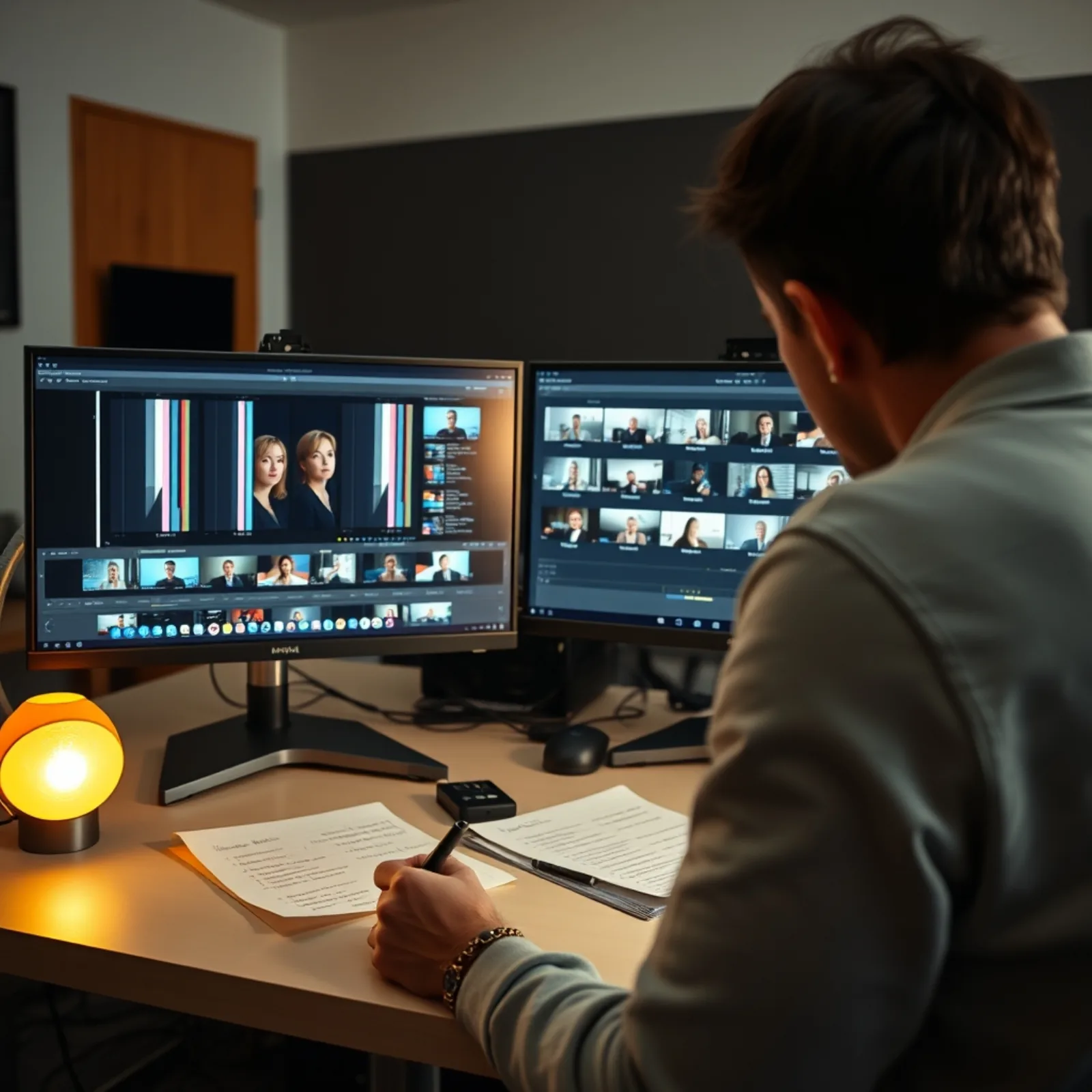
Show rather than describe: annotated references and hook families
Tone described with adjectives, “dynamic, modern, authentic”, guides no decision on the shoot. Every creator puts something different behind those words. Replace them with a few reference videos, and for each one, a sentence saying precisely what you take from it: the pace of the cuts, the on-screen text, the way the product enters the frame. A reference without annotation is copied on what jumps out, rarely on what interested you.
A reference can also be negative. A video labelled “anything but this, too polished” frames things faster than a paragraph on authenticity.
For the suggested hooks, vary the families rather than reworking the same idea. The ones we most often use as a starting point:
- The direct question: it names a problem the target recognises immediately.
- The counter-intuitive statement: it breaks an expectation and creates curiosity.
- The result before the explanation: you show the transformation, then justify it.
- The deadline or the precise figure: it anchors credibility from the first sentence, provided it is true and allowed in your claims list.
Three hooks from three different families produce three real tests. Three variants of the same question produce only one. It is the same logic as the unit of purchase.
How do you know if your brief is good? The four metrics to track
A brief can be measured, and the key metric is the first-pass rate: the percentage of deliverables put live in ads without revision. Everything else, satisfaction, “we’re happy with the result”, decides nothing.
1. First-pass rate
Deliverables accepted without revision ÷ deliverables received. Below 50%, the problem is in the brief, not in the creator. Check the technical specs first: in our files, first-pass rejections are dominated by audio and burned-in subtitles, not by acting.
2. Brief → delivery time
From the day the brief is sent to the day the final file is received. Studioverse summed up the stakes well in 2025: a clean brief is the difference between a usable variant and fourteen days of back-and-forth. Set the product dispatch date, the shoot date and the delivery date in the brief. Three dates. A brief with no shoot date always slips.
3. Number of revisions actually used
Write in the brief how many revisions are included, one is a reasonable standard, and what counts as a revision (a hook redone, yes; a complete reshoot because you changed your mind about the angle, no). Then track how many you really use. If you use up your revision every time, the cause is upstream.
4. Cost per usable creative
Total creator budget ÷ number of creatives actually launched. Not divided by the number of files received. A creator at €350 who delivers four files of which one is launched costs more than a creator at €500 who delivers four of which three are launched. This calculation settles a lot of budget trade-offs.
To link the brief to performance, adopt a naming convention that traces back to the creator. Motion documented in 2025 creative diagnostic scores, Hook Score, Watch Score, Click Score, Convert Score, attributable to a creator via an identifier in the ad name (such as UGC_Ashley). Without that, you will know that a video works. You will not know why, nor who to give more volume to the following month.
Lock your own feedback too
The brief frames the creator. It must also frame the brand. An included revision is useless if your feedback arrives late, or if it comes down to a sentence like “it’s not quite right”. Write three commitments on your side into the brief:
- A feedback deadline, in working days, that you keep. It weighs directly on the brief → delivery time you are measuring.
- A feedback format: precise timecodes on the video, one instruction per timecode. “At this moment, the product leaves the frame” can be fixed. “More dynamic” gets reinterpreted.
- A single point of contact who consolidates internal comments before sending them.
Use this section to complete the list of prohibitions beyond claims: names of competitors never to be mentioned, visual elements outside the brand guidelines. A deliverable that shows a competitor or says its name cannot be broadcast, and that is not a revision: it is a reshoot.
How do you reverse-brief from a winning creative?
An iteration brief changes only one variable at a time, and that variable is chosen from the score that drops off, not by instinct. It is the most profitable brief to write and the quickest: ten minutes, a usability rate of 70 to 85% in our files.
The method is mechanical. You take the creative that performs. You look at where it drops off. Three-second retention low but click-through fine among those who stay: the problem is the hook, so you rebrief five new hooks on the same video body, same creator, same clothes if possible. Retention good but clicks weak: the problem is the CTA or the final promise, so you rebrief the last ten seconds. Clicks good and conversion weak: it is no longer the video, it is the landing page, rebrief nothing.
The iteration brief fits in five lines:
- The reference file, attached, with its version name.
- The variable changed, just one, written out in full.
- What does not move: setting, outfit, pace, CTA.
- The number of variants expected on that variable.
- The output naming, incremented (V2, V3…).
What we stopped doing in 2025: rebriefing a winning creator on a totally new angle “for variety”. When a creator × angle combination works, the yield is in exploiting that combination, not in novelty. You work the seam until measured exhaustion, three-second retention falling over two consecutive weeks, and you open a new angle in parallel, with another creator.
The multi-creator brief on a single angle deserves a word. Giving the same angle and the same three hooks to four different creators produces four very distinct readings of the same argument, for a single writing cost. It is the simplest volume lever when you go from ten to thirty creatives a month. Beyond that, the question becomes the briefing workload: who writes it, who signs off deliverables, who chases. We settled it in the comparison UGC agency or creator platform.
Do you still need to brief a human in 2026?
The four locks apply identically to a generated avatar, except one: proof of use cannot be simulated. An avatar can carry a hook, a promo announcement, a benefit reminder. It cannot show the texture of the product on real skin, nor the reaction of a real face on first use.
What changes in the AI-UGC brief: you no longer write a shoot instruction, you write a prompt plus a list of guardrails. The guardrails are the same as for a human, prohibited claims, exact CTA, length, ratio, plus two specific ones: the disclosure of the synthetic nature when the video stages a testimonial, and the ban on using a face resembling an identifiable real person. The European framework on the transparency of generated content is getting stricter; writing the rule in the brief costs one line and avoids an ad takedown. According to the European Commission’s FAQ on Article 50 of the AI Act, this article applies from 2 August 2026, the date from which providers and deployers of AI systems must comply with its transparency obligations.
Our position, which does not serve commercial convenience: on the e-commerce accounts we run, fully generated creatives hold up reasonably well at the top of the funnel and fall away as soon as you need to convince someone who is hesitating over a price. We use them to saturate a volume of hook tests at low cost, not to carry the proof. And when an avatar replaces a creator in a testimonial video, the rate of user reports goes up. We have no published data of our own on this, just comments we read under the ads.
The skill that will be valued in 2026 is not writing more beautiful briefs. It is writing twenty a month, locked in the same way, accepted against the same grid, and knowing after six weeks which creator × angle × hook combination still deserves budget. Knowing how to brief a UGC creator has become an industrial production job with an ordering vocabulary: deliverable, acceptance, first pass, scope of rights, variant. Brands that keep the vocabulary of inspiration pay the difference in redeliveries.
Frequently asked questions
- Should you send a written script to the UGC creator?
- No. A word-for-word script produces a recitation, and a recitation shows within three seconds. Send the benefit in customer language, two to four proof points, the exact CTA and three suggested hooks. The creator words the rest in their own way. Impose only what legally binds the brand or has to match the landing page.
- How many revisions should you plan for in a UGC brief?
- One included revision is the reasonable standard, provided you define what counts as a revision: a hook redone or a missing product shot, yes; a reshoot because you change the angle after the fact, no. Write it in the brief, not in the contract. And track the number actually used: if it is systematically one, the brief is at fault.
- What duration of rights should you ask for on a UGC video?
- Six months, paid plus organic, covers the majority of e-commerce uses: time to test, scale a winner and draw variants from it. Two weeks is not enough to finish a learning phase. Unlimited across all media is rarely justified, costs a lot and increases the risk of an image-rights dispute.
- Should you ask the creator for raw footage?
- Always, and it should cost nothing if it is written before the shoot. Without raw footage, you can neither change the hook, nor recrop to 4:5, nor redo the subtitles in your own style, nor produce a version for another market. Also ask for the separate voice track and ban burned-in subtitles.
- How do you know if my UGC brief is good?
- Divide the number of deliverables put live without revision by the number of deliverables received. Below 50%, the brief is at fault, not the creator. Track in parallel the time between sending the brief and delivery, the revisions used, and the cost per creative actually launched, not per file received.
- Can you use the same brief for several creators?
- Yes, and it is the most effective volume lever. The same angle and the same three hooks given to four creators produce four distinct readings for a single writing cost. Only adjust the persona and the shoot situation to suit the profile. The difficulty comes later: the acceptance workload, not the writing workload.
- Should you send reference videos to the UGC creator?
- Yes, but annotated. A raw reference is copied on what jumps out, rarely on what interested you. For each video, write a sentence about the precise element to take from it: pace, on-screen text, how the product enters the frame. A negative reference, with what to avoid, frames things just as effectively. Tone adjectives never replace an example.
- How do you test a UGC brief before sending it?
- Have someone read it who knows neither the brand nor the product, and ask them to describe the video they would shoot. Every question they ask flags a vague area the creator will run into too. Check tone, hook and CTA first, the three points most often left to interpretation. Then present the brief in a short call before the shoot.
Lock down your briefs, measure your first-pass rate
If more than half of your UGC deliverables go back for revision, the problem is in the brief. Esekai is a vertical-video studio: creative ads, UGC and organic content for TikTok, Reels and Shorts, with a dedicated Creative Strategist who writes the briefs, shoots and edits in-house, then iterates on the winning variants. Thirty minutes on the phone: formats, budget, action plan. No agency pitch deck.
Book a call →30 minutes to talk formats, budget and action plan.