

Demand four families of deliverables, not one video. Exports: 9:16 master, 4:5 and 1:1 versions, 15/30/60 s cut-downs, with and without burned-in subtitles, and a version without music. Source files: raw rushes, an editable edit project, an .srt file. Legal: a written rights assignment, authorisation to use the creator's image, a dated paid-media scope, a Spark or Partnership code. Data: a hooks × angles matrix, a file naming convention, creative reporting. Without the last three families, you own nothing: you are renting videos. Here is the deliverables schedule to paste into your contract, line by line. As Blog du Modérateur explains in its article on the new 2026 rules, any paid collaboration between a brand and an influencer worth more than €1,000 excluding VAT has had to be covered by a written contract containing several mandatory clauses since 1 January 2026.
What exactly is a “UGC deliverable” in 2026: a file or a package?
A complete UGC deliverable is a package of four types of asset, only one of which is a video. The media asset (the exports you can run), the source asset (rushes, edit project, subtitles as a text file), the legal asset (rights assignment, image authorisation, Spark code) and the knowledge asset (hooks matrix, naming convention, creative reporting). Three out of four are routinely missing from the quotes we see come through in audits.
The typical line on an agency quote in France looks like this: “UGC production, 10 videos, €3,200 excl. VAT”. That's all. Ten MP4 files in a WeTransfer link that expires after seven days. When you ask for the deliverables schedule, in most of the accounts we take over, it simply doesn't exist: the scope fits on one spreadsheet line.
The problem isn't dishonesty. It's that “video” is not a unit of measurement. When AI Vidia announces in its 2026 buyer's guide a typical retainer of 40 videos a month with 5% of variants becoming winners, nobody knows whether “40 videos” means 40 distinct concepts or 40 exports from 6 shoots. The difference in value between the two readings is a factor of six. New Engen, incidentally, asks the right question in its 2026 guide: how many net-new variants per week, at my budget level?
Takema Studio's 2026 comparison sums up the market difference in one line worth keeping in mind: a creator platform delivers “raw”, an agency charges more because it delivers edited and revised. But “edited” still says nothing about ratios, subtitles, rights or rushes. That is exactly the gap the schedule fills.
The day-30 reversibility test: if you end the contract tomorrow morning, what percentage of what you've paid for is still usable without the agency? A package that fails this test is not a deliverable, it's a rental.
Here is the full schedule. The next seven sections go through each block in detail, but if you're going to copy only one thing from this article, make it this table.
| Deliverable | Specification to demand | 2026 market status | Cost if billed as an option | What breaks if it's missing | Acceptance test |
|---|---|---|---|---|---|
| 9:16 master | MP4 H.264, 1080×1920, 25 or 30 fps constant, ≥ 10 Mb/s, AAC audio 48 kHz | Included by default | Included in the base price (€150–500 per video deliverable, Plateya, Sept. 2025) | Nothing, it's the minimum | Does the file pass the Ads Manager upload with no compression warning? |
| 4:5 and 1:1 versions | Reframed with repositioned text, not an automatic crop | Negotiable, often charged | €20–60 per export as a re-edit (range from our 2025-2026 quotes) | Feed and Explore placements lost or served with black bars | Does the text stay within the safe zone across all three ratios? |
| 15 / 30 / 60 s cut-downs | Three lengths per master, same hook, CTA kept | Negotiable | €15–40 per cut-down (our quotes) | Impossible to test length as a variable | Does the 15 s version keep the offer and the proof, or just the hook? |
| Version without subtitles + .srt | Clean export + timecoded .srt file, French proofread | Rarely included | €10–30 per video | Any translation or type redesign requires a re-edit | Does the .srt open in a text editor, with no sync drift? |
| Clean feed (no music / no voice-over) | Direct-sound export alone + separate tracks as WAV | Rarely included | €0 if requested before export, €40–80 afterwards | An expired music licence makes the creative unusable | Can the music be replaced without touching the picture? |
| Alternative hooks | 3 to 5 three-second openings per concept, shot, not edited together | Negotiable, standard at creative agencies | Often included if requested in the brief, otherwise a re-shoot | The hook test becomes a concept test, which is far more expensive | Are the hooks interchangeable on the same video body? |
| Raw rushes | Ungraded camera files, named, delivered on disk or in the cloud for 12 months | Rarely included | Buyout fee to negotiate at signing | No re-editing possible elsewhere, back to the shoot | Can the rushes of the winners be identified by their file name? |
| Editable edit project | .prproj / .aep or XML-EDL + conformed media | Rarely included | Option, sometimes refused on IP grounds | A change of price or packaging = redo everything | Does the project open at a third party with no missing media? |
| Assignment of economic rights | Signed in writing: duration, territory, channels, paid yes/no, derivative formats | Never negotiable | +20 to 100% of the creation price (UGC Playground, June 2026 rate card) | Unlawful paid distribution, buyout from a position of weakness | Can I read the rights end date without calling the agency? |
| Creator's image authorisation | Separate document signed by the person filmed, same scope | Never negotiable | €0 if requested from the sourcing stage | Campaign removed on the person's simple request | Do I have a signed PDF per creator, in their name? |
| Spark Ads code / Partnership Ad | Code + expiry date + commitment not to delete the source post | Negotiable | Uplift of 75 to 150% on sensitive profiles (SparkUGC, Oct. 2025) | The ad dies if the creator deletes the video or closes the account | Is the code pasted into Ads Manager and validated before payment? |
| Management deliverables | Hooks × angles matrix, naming convention, iteration log, monthly reporting | Rarely included, never charged | €0: it's a by-product of work already paid for | You buy back your own learnings from the next provider | Is the file in my Drive, in my name, up to date for month M? |
Which export files should you receive for each video you pay for?
A validated concept should come out as 9 to 14 files, not one. One 9:16 master, two reframes (4:5 and 1:1), two or three duration cut-downs, three to five interchangeable alternative hooks, a version without burned-in subtitles with its .srt, and a clean audio feed. This is the ratio we have applied on our shoots since 2024, and it's the one to put in black and white in the schedule.
Bridgeo, in its comparison of French UGC agencies published in late 2025, recommends that the contract specify vertical 9:16 and 15/30/60 s versions. That's the floor. It still doesn't say which codec, at what bitrate, or whether the subtitles are burned into the picture.
The minimum technical spec to copy
- MP4, H.264 codec, High profile, 1080×1920 for 9:16 (1080×1350 for 4:5, 1080×1080 for 1:1).
- Constant frame rate of 25 or 30 fps, never variable: a VFR file from a smartphone throws subtitles out of sync when re-edited.
- Video bitrate ≥ 10 Mb/s, AAC 48 kHz stereo audio, consistent loudness across the whole package.
- Safe zones respected: nothing important within the top 130 px or the bottom 480 px on TikTok, or the CTA ends up covered by the interface.
- One folder per concept, one subfolder per ratio, identical naming convention throughout.
The clean feed is the line everyone forgets and the one that costs the most later. Commercially licensed music expires; a French voice-over is no use to you the day you open Spain. If you hold the isolated direct-sound track and the project, you can re-dress the video in two hours. Otherwise you go back to the shoot.
On hooks, the question put by Moburst and EntreResource in 2026 is the right one: how many variations of the first 3 seconds per concept? Demand that the hooks are shot during the session, not manufactured after the fact in the edit with a bit of animated text. Three openings filmed on the same set cost ten minutes of shooting. Reconstructed six weeks later, they cost a re-shoot.
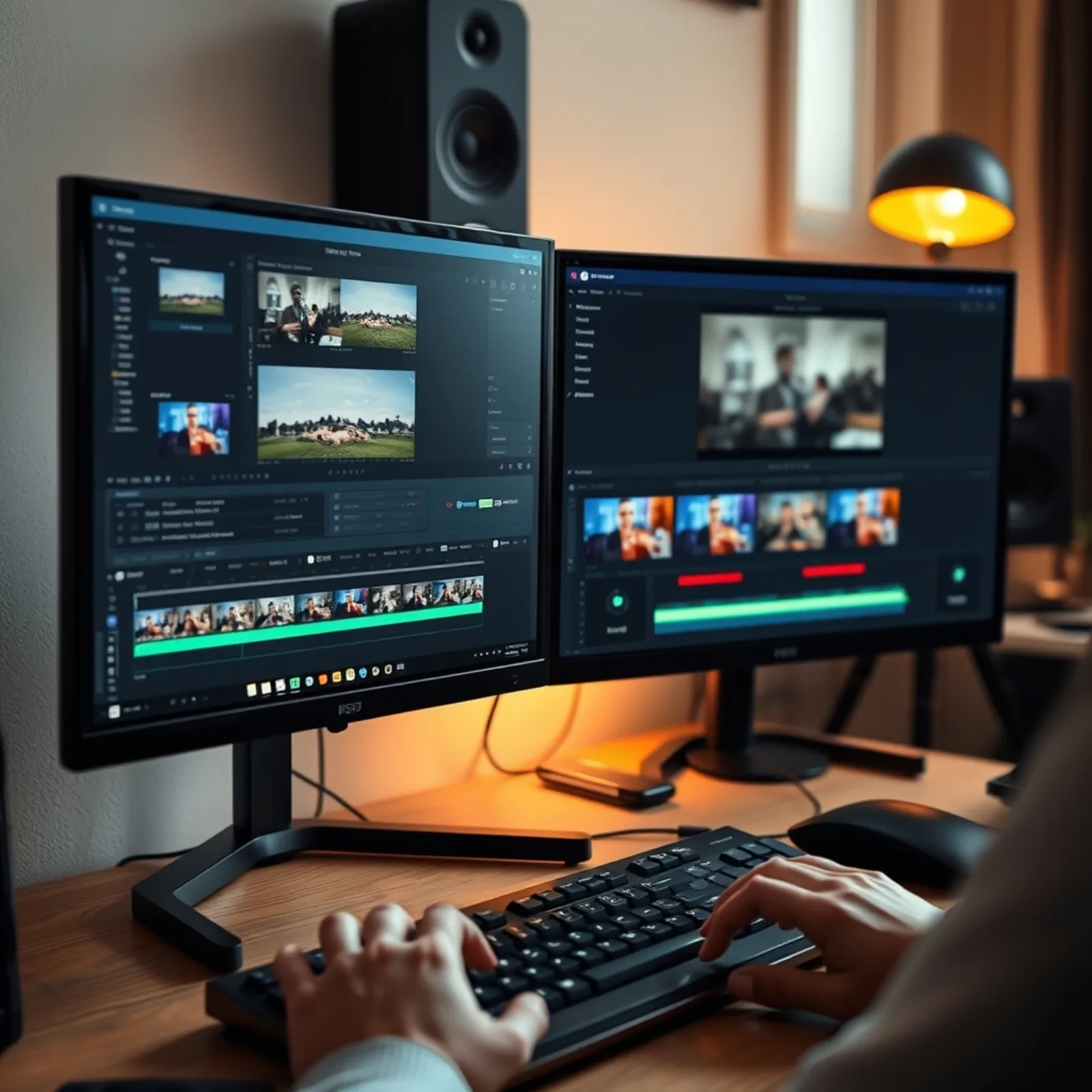
Rushes and edit project: why does the agency refuse, and when is that legitimate?
Asking for all the rushes of all the videos is a bad demand; asking for the rushes and the project of the winning creatives is an excellent one. The distinction is worth money on both sides, and it's the point English-language guides raise without ever answering.
Three refusals are legitimate, and we raise them ourselves with some clients. Volume first: a half-day UGC session generates between 40 and 120 GB of rushes, and storing that for twelve months for a client who will never open it has a real cost. Then rights: a creator has often assigned the use of the approved edits, not of 90 minutes of failed takes in which they appear out of context. Finally intellectual property: an After Effects project contains the agency's templates, grading presets and rigs, which are not part of what you bought.
An illegitimate refusal, on the other hand, can be recognised by its vocabulary. “That's not in our process.” “We never hand over source files.” No reason, no alternative, no price. There, you are facing deliberate withholding of an asset.
The three compromises that work
- Rushes escrow. The agency keeps the camera files in a shared read-only space for at least 12 months, with an obligation to transfer them within 10 working days on simple written request. You pay no storage, and you keep the key.
- A priced flat-rate buyout at signing. The price for releasing the source files is written into the schedule on day 1, not negotiated on the day of the break-up. On our contracts, this flat fee is between 15 and 25% of the production budget for the batch concerned. Negotiated after the fact, there is no ceiling.
- Conformed XML rather than the native project. The agency exports the timeline as XML or EDL with the media used, without its proprietary templates. You can re-edit, but you don't take away its know-how. This is the compromise we accept most often.
A firm position: on a batch of 40 videos a month, claiming every source file will make you pay more without bringing you anything. Target the winners. If the agency tells you, like AI Vidia in its 2026 guide, that 5% of variants become winners, then out of 40 videos you have two files that matter. Those are the two whose rushes you need to own, because those are the ones you will spin out into variants for eight months.
Usage rights, image rights, Spark Ads: which documents to demand, and in what form?
These are three distinct documents, signed by two different parties, and confusing the first two is the number one failure in French UGC files. The rights assignment covers the content and is signed between you and the holder of the rights in the video. The authorisation to use the image covers the person filmed and is signed by that person, in their name. An agency can hold the first without you ever having seen the second. The official site associations.gouv.fr reminds us that you must obtain the written authorisation of the person depicted before capturing any photos or videos.
| Document | What it protects | Who signs it | What happens if it's missing |
|---|---|---|---|
| Assignment of economic rights | The file: reproduction, adaptation, distribution, cutting into variants | Creator or agency holding the rights → advertiser | You pay a buyout after the fact, with no negotiating leverage |
| Image use authorisation | The person: their face, voice, name | The person filmed, in their own name | The campaign can be pulled at the person's request, whatever the agency contract says |
| Authorisation to run on a third-party account (Spark / Partnership / whitelisting) | The right to put media spend behind an account that isn't yours | The holder of the social account (creator) | The campaign stops if the code expires, the post is deleted or the account closes |
| Certificate of content origin | You: knowing whether the creator is human, and which parts are generated | The producing agency | Exposure to a compliance risk you only discover after distribution |
The scope, for its part, is written as five mandatory variables: duration (12 months, 24 months, perpetuity), territory (France, EU, worldwide), channels listed by name (Meta, TikTok, YouTube, website, emailing, in-store display), paid use yes or no, and right to modify. An assignment “all media, all uses” without these five lines isn't worth much the day a creator disputes it.
It costs money, and you need to budget it as a separate line. UGC Playground, in its June 2026 rate card, prices usage rights at between +20 and +100% depending on duration and exclusivity, and recommends never quoting a single price that mixes creation and usage. Takema Studio and Webtonic reach the same upper range in 2026: +30 to 100% of the production rate. SparkUGC (Oct. 2025) goes up to +75 to +150% on sensitive profiles (medical, finance, B2B, multilingual), and puts the all-in cost at 1.8 to 2.4 times the base price once rights, whitelisting, revisions and briefing time are included. If you want the detail of the French ranges, we cover it in how much a UGC video costs in France and what the rights are really worth.
The Spark Ads case, and what you won't be told
A Spark authorisation code is generated from the creator's TikTok account, with a validity period chosen at the time of generation. The source account remains theirs. The operational consequence: your best creative can disappear because a creator cleaned up their profile. We saw it twice in 2025 with e-commerce clients, on ads that had been running for four months. The official TikTok page on Spark Ads confirms that the advertiser can customise the authorisation code's duration according to the campaign's needs and to limit costs.
The maximum durations and the renewal mechanics have changed several times on TikTok's side. We won't give a figure here that you'd be reading in six months' time: check the configurable duration shown in the interface when you sign, and have it written into the schedule, with an obligation to regenerate the code at expiry and a clause forbidding deletion of the source post for the duration of the rights. Same logic for the AI-origin certificate: the European regulatory framework and the platforms' labelling rules move fast, so we require it contractually rather than bet on the state of the law. According to the European Commission, Article 50 of the EU AI Act has applied since 2 August 2026: from that date, providers and deployers of AI systems must comply with the transparency obligations it sets out.
How do you write an acceptance procedure the agency can't get around?
An enforceable acceptance procedure comes down to five elements: dated milestones, a written definition of “compliant”, a priced number of revision rounds, a clear boundary between revision and re-shoot, and a client validation period with the effect of silence. Without these five lines, “delivered” remains an opinion.
Start with the schedule. Bridgeo (Dec. 2025) insists on a calendar with dated milestones in the contract, and Showca.se, a guide originally published in 2024 and so to be read with today's market in mind, argues that a serious UGC agency delivers fully edited videos in 7 to 10 days. In our operations, the milestone that matters isn't final delivery but casting and script approval: if that slips by four days, everything else slips.
Next, define “compliant”. Acceptance is not an aesthetic opinion. It is done against a binary technical checklist: the ratios are there, the durations are there, the subtitles are correct, the .srt exists, the safe zones are respected, the naming convention is applied, the assignment document is attached. Yes or no. Anything that comes down to taste goes through the revision rounds, not through rejection of the delivery.
Revision or re-shoot: draw the line
A revision is made on the existing files: pacing, shot order, on-screen text, music, CTA, subtitling. A re-shoot means filming someone again: a change of script, product, creator or set. Two included revision rounds is the standard Showca.se recommends checking, and it's also what we do. Have it specified what triggers billing beyond that, and at what unit rate.
The re-shoot, for its part, must have its trigger written down: non-compliance with the approved brief, a technical defect, a product badly presented. Not “the client changed their mind”. An agency that refuses to write a re-shoot procedure will charge you for every re-shoot.
On client silence: accept the “silence means acceptance” clause, on two conditions. The period must be at least 5 working days, and it only starts on receipt of a package that is complete as defined by the schedule, not a link to three orphaned MP4s. That second condition changes everything, because it makes documentary compliance a precondition for the clock. The deliverables schedule is the delivery note; the body of the contract has to be worked on separately, and we covered the 7 clauses to demand before signing in another article.

Which management deliverables should you collect every month?
Four documents, all produced by the agency anyway for its own work, and almost never handed over: the hooks × angles matrix, the file naming convention, the iteration log and the creative reporting. This is the knowledge asset. It costs nothing to deliver and it's the one whose loss hurts the most.
The hooks × angles matrix is a two-way table: the angles tested in rows (social proof, demonstration, before/after, price objection, off-label use), the hooks used in columns, and the observed performance in the cells. After six months, this table is worth more than the videos themselves, because it tells you what to shoot. It feeds on the brief, and the brief must also be handed back to you in its validated version; for how to build one, see the 3 layers of a useful brief.
The naming convention is a written naming rule, not an editor's habit. Typical format: BRAND_PRODUCT_ANGLE_HOOK_RATIO_DURATION_V01.mp4. Make it binding in the schedule. The day you change agency, 300 files named “final_v3_ok_really.mp4” are worth zero, because nobody can link an export to a line in Ads Manager.
The iteration log records what was changed, why, and on the basis of what data. Three lines per creative are enough. Finally, the creative reporting must not be an Ads Manager export: it crosses the metrics with the creative variables (hook, angle, creator, duration, ratio) to say which variable moved the result.
New Engen put the question in 2026 in a way that deserves to be reused word for word on your next call: “do you brief from ad account data, or from the brand guidelines?” An agency that briefs from the ad account necessarily holds these documents. It has no reason to withhold them, other than to make leaving painful. Quimby Digital (Jan. 2026), incidentally, describes the solid agency as one that keeps strategy, briefs, vetting, rights, production, revisions and reporting in a single connected workflow. A connected workflow produces documents. Ask for them.
What does a missing deliverable really cost, and how do you run the day-30 reversibility test?
A missing deliverable never costs the price of the option: it costs the price of remaking it, plus the fact that you're negotiating as the one asking. A forgotten reframe can be fixed for a few tens of euros while the project is still open. Six months later, with no rushes or project, it's a shoot.
Three catch-up costings
- The re-shoot. You pay the production price again. In September 2025, Plateya put a 15 to 30 s vertical video deliverable at €150 to €500 with French creators; Takema Studio gives €200 to €500 for a short video produced by an agency in 2026. Multiply by the number of creatives affected, and add three weeks to the schedule.
- Buying out rights after distribution. +20 to 100% according to UGC Playground (June 2026), up to +75 to 150% on sensitive profiles according to SparkUGC (Oct. 2025). Except that these ranges are those of a negotiation held before. Afterwards, the creator knows your campaign is already running.
- Re-editing without source files. It doesn't exist. Without rushes or a project, you don't re-edit, you re-shoot. The cost of the missing “rushes” deliverable therefore equals the cost of a complete re-shoot, plus the loss of the original creator if they're no longer available, and character consistency is worth a lot for a brand that has established a face.
A useful piece of context: in September 2025, DesignRevision reported, from Billo data, an average cost of around $198 per deliverable in the United States, falling as a result of the influx of creators and AI tools. In other words, unit production is being devalued while the value of rights and source files doesn't move. What you will pay dearly for in 2027 isn't the shoot, it's the right to reuse and the ability to re-edit.
The day-30 reversibility grid
Thirty days after the start of a contract, ask yourself the question head-on: if I stop tomorrow, what am I left with? Ten lines, ten points each. Below 60 out of 100, you're renting.
| Item to check (10 points each) | Condition for scoring the points |
|---|---|
| 9:16 masters | All in your storage, not in an expiring link |
| Ratio and duration versions | Present for every approved concept |
| Versions without subtitles + .srt | Text files retrieved and readable |
| Clean audio feed | Music replaceable without touching the picture |
| Rushes of the winners | In your possession or under written escrow |
| Editable project or conformed XML | Openable by a third party, linked media included |
| Signed rights assignment | PDF with duration, territory, channels and paid use stated explicitly |
| Image authorisations | One per person filmed, in their name |
| Spark / Partnership codes | Active, with known expiry dates |
| Matrix, naming convention, reporting | Up to date for the current month, in your Drive |
Run this test at day 30, not at the end. At day 30, the agency still wants to do well and the files are still warm. At day 300, you're in the other scenario, the one described in recovering your assets if you leave the contract. And if you're comparing two providers, the deliverables schedule is the only document that makes two proposals genuinely comparable: the full method is in comparing two video production quotes.
One last thing, and it runs against the immediate interest of an agency like ours. If you send this deliverables schedule before asking for a quote, two or three providers on your shortlist won't reply. That's not a failure of your process, it's its first useful result: those who drop out are precisely those whose business model relies on withholding what you've paid for. Knowing which deliverables to demand from a UGC agency isn't about getting more for the same price, it's about paying the real price for a package you remain the owner of.
Frequently asked questions
- Should a UGC agency deliver the rushes by default?
- No, and demanding them across the whole volume will make you pay more for nothing. Target the rushes of the winning creatives, the ones you'll spin into variants for months. The three acceptable alternatives: rushes escrow for 12 months, a priced flat-rate buyout from signing, or a conformed XML export with the media used, without the agency's templates.
- Are rights assignment and image rights the same thing?
- No. The assignment of economic rights covers the content and is signed with the holder of the rights in the video. The authorisation to use the image covers the person filmed and is signed by them, in their name. You can hold the first without the second: in that case, the creator can ask for your campaign to be pulled despite a valid agency contract.
- How many exports should you expect per validated UGC concept?
- Between 9 and 14 files: one 9:16 master, two reframes at 4:5 and 1:1 with repositioned text, two or three duration cut-downs, three to five interchangeable alternative hooks, a version without burned-in subtitles with its .srt file, and a clean audio feed. This ratio must appear in the deliverables schedule, not be guessed at after delivery.
- How much do usage rights cost on top of production?
- In June 2026, UGC Playground prices a supplement of 20 to 100% depending on duration and exclusivity. Takema Studio and Webtonic give 30 to 100% in 2026. In October 2025, SparkUGC reported an uplift of 75 to 150% on sensitive profiles (medical, finance, B2B) and an all-in cost of 1.8 to 2.4 times the base price.
- What if the agency refuses to attach the deliverables list to the contract?
- Ask for the reason in writing. A reasoned refusal on a specific point, an After Effects project containing its presets, long-term storage of rushes, can be settled with a compromise. A refusal on principle, with no reason or priced alternative, signals deliberate withholding of assets. In that case, the package delivered will never pass the day-30 reversibility test.
- Should you accept the “client silence means acceptance” clause?
- Yes, on two conditions. The period must be at least 5 working days, and the clock only starts on receipt of a package that is complete as defined by the deliverables schedule, not a simple link to a few MP4s. That second condition makes documentary compliance a precondition of validation, and protects against partial deliveries being counted as accepted.
Get your next UGC batch properly accepted
You now know what a deliverables schedule should contain: exports, sources, rights, management. At Esekai, we produce vertical videos in-house for TikTok, Reels and Shorts: creative ads, UGC, organic content, with a dedicated Creative Strategist and fast iterations. We are not a 360 agency, just a vertical studio. Thirty minutes: formats, budget, action plan. No agency pitch deck.
Book a call →30 minutes to talk formats, budget and action plan.