

Choosing a UGC agency comes down to four points you can verify before signing: who owns the raw rushes, the exact scope of the rights (duration, media, territories), whether the creators remain accessible after the contract, and what monthly output the agency can really sustain. Everything else (portfolio, advertised creator pool, ROI talk) is not enforceable. Test with a paid pilot of 8 to 12 videos, then decide on cost per winning creative, never on unit price. This article gives you the elimination method, the comparison of the four buying models and the exit clause to negotiate before you sign. If you contract directly with a creator for an influencer collaboration, Blog du Modérateur (2026) points out that commercial collaborations worth more than €1,000 must be covered by a written contract.
Why don’t most “how to choose a UGC agency” guides help you decide?
Because they list declarative criteria that nobody can verify before signing, or rely on afterwards. “A pool of 5,000 creators.” “A data-driven approach.” “Our clients see 3x their ROAS.” None of these sentences holds up in a contract, none can be checked by email, and none is of the slightest use the day the collaboration goes off the rails.
A useful criterion has three properties: it can be verified in writing within 48 hours, it can be quantified, and it can be copied into a clause. The advertised number of creators has none of these. Neither, most of the time, does “sector specialisation”. If you first want to understand the different types of provider and their price lists, we have covered that separately: the 4 UGC agency models and their 2026 prices. Here, we go straight to the decision.
Several directories (Matchfolio, La Fabrique du Net, Digitiz) list dozens of UGC agencies in France, with no consolidated official count. The comparisons you read are almost all written by one of those agencies, which is why the agency publishing the ranking invariably comes first. That is not dishonest, it is simply unusable for a buyer.
Above all, none of these guides addresses the one question that actually costs money: what happens when it doesn’t work? We have seen brands pay twice for the same content. Once for production, and once to buy the rights back six months later, because nobody had read the line “3 months, paid social, France”.
You don’t choose a UGC agency for what it produces. You choose it for what you get back the day you leave.
Three assets are transferable: the raw rushes, the usage rights and the relationship with the creators. A fourth never is, and nobody talks about it: restart time, meaning the number of weeks needed to get back to your creative output after changing provider. On the accounts we have taken over, that delay runs between 3 and 7 weeks depending on whether or not the brand recovered its source files. That is the real cost of leaving.
Which 4 questions rule out a UGC agency in 48 hours?
Four questions asked by email, before any sales meeting, are enough to weed out most candidates. Ask them in writing. Demand the answer in writing. An agency that replies “let’s discuss it on the call” has already answered.
Question 1: Who owns the raw rushes, and how quickly will I receive them?
Rushes are the unedited source files: the creator’s full takes, the product shots, the B-rolls. This is the most discriminating line in the market and the one no comparison covers. With the rushes, you can re-edit 15 variants in-house, test new hooks six months later, or hand the files to another editor. Without them, you own a final MP4 and nothing else.
The answer that passes: “The rushes belong to you, delivered to your drive within 7 days of approval, edit project included.” The answer to dig into: “On request.” The answer that rules them out: “We only deliver the masters, the rushes remain our intellectual property.” We still hear that one regularly in 2026.
Question 2: Write down the exact scope of the rights for me: duration, media, territories
Without a written statement of the duration, media and territories of use, a brand can end up paying again to use its own content (emarketerz.fr, Comment choisir la bonne agence UGC pour sa marque ?). It is the number one legal risk in the sector and it is trivial to neutralise: three words in a quote.
Ask for the detail line by line. Duration: 6 months, 12 months, perpetuity? Media: paid social only, or website, newsletter, Amazon product page, in-store display? Territories: France, Europe, worldwide? And the question everyone forgets: is whitelisting included, in other words, do you have the right to run ads from the creator’s account through Spark Ads on TikTok or Partnership Ads on Meta? That right is often charged separately, and it changes performance. The detail of the price ranges and buy-outs is here: the real prices and usage rights in France. The TikTok for Business help centre states that the creator can provide an authorisation code so the brand can use their post in a Spark Ad.
Question 3: Can I work with your creators again if we stop?
An uncomfortable question to ask during the courtship phase. Ask it anyway. Most contracts contain a non-solicitation clause of 12 to 24 months that forbids you from contacting directly a creator you met through the agency. That is defensible: the agency sourced, cast and negotiated. What is not defensible is discovering the clause after building your whole advertising identity around a face you can never call back.
Straight after, ask how sector exclusivity between competing brands is handled in the creator pool, an audit point rarely mentioned, raised by bridgeo.fr in its comparison of French UGC agencies (2026). If the same creator shoots for you and for your direct competitor the following month, your brand recognition takes a hit, and so does your audience. According to the ARPP’s Observatoire de l’Influence Responsable 2025, creators holding the Certificat de l’Influence commerciale Responsable are three times more compliant than uncertified ones: so ask which creators in the pool hold this certificate.
Question 4: What output do you sustain over three consecutive months, and how many days does it take you to replace a creator who fails?
The output quoted in the commercial proposal and the output sustained in August are not the same figure. Ask for the number of videos delivered per month, for a client comparable to you, over three months in a row, including the holiday month. And ask how long it takes to replace a creator who doesn’t deliver, delivers off-brief, or disappears.
On our own productions, roughly one creator in five drops out or delivers off-brief on the first attempt. That is normal, it comes with the job. What is not normal is an agency with no quantified procedure: with us, replacement is launched within 5 working days, with no re-billing. If the person you’re dealing with hesitates over this figure, they have probably never handled volume.
| Question asked in writing | Answer that passes | Answer to dig into | Answer that rules them out |
|---|---|---|---|
| Ownership of raw rushes | Rushes + edit project delivered within 7 days | “On request” or “as an option” | “The source files remain our property” |
| Duration / media / territories | Written in black and white in the quote, whitelisting specified | “Unlimited digital use” with no territory | “We’ll see case by case with the creator” |
| Access to creators after the contract | Non-solicitation capped at 12 months, buy-out possible | Clause present but duration not stated | Perpetual ban on direct contact |
| Real output + replacement | Figure over 3 consecutive months, replacement within 5 days | “Scalable” capacity with no figure | No commitment on timing |
These four questions are specific to UGC. If you are preparing a broader video tender, the full list is here: the 12 useful questions to ask a video agency before signing.
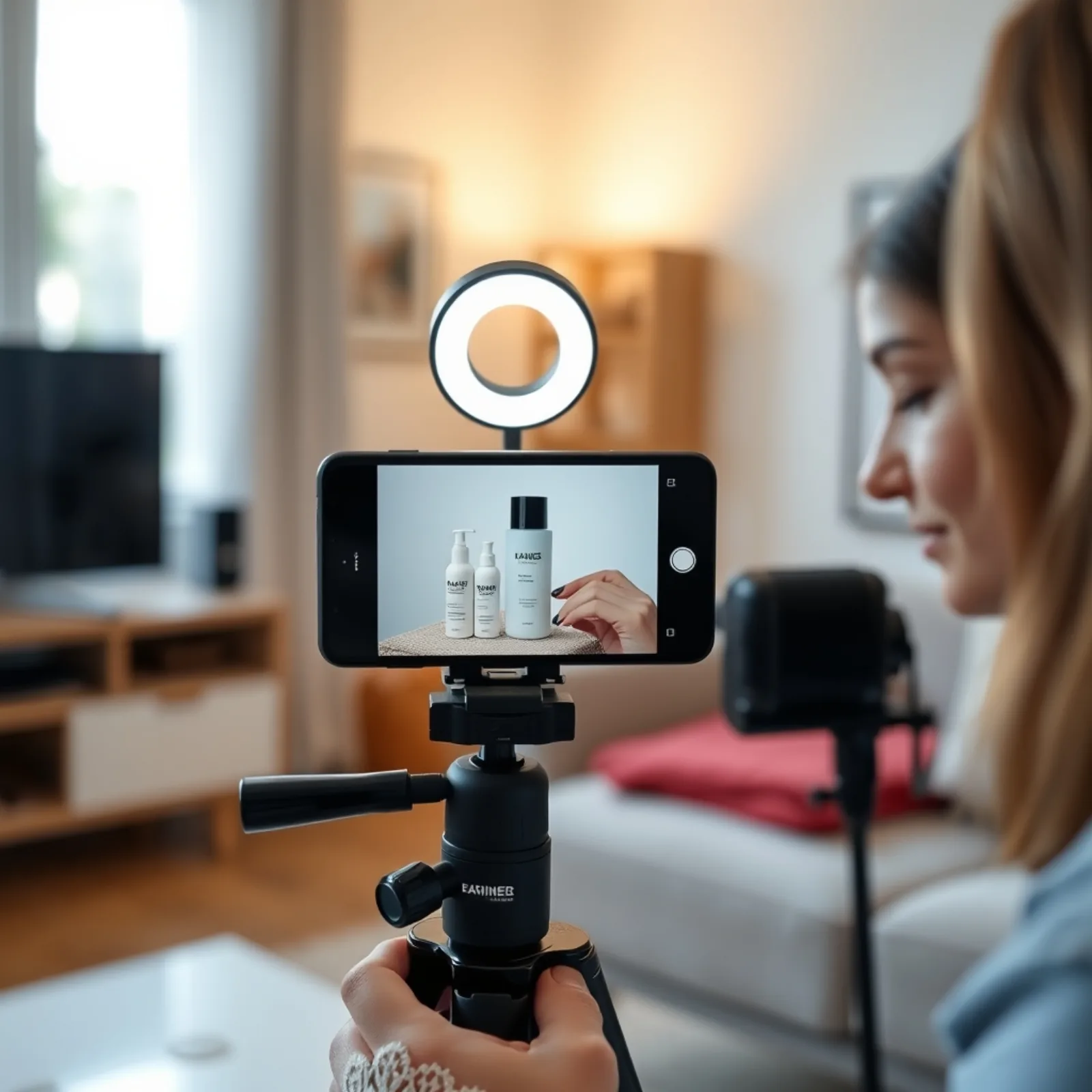
Agency, platform, freelancer or direct creator: which one fits your volume?
Below 8 videos a month, an agency is an extra layer of cost: you pay for coordination you don’t need. Above that, freelancers and platforms turn into a full-time project-management job that nobody on your team has time to do properly.
The four models don’t sell the same thing. A UGC agency sells a creative asset and coordination. A self-service platform sells volume. A direct creator sells one video. A vertical production studio sells a managed monthly output. Mixing up these four offers on a per-video price grid is like comparing a rent and a hotel night.
| Criterion | UGC agency | Self-service platform | Direct creator | Vertical video studio |
|---|---|---|---|---|
| What you buy | A creative asset + casting | Volume on demand | One video, one face | A managed monthly output |
| Indicative 2026 price (takema-studio) | Full-service agency from €2,160 excl. VAT | From €49 excl. VAT / video | Variable, negotiated case by case | Monthly package |
| Raw rushes delivered | To be demanded, rarely by default | No in most cases | Yes if written into the brief | Yes, by default |
| Sector exclusivity | Possible, to be negotiated (bridgeo, 2026) | None | Up to you | Contractual |
| Who replaces a creator who fails | The agency, delay to be quantified | You recommend, you pay again | You | The studio, included in the package |
| Relevant monthly volume | 8 to 25 videos | 1 to 6 videos | 1 to 4 videos | 12 videos and more |
The tipping point is around 8 videos a month, and we have documented it with figures: the tipping point is 8 videos a month. Below that, buy by the unit and keep your money for media. Above it, the hidden cost is no longer the video, it is the time your acquisition manager spends chasing creators on Instagram.
How much does a UGC agency really cost in 2026, and what does the per-video price hide?
The advertised per-video price almost never covers the four real cost items: production, rights, iterations, editing. Public price lists vary widely: takema-studio quotes a full-service agency offer from €2,160 excl. VAT and a self-service platform from €49 excl. VAT per video; the “€300-800” agency ranges you come across elsewhere come from other sources, to be checked. Check the source before quoting a range. An influencer collaboration is negotiated on a completely different basis (audience), with very scattered rates: ask for quotes rather than relying on a published range.
These ranges remain indicative and are not a benchmark: two quotes at the same unit price can cover very different services. They are also unusable as they stand, because two quotes at €450 a video can hide realities that range from simple to threefold. Always break them down:
- Production: creator fee, product shipping, casting management. This is the only line everyone bills.
- Rights: organic only, or paid included? For how long? Moving from 3 to 12 months of paid use often adds 30 to 50% to the base price on the quotes we see.
- Iterations: how many hook variations on the same take? “Unlimited” is a salesperson’s answer. Demand a number.
- Editing: subtitles, sound design, graphics, 9:16 and 4:5 formats. A “raw creator” deliverable and an ad-ready edited deliverable are not billed the same way.
The costliest reasoning error is treating the video as the unit of purchase. Your real unit of purchase is the monthly batch that feeds your campaigns without gaps. An agency at €350 that delivers 6 videos in 5 weeks costs you more than one at €550 that delivers 12 in 3 weeks, because the first leaves you running tired creatives for a fortnight.
One last point of caution: be wary of the “monthly package” model when the package commits to no number of deliverables. We have seen contracts at €4,500 a month whose actual volume depended “on creator availability”. A package with no delivery floor is not a package, it is an open-ended budget line.
How do you check a UGC agency portfolio when everyone shows their best videos?
Ask for the videos that lost. A portfolio proves nothing: it is a selection by definition. The question that reveals a real practitioner is “show me three creatives you produced that underperformed, and tell me why”.
The useful answers sound like this: “The hook promised a before/after that we only showed at second 11, and watch time dropped at 4 seconds.” Or: “The creator was too far from the 45+ target, hook rate of 11% against 23% on our other angles.” An agency with no failure to talk about hasn’t shot enough, or never looks at the numbers after delivery.
Second request: the tested / winner ratio. How many creatives do you need to produce to get one that holds up at scale? On our e-commerce campaigns, we see one truly scalable creative for every 6 to 8 tested, with strong variance depending on the maturity of the ad account; this is our internal observation, not published data. An agency that claims 1 in 2 is not measuring anything.
Third request: two references who ran these videos as paid, not organic. The KPIs to have them cite are those a competent TikTok or UGC agency tracks by default: hook rate, watch time, view-through conversions (benandvic.com, Agence TikTok Ads & UGC : la check-list complète). If the person you’re dealing with talks in views and likes on an advertising brief, you are not facing a performance profile.
To read a portfolio line by line without being dazzled by the editing, we published the 12-proof grid for reading a portfolio.

What should a paid pilot that really settles the question look like?
A pilot that settles it means 8 to 12 videos, at least 3 creative angles, 30 days of running and a single decision indicator: cost per winning creative. Everything else is noise.
Refuse the “free test of one video”. It is a commercial offer, not a test. A single video tells you nothing about an agency’s ability to sustain output, iterate fast or find an angle that works. It only tells you that this agency can produce a good-looking video when it throws its whole team at it. We stopped offering this format in 2025: the brands that accepted it signed on an impression, then found out in month 2 that the real pace was half of that.
The format we recommend, and apply:
- 3 distinct creative angles (problem/solution, demonstration, objection handled), each split into 3 hooks. That makes 9 creatives minimum.
- A written brief supplied by the agency, not by you. The brief is a deliverable: if they ask you to write it entirely, you are paying for labour, not expertise.
- A media budget floor high enough to get out of statistical noise. Below that, you measure nothing but chance.
- 30 days of running, with a checkpoint at D+14 to trigger iterations on the creatives that show a good hook rate but poor conversion.
- The rushes delivered at the end of the pilot, even if you don’t continue. This is the clause that reveals intentions.
The final decision rests on a single figure: how much each creative able to sustain the spend cost you. Not the unit price, not the number of views, not “alignment with the brand”. The calculation method is detailed here: thinking in cost per winning creative.
An honest caveat: on a young ad account with little conversion history, 30 days may not be enough to separate two providers. In that case, judge first on meeting deadlines, casting quality and iteration capacity, and push the performance verdict to 60 days. Saying otherwise would be selling you false certainty.
Do you need a UGC agency specialised in your sector?
Sector specialisation is largely oversold; specialisation by platform and by objective matters far more. A firm position, and not one that suits us commercially: we too could sell you “beauty expertise” or “food expertise”.
What transfers from one sector to another is the mechanics: knowing how to write a hook that holds for 3 seconds, how to cast a credible face for a given target, how to split a winning angle into 8 variants in 72 hours. What doesn’t transfer is regulatory compliance and product vocabulary. An agency that has never shot food supplements will ignore the prohibited claims and get three of your creatives rejected by Meta. Same in finance, health, CBD, insurance.
So: demand sector specialisation if you are in a regulated sector, or if your product requires a technical demonstration that has to be learned. Otherwise, prefer an agency that masters your main platform and your objective, cold acquisition, retargeting, product launch, rather than one with three logos from your vertical on its website.
There is a serious counter-argument to our position: in some sectors, the specialist agency already has a pool of creators who are credible on the product, practitioners, professionals, real users. That saves three weeks of casting. If that is your case, make them prove it: ask for the list of available profiles and the date of their last collaboration, not the sales pitch.
How do you know when to leave your UGC agency, and at what price?
Negotiate your exit before you sign the entry: the reversibility clause is the only one that protects you when the relationship deteriorates. A serious agency accepts it without blinking. An agency that gets irritated by it has just given you your answer.
What this clause must contain, point by point:
- The rushes: full transfer of the source files within 15 days of termination, to a medium you designate.
- The post-contract licence: the rights acquired on videos already paid for survive the end of the contract, for the duration originally negotiated. Without this line, you may lose the right to use creatives you funded.
- Spark Ads codes and content authorisations: the list of active TikTok authorisation codes, their expiry dates, and the status of Partnership Ads on Meta. These authorisations expire, and nobody will warn you.
- Notice period: 30 days is the healthy norm. 90 days on a UGC contract is a quarter of creatives you pay for without believing in them.
- Non-solicitation: time-limited, with a stated buy-out amount if you want to keep a creator directly.
When should you leave? Three concrete signals, not impressions. Delivered output drops by more than 25% over two consecutive months with no explanation. The rate of winning creatives deteriorates while your offer and audience haven’t moved. And the most telling: the agency no longer proposes new angles, it recycles the same format with a different face. That last point signals ad fatigue even before your CPMs rise.
The cost of exit is measured in weeks, not euros. With the rushes and rights in hand, a brand is back at full output in 2 to 3 weeks with a new provider. Without them, you have to recast, reshoot, re-edit: that is 6 or 7 weeks, with a hole in the creative pipeline while your campaigns run on worn-out visuals. Multiply by your monthly media spend and you get the real price of a bad contract. And if you are still comparing quotes, the warning signs to spot before signing are listed here: 11 red flags in a video agency quote.
One last thing, and it runs against what the market sells. Choosing a UGC agency is not a lifetime decision, and treating it as one will make you sign too long, too expensive, with too many clauses. Treat it as a 90-day decision, renewable. Agencies that do good work are not afraid of being re-evaluated every quarter; it is the others who ask you for twelve firm months.
Frequently asked questions
- What is the first question to ask a UGC agency?
- “Who owns the raw rushes, and how quickly will I receive them?” It is the most discriminating criterion in the market and the one almost no comparison covers. An agency that keeps the source files locks you in: you can neither re-edit variants in-house nor hand the material to another provider.
- How much does a UGC agency cost in 2026?
- According to takema-studio (page dated 2026), a video produced through a UGC agency costs between €300 and €800, against €150 to €300 on a self-service platform. These ranges don’t necessarily cover extended paid rights, hook iterations or ad-ready editing. Have these four items broken down before comparing two quotes.
- At what volume does a UGC agency become worthwhile?
- Around 8 videos a month. Below that, you pay for coordination you have no use for: a direct creator or a self-service platform is enough. Above it, managing casting, follow-ups and replacements becomes a full-time job that your acquisition team doesn’t have time to do properly.
- Should you accept a free test of one video?
- No. A free video proves that an agency can mobilise its team on a showcase case, not that it sustains output. Prefer a paid pilot of 8 to 12 videos, 3 angles split into 3 hooks, 30 days of running, with the rushes delivered at the end even if you don’t continue.
- What do duration, media and territories mean in a UGC contract?
- They are the three limits of usage rights. Duration sets how long you can run the content, media specify where (paid social, website, newsletter, display), territories delimit the countries. Without these written statements, a brand may have to pay again to use its own content, as emarketerz.fr points out.
- How do you check the creator pool an agency advertises?
- Ask for the list of profiles available for your brief, with the date of their last collaboration and their real availability over the month. Also ask how sector exclusivity between competing brands is handled, an audit point raised by bridgeo.fr in 2026. A global number of registered creators means nothing.
Test us on a pilot, not on a showreel
You now know what to demand: rushes delivered, limited rights, sustained output, cost per winning creative. Esekai is a vertical video production studio, creative ads, UGC and organic content for TikTok, Reels and Shorts, with a dedicated Creative Strategist, shooting and editing in-house, and iterations launched within days. On the agenda: 30 minutes on your formats, your budget and an action plan. No agency presentation.
Book a call →30 minutes to talk formats, budget and action plan.