

Evaluating a video agency portfolio means checking four measurable things, not an aesthetic. One: relevance, the same format, platform and objective as your case. Two: metrics per piece (hook rate, completion rate, CPA), never views. Three: volume and the rate of winning creatives, given that only around 5% of tested creatives really perform, according to Motion (Creative Benchmarks 2026). Four: traceability, raw rushes, a test log that includes the losers, and a signed rights assignment. A portfolio with no figures and no losers is not a portfolio: it is a demo reel. According to the 35th Observatoire de l'e-pub by the SRI and UDECAM, published in February 2026, the French digital advertising market reached €12.4 billion in 2025 (+11%), driven in particular by Social and Video.
What should a video agency portfolio contain, and what has no business being in it?
A portfolio that is useful for buying contains eight elements: cases in your vertical, videos in native 9:16 format that have not been cropped, families of iterations, media figures per piece, the agency's exact role on each project, the people who worked on it, usage rights, and the real brief-to-delivery turnaround. Everything else is decoration.
We still receive 40-page decks where every slide is a client logo. A logo proves nothing. It proves that an invoice changed hands, possibly for an event, a recording, a LinkedIn post. Not that a vertical creative was designed, tested and scaled.
What should come out of the portfolio, and what you can discard without a second thought:
- The 45-second music showreel. It is an anthology of shots. It says nothing about process, cadence or performance.
- Cumulative views (“80 million views generated”). Since Instagram unified its metrics (announced in late 2024), a “view” is counted as soon as a Reel starts playing, replays included: cumulative views say nothing about real attention. An account with 80M views can have a catastrophic CPA. Social Media Today reported on 7 August 2024 that with this change, Instagram also counts repeat views of a piece of content, as it already did for plays and replays of Reels.
- Client references with no associated case, no date, no scope.
- 16:9 videos “adapted” to vertical. We come back to this below; it is the most frequent signal.
- Mentions of average market prices. The portfolio is not a quote, and the quote is judged afterwards, using the 4-step comparison method.
The starting question is not “is it beautiful”. It is: does this portfolio let me predict what this team will produce for me in 6 weeks. Ninety per cent of the portfolios we see circulating in pitches do not let you answer. Ours included, three years ago.
Why is the most beautiful showreel often the worst buying signal?
Because a showreel is a hand-picked sample from the top 5% of a body of work, and the information you care about sits in the remaining 95%. Motion, in its Creative Benchmarks 2026 study covering $1.29 billion of Meta spend, 578,750 creatives and 6,015 advertiser accounts, observes that only around 5% of tested creatives become winners: roughly 4% at the lower spend tiers, up to 8% at enterprise level. A showreel shows you those 5%. Never the rest.
Same study, another figure that puts things in perspective: around 7.7% of creatives clear the threshold of 10× the median performance. In other words, the video that makes an account's fortune is statistically rare, and it arrives after a heap of failed attempts. A portfolio that owns up to no failures is not an honest portfolio, it is an edited one.
There is a second, more recent problem. Since 2025, generative video has made it possible to fabricate a polished showreel without a single client. We have seen pieces turn up in pitches that were clearly produced without any commission, presented as campaigns. The portfolio has become structurally less reliable than in 2022. The countermeasure is simple: ask for authorship, not aesthetics. As the law firm Stibbe pointed out in July 2026, the European Commission adopted guidelines on 20 July 2026 on the transparency obligations of Article 50 of the AI Act, obligations that have applied since 2 August 2026.
The 5 tells of a doctored portfolio (each spottable in 10 seconds)
- Cropping from 16:9. Look at the edges: people cut off at the shoulders, an off-centre product, blurred bars at the top and bottom, camera movements that leave the frame. A shoot designed for vertical puts the action in the central third and leaves room at the top for text.
- Burned-in subtitles outside the safe area. If the text slips under TikTok's “Like” button or behind the Instagram caption, nobody ever saw it in real delivery. The piece never ran.
- Cut hooks. In a showreel, they keep the pretty shot and throw away the first three seconds because they are “wordy”. Yet the first three seconds are the only place where money is made. A hook missing from the portfolio means an agency that does not know where the value is.
- Unlicensed commercial music. A chart track on a Meta ad means either a sync deal (rare, expensive, verifiable), or an organic piece repainted as advertising. Ask for the licence.
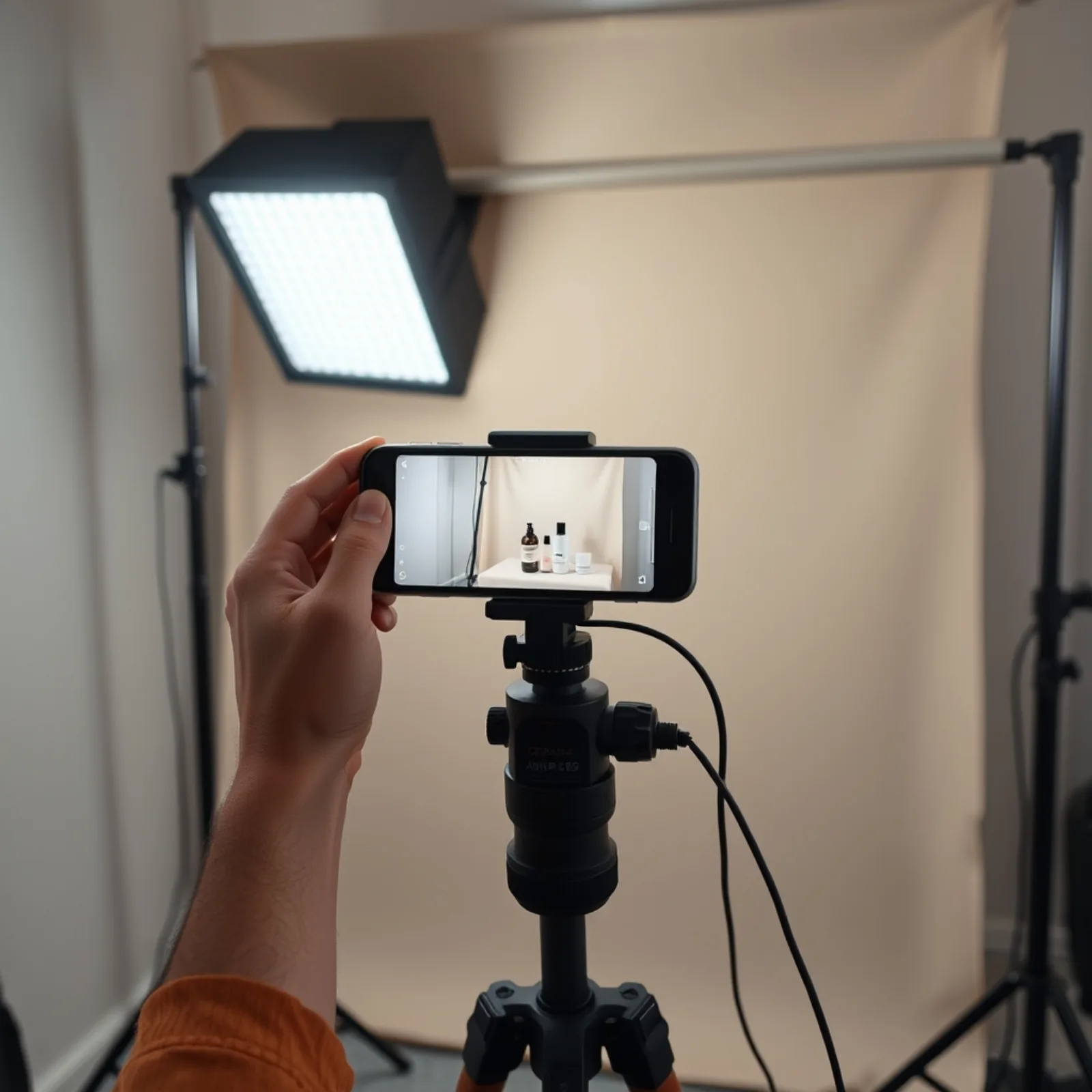
- A studio-lit product shot in a video sold as UGC. Softbox, gradient backdrop, perfect focus: that is not a creator at home, it is a set. Nothing illegitimate about it, but it is not the same price or the same performance.
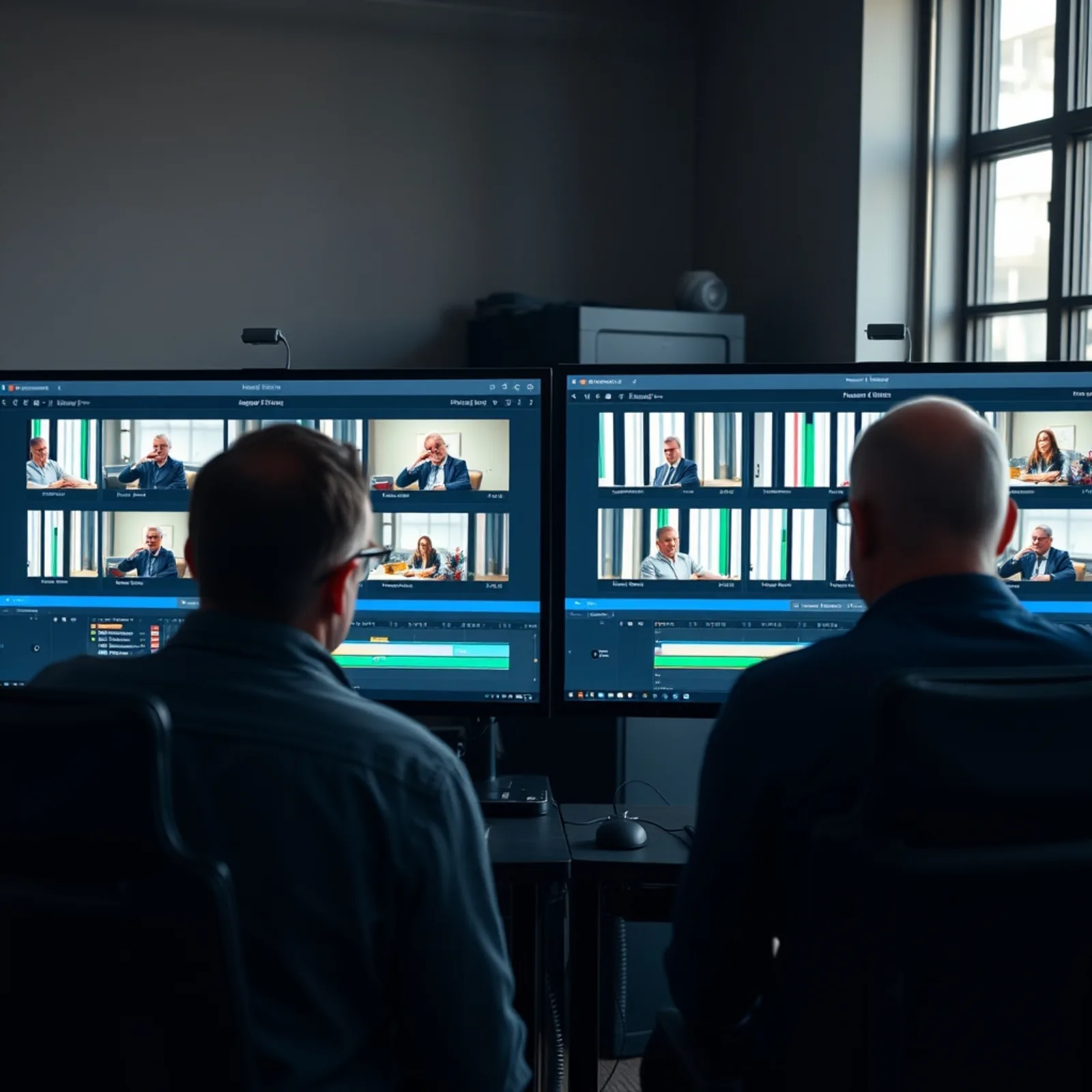
Which figures should you demand for each piece in the portfolio, and which thresholds count as good?
Four metrics per piece are enough: hook rate, hold rate, completion rate, and a business indicator (CPA, ROAS or cost per lead), accompanied by the platform, the measurement window and the impression volume. Without those three details, a figure means nothing.
The trap that 9 agencies out of 10 do not flag: TikTok measures a play at 2 seconds, Meta at 3 seconds (hawky.ai, March 2026; reloop.so, May 2026). TikTok hook rates therefore look naturally higher, without any creative being better. An agency that announces “a 45% hook rate” without specifying the platform either does not master its subject, or is counting on you not knowing. Ask the question. The answer is a zero-cost honesty test. TikTok Ads Manager's official glossary of video metrics (November 2025) defines “2-second video views” as the number of times a video is played for at least 2 seconds during an impression session, replays excluded.
If the very definition of the hook and how exactly it is measured seem hazy to you, take five minutes on the definition and exact measurement of the hook before opening the first portfolio. It changes the questions you ask in the meeting.
| Metric | Average level | Strong level | Platform / window | Source, date |
|---|---|---|---|---|
| Hook rate | 25–40 % | 40% and above | Meta at 3 s / TikTok at 2 s (not comparable) | Prooflytics, 30 May 2026 |
| Average Reels hook rate | 28 % | , | Instagram Reels, 3 s plays | Coinis, 2026 |
| DTC prospecting medians | ~23% in-feed, ~30% Reels, ~27% Stories | +14 pts in warm retargeting | Meta, by placement | AdSights 2025, via Sepia Lab, 16 June 2026 |
| Completion rate (VCR) | Meta Reels 15–25%, Snapchat 20–30% | TikTok 25–35%, YouTube TrueView 30–35% | By platform, full video | Prooflytics, 30 May 2026 |
| Winner rate | ~4% (lower spend tiers) | ~8% (enterprise level) | Meta, by advertiser account | Motion, Creative Benchmarks 2026 |
| Frequency / saturation | > 3–4 on cold = likely fatigue | ≥ 5 = heavy saturation | Meta, cold audience | Modo25, 4 June 2026 |
A nuance we own up to, even though it hurts the pitch: a high hook rate is not proof of sales. In 2025 we delivered pieces with a 52% hook rate on Meta that converted worse than videos at 31%. The hook attracts, what follows sells. When an agency shows you only a hook rate, it shows you half the work. Demand at the very least the hold rate at 15 seconds or the cost per purchase over the same window.
How do you read the volume of a portfolio, and not just its quality?
A portfolio must prove a cadence, not a masterpiece: if the agency cannot demonstrate that it turns out several creatives a week for the same client, it mathematically cannot produce a reliable winner for you. This is arithmetic, not opinion.
The figures from Motion (Creative Benchmarks 2026, relayed by AdLiftr on 27 April 2026): the median advertiser launches 6 to 7 creatives a week; at the higher spend tiers, that climbs to 12–19 and beyond. At the “Large” tier, the average account puts out around 11.24 ads a week and gets in the region of 1.75 winners a month.
Run that through your buyer's head. An agency that offers you 4 videos a month, with a 5% winner rate, statistically produces 2.4 winners a year. Two. Over twelve months. If your media plan relies on a monthly creative refresh, the contract is already lost at signing, regardless of the team's talent.
What you are looking for in a portfolio is not the best video. It is proof that a team has kept going for 20 weeks in a row on the same account, with a test log to show it. Consistency is rarer than talent, and far more predictive.
Second figure to keep in mind: the concentration of spend. Again according to Motion 2026, the share of Meta spend absorbed by winning creatives goes from 23% on micro-accounts to 64% at enterprise level, and around 6% of ads capture the majority of an account's budget. Translation: you are not buying video by the kilo, you are buying a machine for finding the 6%. The portfolio must show the machine.
That leaves the budget constraint. Not everyone can fund 12 creatives a week, and that is legitimate, but what monthly volume your budget can really afford should be calculated before judging an agency on its cadence. If you can only fund 6 pieces a month, stop demanding references at 15 pieces a week: look instead for a team that proves a decent winner rate at small volume, which is a different trade.
What traceability proofs should you ask for to know whether the agency really produced these videos?
Four documents settle the question of who made the work within 24 hours: the timestamped raw rushes of a project, the test log including the losing creatives, an anonymised ad-level Ads Manager export, and a signed rights assignment contract with a UGC creator. An agency that really produced the pieces will send them the same day. It already has them.
1. The raw rushes and the project folder tree
Ask for the folder tree of a production directory: rushes, selects, edits, versions, exports. With file names and creation dates. A studio that shoots has camera names (A001_C003, MVI_, DJI_), LUTs, separate audio tracks. A reseller that subcontracts has files named “final_v3_OK.mp4”. We are not judging talent here. We are judging whether someone actually held a camera.
2. The test log, with the losers
The killer question, the one that sorts things out in a single meeting: “show me the 9 losing videos that went with this winner”. A team that runs performance creative has a table: concept, hook variant, launch date, spend, result, decision (kill, iterate, scale). A team that delivers files has nothing. Silence on this question is worth more than three hours of presentation.
3. The ad-level Ads Manager export
Not a slide saying “+340% ROAS”. An export, at ad level, with the creative's thumbnail, impressions, frequency, cost per result, over a dated period. The client name can be masked, the absolute values indexed to base 100. Three forms of anonymisation are acceptable and do not alter the reading: masking the account name, indexing the amounts, rounding the volumes. Refusing to show the structure of the data, on the other hand, is not an NDA problem.
4. The rights assignment
A UGC video shown in a portfolio without a signed rights assignment is a risk that passes to you the day you run it. Duration, territory, media, exclusivity, right to modify: five lines to check. Same for music. We have seen a brand pull 11 creatives in the middle of the 2024 sales period because the creator had limited usage to 3 months and nobody had read it.
The portfolio is only one block of a wider review: if you want the full framework, process, team, reporting, contractual, it is detailed in the full 100-point agency audit. This article stays on the “proof of work” building block.
How do you check that a portfolio survives 2026's creative fatigue?
Look for families of iterations, a single concept rolled out in 10 or 15 hook variants, and not twelve orphan concepts presented side by side. The lifespan of a creative has collapsed: on Meta, a performing piece lasts 7 to 14 days on average with a given audience (Systemia, 19 May 2026), compared with 30 to 45 days two years earlier according to field observations in D2C (Project Supply, 2026).
The cause is structural. Ad load has increased, and Advantage+ concentrates spend on the best creatives faster than ever, and therefore burns them out faster (Modo25, 4 June 2026). Beyond a certain frequency threshold, the cost per result deteriorates markedly; the exact extent depends on the account and is not quantified by Motion. An agency that has not taken this on board will still sell you a “brand film cut into three formats”. That no longer lasts ten days.
What you look at concretely in a portfolio, on this criterion:
- The number of variants per winning concept. On our own e-commerce accounts, a concept that works is rolled out between 8 and 20 times (hook, text hook, order of proofs, length, voice-over). Below 5, we consider the concept has not been exploited.
- The presence of relaunches: the same family put back online 6 weeks later with a new hook, and the results compared.
- The brief-to-delivery turnaround, documented. An agency with a 5-week lead time cannot respond to fatigue that arrives in 10 days.
- How the agency diagnoses fatigue. There is no official “fatigue score”: it is read in ad-level trends, CTR falling, frequency rising, cost per result deteriorating (Atria, 3 June 2026). If someone talks to you about a proprietary score with no method, ask for the method.
What we don't know, and we would rather say so: lifespan varies enormously with audience size and vertical. On a French B2B niche of 300,000 targetable people, we have seen creatives burn out in 5 days. On a beauty account with a broad audience, some pieces lasted 9 weeks. The published ranges are medians, not laws.
Portfolio, showreel, CV, case study: what do you really look at in each?
On the agency side, the “CV” corresponds to the references and the named team, the portfolio proves feasibility, the case study proves causality, and the test log proves the process. These are four different documents, with four different levels of falsifiability. Confusing them is the most common mistake in pitches.
The difference between a CV and a portfolio, for a decision-maker: the CV lists experience (who, where, how long), the portfolio shows productions (what, what it looks like). The CV answers “do they know my sector”, the portfolio “do they know how to do it”. Neither answers “did it work”. Only the case study with figures and the media export do.
| Document | What it proves | What it doesn't prove | Doctoring | The question to ask | Weight /60 |
|---|---|---|---|---|---|
| Music showreel | Editing mastery, art direction | Performance, authorship, cadence | High | “Send the 3 full videos the shots 4, 9 and 12 come from, uncropped” | 5 |
| Portfolio of 3 to 6 cases | Feasibility in your format and your vertical | The media result, the agency's exact role | Medium | “Who, by name, wrote, shot and edited this piece?” | 10 |
| Case study with figures | A correlation between creative and result | Causality, if no test is described | Medium | “What was the control creative, and over what period?” | 10 |
| Test log with the losers | The iteration process and honesty | The quality of video execution | Low | “Show me the 9 losers around this winner” | 10 |
| Ads Manager export (ad level) | The real media result, piece by piece | Who produced the videos | Low | “CSV export with thumbnails, frequency and cost per result, values indexed” | 10 |
| Raw rushes + folder tree | Authorship of the work | Performance | Very low | “Screenshot of a project's folder tree, file names and dates” | 5 |
| Rights assignment (creator, music) | That you can run it without risk | Creative quality | Low | “Duration, territory, media, exclusivity: show the template contract” | 5 |
| Contactable client references | Staying power, the working relationship | The figures, unless the client provides them | Medium | “Two active clients and one who left, with their number” | 5 |
The column that matters most is the fourth. The easier a document is to doctor, the less it should weigh in your decision. That is why the showreel, the most polished piece in the file, weighs 5 points out of 60.
How to score a video agency portfolio in 90 minutes: the 60-point grid
Six blocks of 10 points, a score out of 60, three decision thresholds: below 30, you rule it out; between 30 and 44, you shortlist subject to a paid pilot; at 45 and above, you move to negotiation. Allow 90 minutes per agency, 30 of them on a video call with the creative team, not with the salesperson.
Block 1, Portfolio relevance (10 pts)
Same platform, same objective, same type of product, same average basket. 10 points if at least two cases tick all four. 5 points if the platform and the objective match but not the sector. 0 if you are shown 16:9 corporate and company drone footage. A beautiful corporate film predicts nothing about a Reel at a €1.80 CPA.
Block 2, Native 9:16 format (10 pts)
Watch three pieces on your phone, not on a 27-inch screen. Framing designed for vertical, safe area respected, legible subtitles, sound mixed for a smartphone speaker, hook present in the first second. Each missing point costs 2 points. The phone test eliminates about a third of submissions, in our experience.
Block 3, Figures per piece (10 pts)
10 points if each case carries hook rate, hold rate, a business indicator, platform and measurement window. 6 if the figures exist but without a window. 3 if you are only given views and engagement. 0 if the portfolio contains no media figures at all. And deduct 3 points from any agency that announces a hook rate without specifying the platform.
Block 4, Volume and cadence (10 pts)
Number of creatives delivered per month on the biggest account in the portfolio, number of consecutive weeks, claimed winner rate. 10 points above 20 documented pieces a month with 6 months of continuity. 5 points between 8 and 20. 0 below 6, unless your real need is lower.
Block 5, Traceability (10 pts)
2.5 points for each document supplied within 24 hours out of the four in the previous section. This block is the most discriminating and the quickest to administer: one e-mail, one deadline, you count. Serious agencies answer within half a day, because the documents already exist in their Drive.
Block 6, Iteration and resistance to fatigue (10 pts)
Visible families of iterations, number of variants per concept, documented brief-to-delivery turnaround, fatigue diagnosis method. 10 points if the agency shows a concept rolled out 10 times with the results compared. 0 if the portfolio is a collection of one-shots.
And what if no agency has a case in your sector?
It happens often, and more often than people admit in niche verticals (medical equipment, industrial B2B, regulated financial services). Two options. Either you choose on blocks 2 to 6 and accept a block 1 of 0, which is defensible: the mechanics of vertical transfer better than sector expertise. Or you launch a paid pilot: 6 to 10 creatives, real media budget, 3 weeks, two agencies in parallel. It costs more than a comparative brief. It costs far less than a failed annual contract.
A firm position, which we own: a paid pilot beats a perfect portfolio. We have lost pitches to agencies with a more seductive file, and we have won some by offering to pay half of the pilot ourselves. Three weeks of real production reveal response time, the quality of the reverse brief, the handling of feedback and the ability to iterate, four things no PDF shows.
Once the score is set and the agency shortlisted, the interview needs preparing: the 12 questions to ask once the portfolio is validated cover team, process and contract. And when the quote arrives, the pitfalls change in nature: they are listed in the red flags on the quote side, once the portfolio has passed.
What this grid changes in an agency competition
It shifts the conversation from seduction to proof, and you can see it from the very first e-mail. A written request that mentions “test log with the losing creatives” and “ad-level export, indexed values” sorts the submissions before the meeting even happens. Some agencies stop replying. Good.
One last point, and it is worth being said by a studio: this grid also puts us in difficulty. There are projects where the client never passes us their Ads Manager data, so we have nothing to show for block 3, whatever the quality of the work. When an agency replies “we don't have the figures on this case because the client handled media in-house and did not share them”, it is not a dodge. It is the daily reality of the trade. What matters is that it has at least two or three cases where it does.
And if you take away just one thing to do on Monday morning: open the most impressive portfolio on your shortlist on your phone, mute the sound, and watch the first second of three videos. You will know in thirty seconds whether someone has thought about vertical, or whether you have been sold resized 16:9.
Frequently asked questions
- How many projects should a video agency portfolio contain?
- Three to six in-depth cases beat forty thumbnails. The only metric that matters is the density of proof per case: native format, dated media figures, the agency's exact role, variants of the concept, rights. A portfolio of 40 pieces without a single media figure is worth less than a file of three cases with ad-level Ads Manager exports.
- Is a “pretty” portfolio a good portfolio?
- Art direction is judged in 30 seconds, performance in 30 days. An aesthetic portfolio proves editing mastery, nothing more. According to Motion (Creative Benchmarks 2026), around 5% of tested creatives become winners: a beautiful showreel shows those 5%, never the process that produced them. Look for cadence and the test log.
- What is the difference between a CV, a portfolio and a case study?
- The CV lists experience and answers “do they know my sector”. The portfolio shows productions and answers “do they know how to do it”. The case study with figures answers “did it work”, with a control creative and a measurement period. On the agency side, add the test log: it is what proves the iteration process.
- What if the agency refuses to give figures because of an NDA?
- Three forms of anonymisation remain acceptable and are enough: masking the account name, indexing the amounts to base 100, rounding the impression volumes. The structure of the data, creative thumbnail, frequency, cost per result, period, is not covered by an NDA. A refusal to show the structure itself is not a legal problem.
- Is a 16:9 portfolio cropped to 9:16 a serious problem?
- Yes, and you can spot it in ten seconds: people cut off at the shoulders, an off-centre product, blurred bars at the top and bottom, camera movements that leave the frame, subtitles placed under interface buttons. A shoot designed for vertical puts the action in the central third and leaves the top free for text. Always watch on a phone.
- Can you evaluate a UGC agency portfolio like a studio portfolio?
- No. In a UGC portfolio, you judge the casting, the diversity of profiles, the quality of the brief and above all the signed rights assignment. In a studio, you judge the shoot, the lighting, the sound and the editing. A product shot lit with a softbox in a room sold as UGC signals a disguised set: not the same price, not the same performance.
Run your own 60-point grid past us
You now know what to demand from a portfolio: figures per piece, weekly cadence, a test log with the losers. Esekai is a vertical video studio, creative ads, UGC and organic content for TikTok, Reels and Shorts, with a dedicated Creative Strategist, in-house shooting and editing, and iterations within days. Not a 360 agency. Thirty minutes on a video call: formats, budget, action plan. No agency presentation.
Book a call →30 minutes to talk formats, budget and action plan.