

Casting a UGC creator means selecting someone to carry a message, not an audience. The method that holds up in production: define the on-screen persona (perceived age, voice, available setting, credibility as a user), source 30 to 40 profiles, shortlist 12 on real videos, then pay for 5 short tests on your product before committing to the series. The portfolio predicts nothing: it is a sample chosen by the creator, often edited by another agency. Only a paid take on your brief predicts anything. And casting should be budgeted as a separate line, with its own waste rate. According to the ARPP's Observatoire de l'Influence Responsable 2025, the gap in compliance failures between small creators and the most-followed accounts fell from 15 points in 2023 (23% versus 8%) to 10 points in 2024 (15% versus 5%).
UGC casting: what exactly are you selecting, a person or an audience?
With pure UGC, you are buying a creative asset that runs on your own channels: the creator's follower count does not enter the buying equation. The video goes out through Meta Ads, TikTok Ads, on your product page or in your email sequence. Nobody sees it on the creator's account. Their audience is therefore not an asset you are paying for.
That is why the criterion most often cited in French search results, engagement rate, is useless here. Neads puts it on its list of selection criteria, specifying that it is “often more meaningful than the number of followers”. That sentence is true in influencer marketing. It is beside the point in UGC: a creator with 400 followers who can deliver a 25-second script without reciting it will make you more money than an account with 80,000 followers who speaks like an instruction leaflet. We stopped looking at account stats in 2024, and the rate of winning creatives has not moved an inch.
One exception, and only one: Spark Ads and whitelisting. There, the ad is served from the creator's account, with their handle visible. The account becomes a parameter again, but not for its engagement: for its coherence. An empty account, abandoned for eight months, or filled with content incompatible with your brand, is a problem of context, not reach. The contractual distinction between the two models is detailed in UGC creator or influencer: the difference is contractual. The TikTok For Business help centre states that Spark Ads let you run ads from other creators' organic posts, provided you have their authorisation.
What you are really selecting comes down to four functions: someone who can carry a product pitch without the script showing, who has a usable place to shoot, who is credible as a user of this specific product, and who delivers on the agreed date. The first three can be judged from a video. The fourth can only be judged from a real test.
How do you define the on-screen persona before opening a single profile?
A casting almost always fails upstream: you look for “someone who looks like my customers” without ever having written down what your customers look like on screen. The on-screen persona is not the marketing persona. It is a sheet of six variables, all observable in a twenty-second video.
The 6 variables of the on-screen persona
- Perceived age, not real age. Nobody reads a creator's ID card in a feed. Write down a perception range: “reads as between 28 and 35 on screen”. A 24-year-old can very well fall within that range.
- Gender and representation. If 78% of your buyers are women over 45, your pool cannot be 90% 22-year-old students, which is nonetheless the spontaneous make-up of most marketplaces.
- Voice and pace. A pace that is too slow kills the first three seconds. A pace that is too fast makes the subtitles unreadable in 9:16. We listen to the creator's videos without the picture; it is the quickest test we know.
- Available setting. An underrated variable. You are not only casting a person, you are casting their kitchen, their tiled bathroom, their balcony, their car. For a hair-care brand, the absence of a properly lit bathroom is a deal-breaker, whatever the charisma.
- Credibility as a user. Could this person buy this product in real life? A sports supplement carried by someone who has obviously never set foot in a gym is visible within two seconds, and the most-liked comment will tell you so.
- Language and regional accent. For a French market, a strong accent is not a flaw; it is often a differentiator when all your creatives sound Parisian. For distribution in Belgium or Switzerland, it is a parameter to weigh explicitly.
Bridgeo sums up casting as the intersection of the customer persona with age, style, tone of voice and the ability to embody the brand. That is right, but incomplete: without the setting and credibility as a user, you select photogenic people who all shoot in front of the same white wall. We have seen series of twelve videos where all twelve were visually interchangeable. Same look, same room, same light. Zero creative variance, therefore zero media learning.
One last point, and it is a sharp one: cast two opposite on-screen personas, not just one. On our e-commerce accounts, the two best ratios in a single series almost always come from two profiles the client would never have put side by side. The mother of a family and the student. The sporty thirty-something and the sceptical retiree. Casting is a testing mechanism, not a fashion casting exercise.
Where to source UGC creators: platform, agency, direct pool or your own customers?
The four channels differ not by price, but by the answer to a single question: who chooses the person who will talk about your product? That is the angle that matters here, since the overall budget trade-off is covered in UGC agency or creator platform: the threshold that settles it in 2026.
| Channel | Entry cost / video | Shortlist lead time | Who carries the casting | Control over the person |
|---|---|---|---|---|
| Marketplace / platform | From €20 (Influee, pool figures self-declared by the platform: several tens of thousands of creators in around twenty countries) | 24 à 72 h | You + the matching algorithm | Medium: you choose from whoever applies |
| Direct creator (DMs, social networks) | $50 to $300 and more; €80 to €700 depending on level in France. Indicative ranges taken from platforms and studios (Influee, Takema Studio): orders of magnitude, not guaranteed rates; the lead times shown are estimates. | 7 to 15 days | You, entirely | Maximum |
| UGC agency | $500 to $2,000 (Influee, 2025, recruitment + management + editing included) | 3 to 10 days | The provider | Variable: depends on the veto right negotiated |
| Customer ambassadors (internal pool) | Free product + €30 to €80 compensation (order of magnitude observed on our campaigns) | 15 to 30 days | You, via your CRM | Maximum on credibility, low on technique |
| Channel | Main risk | Recast included? | From what volume it wins |
|---|---|---|---|
| Marketplace | Global pool with little French focus, very uneven sound quality | No (you place a new order) | 1 to 8 videos / month |
| Direct | Internal time for sourcing and follow-up, poorly framed rights | No | Always, if someone has 6 hours a week |
| UGC agency | Recycled pool: your creatives look like your competitor's | Negotiable, to be written into the contract | From 8 to 12 videos / month |
| Customer ambassadors | High drop-out rate, unpredictable technical quality | Not applicable | As a complement, never as the sole channel |
A word on the pool figures advertised by agencies. Neads claims “more than 500 partner creators” specialised by vertical, Cosmy “more than 900 creators” and a five-step method. Bridgeo, in an analysis published in early 2026, points out that these volumes are self-declared, that no study sets a minimum pool size, and that the pace at which new talent is recruited is a more reliable indicator than the advertised stock. The right question to ask in a meeting is therefore not “how many creators?” but “how many new creators did you bring on last quarter, and how many times have you used this one in the last six months?”.
Bridgeo also points to the real arbiter in choosing a channel: the time available internally. With nobody to write briefs, track deliveries and manage rights, the saving made by going direct is paid for in lost hours and delayed campaigns. We see it every quarter: the brand that selects its creators itself gets better castings, provided it has someone for whom this is part of the job, not a Friday-afternoon side task.
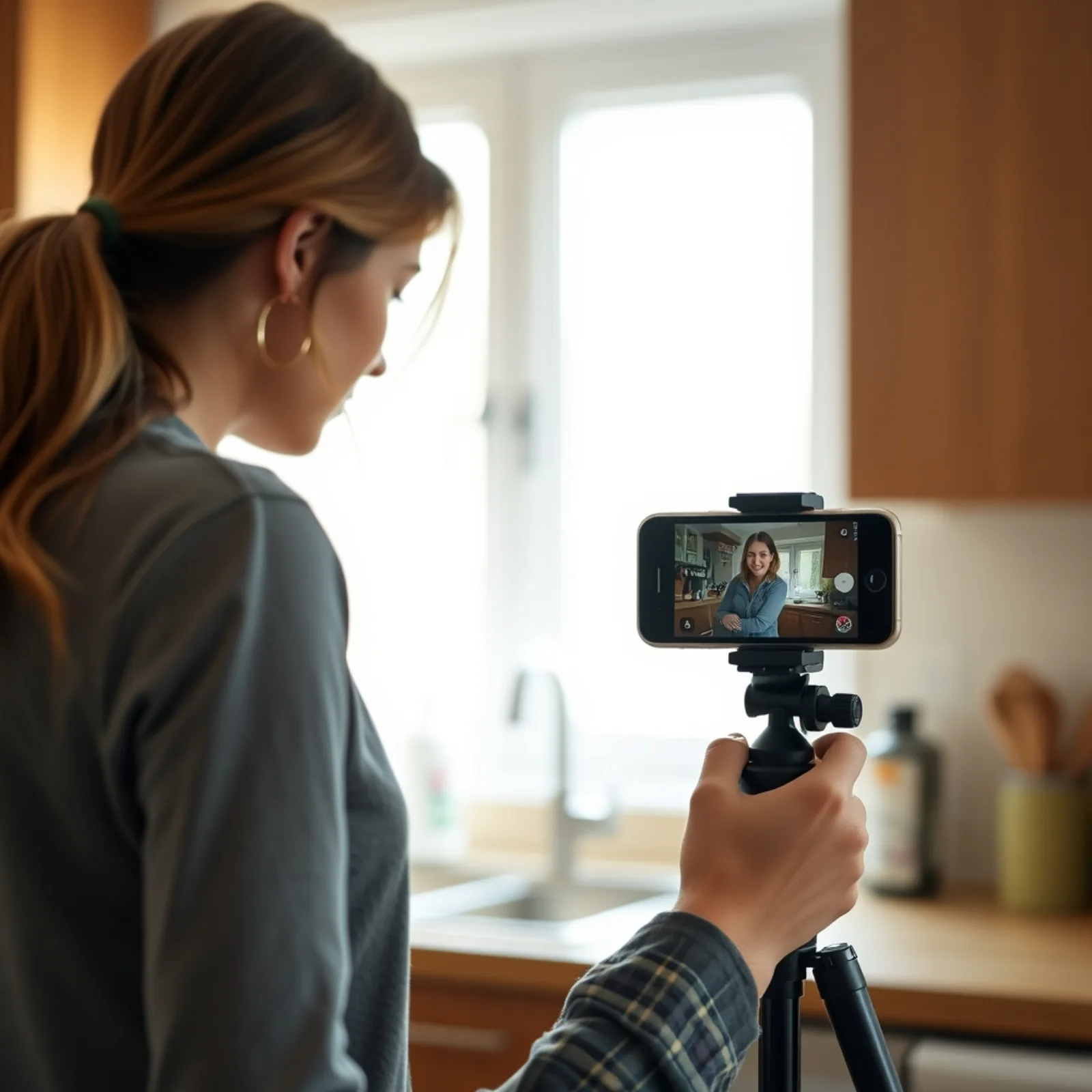
Why does a portfolio not predict performance, and what should you look at instead?
A UGC portfolio is a sample selected by the seller: five videos chosen out of two hundred, often edited, colour-graded and subtitled by the client agency that commissioned them. You are looking at someone else's work. The creator supplied the raw material, not the result.
We ran the exercise in-house: on a batch of creators selected on portfolio alone, a good third could not reproduce the level shown once we gave them a different script. Not out of bad will. Because the portfolio video had been shot in good conditions, with a product they knew, and rescued in the edit.
The 5 signals you can really read in an existing video
- The raw sound. Mentally cut the music. Can you hear the room? The echo of an empty living room is hard to fix. Ask for a video without added music or voice-over: a refusal is a signal in itself.
- The native light. Window and daylight, or a frontal ring light that flattens everything? The second gives an “advert” look that cancels out the UGC effect you are paying for.
- The pace under a script. Spot the videos that are obviously sponsored and compare them with the creator's personal videos. The gap in energy between the two tells you everything about their ability to carry an imposed text.
- Consistency between videos. Three videos shot in three different settings: a creator who knows how to vary. Three videos from the same angle of the same sofa: a single creative that you will end up buying six times.
- Traces of external post-production. Kinetic subtitles, packshot b-rolls, motion design: if the whole portfolio is at that level, ask for the original rushes. You are buying a person in front of a camera, not an editor.
La Fabrique du Net puts it well in a 2026 analysis: a well-argued casting shows videos already shot by each creator proposed, not a follower count, and provides for several hooks, lengths and formats. That is the minimum. Our position is even tougher: even with real videos in front of you, you do not sign a series without a paid take on your own product.
How do you build a 40 → 12 → 5 → 3 casting funnel?
A useful UGC casting is run like a recruitment funnel: four rounds, one precise deliverable at each round, and a pass rate that you measure. Here is the protocol we apply to build a group of three creators for a product category.
Round 1, source 30 to 40 profiles (2 to 4 hours)
A short call-out or a manual search, whatever the channel. What we require from the application: two links to videos where the creator speaks to camera, a photo of the place where they usually shoot (yes, a photo of the setting), their rate for a 30-second video with 3 months of Meta rights, and their invoicing status. Four pieces of information, no fifteen-field form. Incomplete applications drop out: that is already a test of reading a brief.
Round 2, shortlist 12 on real videos (1 to 2 hours)
We run the 5 signals from the previous section, headphones on, sound first. In our castings, the pass rate from round 1 to round 2 is around a third; in other words, out of 36 applications, we keep about a dozen. This ratio moves a lot depending on the channel: it rises with an agency pool that has already been filtered, and collapses with an open call-out posted in a Facebook group.
Round 3, 5 paid tests on your product (the round that decides)
We keep 5 profiles and commission a test take paid €20 to €30: a single 15 to 20-second take, an imposed hook, the product in hand, no editing requested, raw file. Lead time: 72 hours. Three variants of the same hook if the creator wants to maximise their chances.
This test costs little and buys four pieces of information no portfolio gives: the sound quality in their flat, the way they say your text, their ability to vary, and above all whether they meet the deadline. Paying for the test changes the whole relationship: you become a client, not a recruiter asking for free work. And it is not only a matter of ethics: serious creators refuse free tests, so an unpaid casting mechanically selects the most available, not the best.
Round 4, keep 3, score, contract
We score the 5 takes on the grid below, keep 3, and keep the other 2 in named reserve (not “we'll get back to you”, but “you are in reserve, I'll write to you within 6 weeks if we expand”). This reserve is what makes a recast painless three weeks later.
| Criterion (scored out of 5) | What we actually observe | Elimination threshold |
|---|---|---|
| Credibility as a user | Do they handle the product like someone who uses it? | ≤ 2: eliminated |
| Raw sound | Listen on headphones, no music: echo, hiss, neighbours | ≤ 2: eliminated |
| Pace and naturalness | Are they reciting? Do they look above the lens? | ≤ 2: eliminated |
| Available setting | Number of usable rooms, daylight | Only 1 angle: penalised |
| Reliability | 72-hour deadline met, file in the right format, naming respected | Late with no message: eliminated |
| Ability to vary | 3 hooks on the same script: are they really different? | 3 identical takes: penalised |
Reliability weighs more than you might think. A creator scored 5/5 on naturalness to camera but who delivers four days late costs far more than a punctual 3.5/5, because they push back your media calendar. We weight accordingly: reliability and sound count double in our total.
Once the three creators are chosen, the casting no longer guarantees anything: everything is played out again in the writing of the brief. The four locks to put in place are detailed in how to brief a UGC creator.
How much does a UGC casting really cost, and what is its waste rate?
A serious casting of three creators costs between €450 and €800 all-in, which is a cost per creator kept (CPCK) of €150 to €270, and this cost appears on no agency quote. It is nonetheless a production line like any other. Here is the calculation, with the orders of magnitude we have observed on French castings in 2025-2026.
| Casting line item | Volume | Unit cost | Total |
|---|---|---|---|
| Sourcing + sorting the 40 profiles | 4 h | €60/hour (internal time valued) | 240 € |
| Paid test takes | 5 | 25 € | 125 € |
| Products sent + postage | 5 | cost price + €7 postage | 80 à 150 € |
| Scoring, exchanges, contracting | 2 h | 60 €/h | 120 € |
| Total for 3 creators kept | , | , | €565 to €635 → CPCK ≈ €190 to €210 |
These amounts are a calculation model, not published data: they come from our own castings and move with the price of your product and the hourly rate you use. Now amortise. Three creators who each deliver 6 videos over a quarter make 18 videos: the casting adds about €33 per video. The same three creators used for 2 videos each is €100 per video of extra cost. Hence the rule: you do not cast for a campaign, you cast for a quarter. The rates for the video itself are detailed in the 2026 UGC creator rate card and its 5 hidden costs.

The recast rate: the metric nobody publishes
A recast is the replacement of a creator before their third deliverable. Even with a paid test beforehand, we regularly see one in four to one in five on a starter series. The causes are always the same: availability that collapses after the first order, a house move that makes the setting disappear, or a creator who accepts a competing brand in parallel.
We do not know how to bring this rate below about 15%, and we distrust any provider who promises zero recasts. What we do know how to do is make it free: two profiles in named reserve, a contract that provides for replacement, and a shooting schedule that never depends on a single person.
The real price of a casting is not read in the paid tests, but in the three weeks of media delay caused by a creator chosen on a portfolio.
What should the contract contain before the first take: rights, exclusivity, recast?
Five clauses decide the real value of your casting: duration and scope of rights, Spark Ads authorisation, sector exclusivity, replacement clause, and the creator's invoicing status. Everything else is negotiable.
- Duration and media of the rights. The market standard in France is around 3 months, paid social use. In market practice, an extension to 12 months or the addition of Spark Ads is generally negotiated with a significant premium, to be priced case by case. Price the extension before the shoot, never after: once the video is a winner, your negotiating power is zero.
- Spark Ads / whitelisting. It is not included in a standard UGC purchase. You need an authorisation code, a duration, and an explicit statement that the ad will be served from the creator's account. According to TikTok's Spark Ads creation guide, it is the creator who decides whether to give the brand the code authorising the use of their post in a Spark Ad.
- Sector exclusivity. How many months, on exactly which category? “Cosmetics” is too broad and will be expensive; “anti-ageing facial care” is workable. Also ask your agency how it manages exclusivities between competing brands in its pool: an agency that works with the same fifteen creators delivers campaigns that look alike, including at your competitors.
- Replacement clause. Who pays for what if the creator drops out after the first deliverable? With an agency, demand the recast without re-billing of the sourcing. Going direct, provide for a limited non-refundable deposit.
- Status and invoicing. Does the creator invoice? Under what status? The question is not administrative, it is financial: a casting that ends in being legally unable to pay blocks the whole series.
What you can demand contractually also depends on the degree of authenticity you are buying: a real customer giving a testimonial, a creator playing the role of a customer, or an openly acknowledged actor do not carry the same disclosure obligations. The full grid is in authentic or simulated UGC: the 5 degrees, the prices and the law. According to the DGCCRF's 2024 review, more than 260 influencers were inspected in 2024 and 40% showed anomalies, leading to 40 warnings, 65 compliance orders and 8 criminal reports.
And here is what we do not know, because it needs saying: the French legal framework applicable to commercial influence is evolving, and we will not publish an interpretation of the 2026 law without a primary source to back it up. A written contract, a mention of the commercial nature, maximum vigilance with underage creators: these are common-sense reflexes, not legal advice. Have your contract template reviewed by a lawyer. Once. It will serve for the next fifty castings.
How do you know a casting has failed, and when should you recast?
A casting has failed when a creator's second deliverable is still non-compliant with the brief after one written round-trip, not before, and above all not after. Before, you are confusing running-in with incompetence. After, you are paying for videos you will not use.
The warning signs are very concrete: more than 48 hours late with no message, sound degraded compared with the test take, refusal to redo a take, a file compressed through a messaging app instead of the upload link requested. Taken in isolation, none is serious. Two together, and you switch to the reserve.
A safeguard, because the mistake is common: if all three creators miss the same point, it is not the casting that failed, it is the brief. Three different people, three different settings, one and the same flaw: the cause is on your side. We saw a small-appliance brand recast twice in 2025 before admitting that its script required a demonstration impossible to film alone with a phone. The fourth casting would have changed nothing.
Measure three things on every casting and you will never have this debate again: the round 1 → round 2 pass rate, the median time between brief sent and first take received (for us, it runs around 5 to 7 days when the product is already with the creator), and the recast rate before the 3rd deliverable. Three figures in a spreadsheet. By the third casting, you will know which channel suits you, and how much your company really pays to find a person who knows how to talk about your products.
One last thing, and it goes against the commercial interest of any agency, ours included: learning to cast UGC creators in-house is one of the few marketing skills that does not depreciate. Platforms change, formats change, media costs rise. A pool of twelve tested, scored, contracted carriers, available within ten days: that stays. And it is bought once, not every quarter.
Frequently asked questions
- Should you look at the follower count when casting a UGC creator?
- No, unless you plan to use Spark Ads or whitelisting. With pure UGC, the video is run on your ad channels: you are buying a creative asset, not an audience. A creator with 300 followers who can carry a script without reciting it is worth more than an account with 50,000 followers whose delivery is artificial. The account only becomes a criterion if it carries the distribution.
- How much should you pay a UGC creator for a test take?
- Between €20 and €30 for a raw 15 to 20-second take, delivered within 72 hours, with no editing. This amount covers their time without committing you to the series. A free test selects the most available creators, not the best: established profiles systematically refuse to work without payment, even on a short format.
- How many creators do you need to source to keep three?
- Allow 30 to 40 profiles sourced for 12 shortlisted, 5 paid tests and 3 creators kept. In our castings, the pass rate from the first to the second round is around a third, with large variations depending on the channel: an agency pool that has already been filtered goes much higher than an open call-out.
- Is a UGC creator's portfolio enough to select them?
- No. A portfolio is a sample chosen by the creator, often edited, colour-graded and subtitled by the client agency that had commissioned the video. You are judging an editor's work. Ask for an unedited rush, listen to the sound on headphones with no music, and commission a paid take on your product before committing to several videos.
- What is the recast rate and what should you expect?
- The recast rate measures the share of creators to be replaced before their third deliverable. We see one in four to one in five on starter series, even after a paid test. The dominant causes: availability that collapses, a lost setting, or a direct competitor accepted in parallel. Keep two profiles in named reserve.
- Should you cast yourself or let the agency do it?
- It depends on the internal time available, not the budget. Without someone for whom it is part of the job to write briefs, track deliveries and manage rights, the saving from casting direct is paid for in lost hours. If you delegate, negotiate a veto right on every profile and a recast without re-billing of the sourcing.
Let's build your pool of tested creators
Choosing a creator on a portfolio is buying a video at random. Esekai casts, tests and contracts the people who carry your creatives, then produces your vertical videos in-house for TikTok, Reels and Shorts, with a dedicated Creative Strategist and fast iterations. We do only one thing: vertical video. At the meeting, 30 minutes: formats, budget, action plan. No agency pitch deck.
Book a call →30 minutes to talk formats, budget and action plan.