

A well-produced video is not enough if it is hard to follow in the feed or if its message arrives too late. When preparing your script and organising the production stages, how to create a video ad depends first and foremost on the objective, the audience and the intended placement.
Ready to produce? Esekai is a creative ads and video ads agency that plans, shoots and edits vertical videos for brands, with measured results in our case studies.
A Facebook video ad has to grab attention without the context of someone choosing to visit your website. Creating one therefore calls for concrete decisions: format, hook, subtitles, call to action and success metric. A creative designed for an awareness campaign is not judged in quite the same way as an ad intended to drive purchases.
Which formats should you prepare for Facebook placements?
Picture the same creative shown in the feed, full screen in a Story or in a Reel. A single framing may leave too little room for the product in one placement, or cut off text in another. So plan your variations around the placements you intend to use.
The vertical 9:16 format generally suits full-screen experiences such as Stories and Reels. For the feed, a square or less elongated vertical framing may make better use of the available space. These are creative guidelines, not universal specifications: check the requirements and the preview for each placement in Ads Manager before going live.
| Placement | Working format | Watch out for |
|---|---|---|
| Facebook Feed | Square or vertical | Make the message understandable without reading the accompanying text. |
| Stories and Reels | Vertical 9:16 | Keep the subject and key text away from the edges. |
| Running across several placements | Tailored variations | Check each preview rather than assuming a single framing works everywhere. |
Choosing ratios, placements and variations is covered in detail in our article on Facebook ad formats. For a multi-placement campaign, plan the variants from the shoot brief onwards: this avoids discovering after the edit that an important shot cannot be reused.
Take Care Over the First Few Seconds and the Flow of the Message
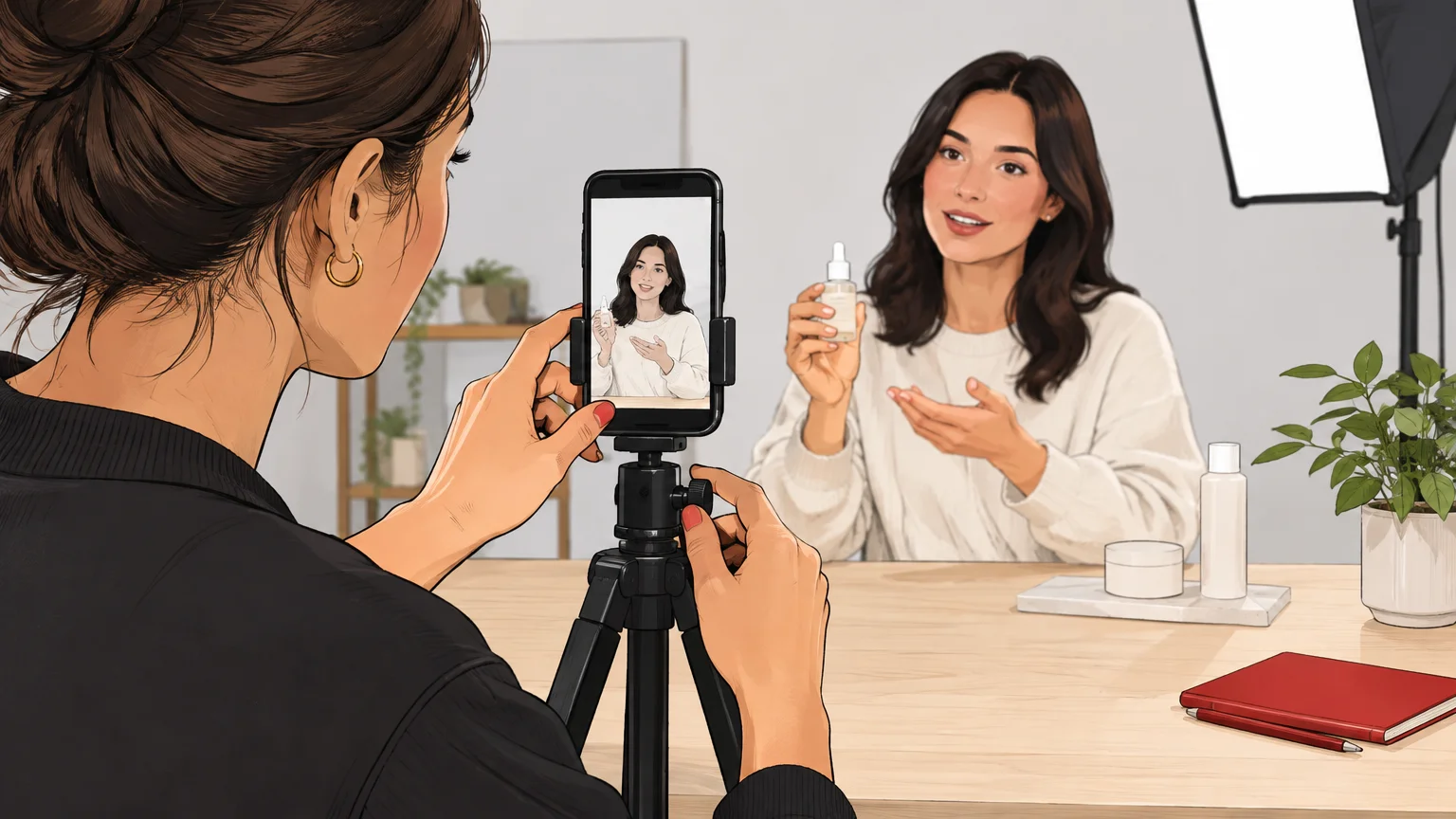
Before filming, sum up the main idea in a single sentence. For example: "This cream goes on quickly and leaves a radiant finish." Open with the visible result, a relevant question or a demonstration. A long intro or a logo shown for several seconds delays the reason to keep watching.
An article published by Meta in 2018 reported that a Nielsen study commissioned by Facebook attributed half of a campaign's recall and purchase intent value to the first three seconds. This figure is historical and comes from a study commissioned by the platform; it is not a performance benchmark for 2026. It nonetheless remains a useful reminder to work carefully on the opening of your creative, without treating it as a promise of results.
A product demonstration, a testimonial or a usage scene can then develop the idea. For a restaurant, you might show a dish being prepared, then the experience on offer and the practical information to remember. The video must remain understandable without sound: add legible subtitles and keep each sequence to one idea.
Link the Creative to Campaign Metrics
An ad designed to raise brand awareness is not measured in the same way as a purchase campaign. Decide upfront what you want to achieve: reach, views, clicks, enquiries or purchases. Then choose the metric that matches this objective and compare variants using the same measure.
Emplifi's benchmark report published in 2026 analyses brand posts on Facebook published worldwide in 2025. It shows a median of 8 interactions for standard video posts and Reels, compared with 37.5 for live videos. These results relate to brand posts, not exclusively paid ads, so they cannot be used to predict the conversions of a video campaign.
For an acquisition campaign, track meaningful clicks, cost per result and attributed conversions instead. If views are high but clicks remain low, rework the offer, the hook or the call to action. If clicks are high but purchases don't follow, also check the landing page and the consistency between the ad's promise and the user journey on offer.
Organise Campaign Production and Management
An effective brief sets out the audience, the objective, the product to showcase, the proof to show and the expected action. It also specifies the placements and variations required. A single shoot can provide several openings or demonstrations to test, provided these variants are planned in the script and the edit.
Production and media management are two separate tasks, even though they complement each other. We produce scripted, filmed and edited videos, and we can also support campaign management on Meta Ads. This can include campaign structure, targeting, A/B testing and retargeting. To find out more about the scope of this support, see our Facebook Ads agency page.
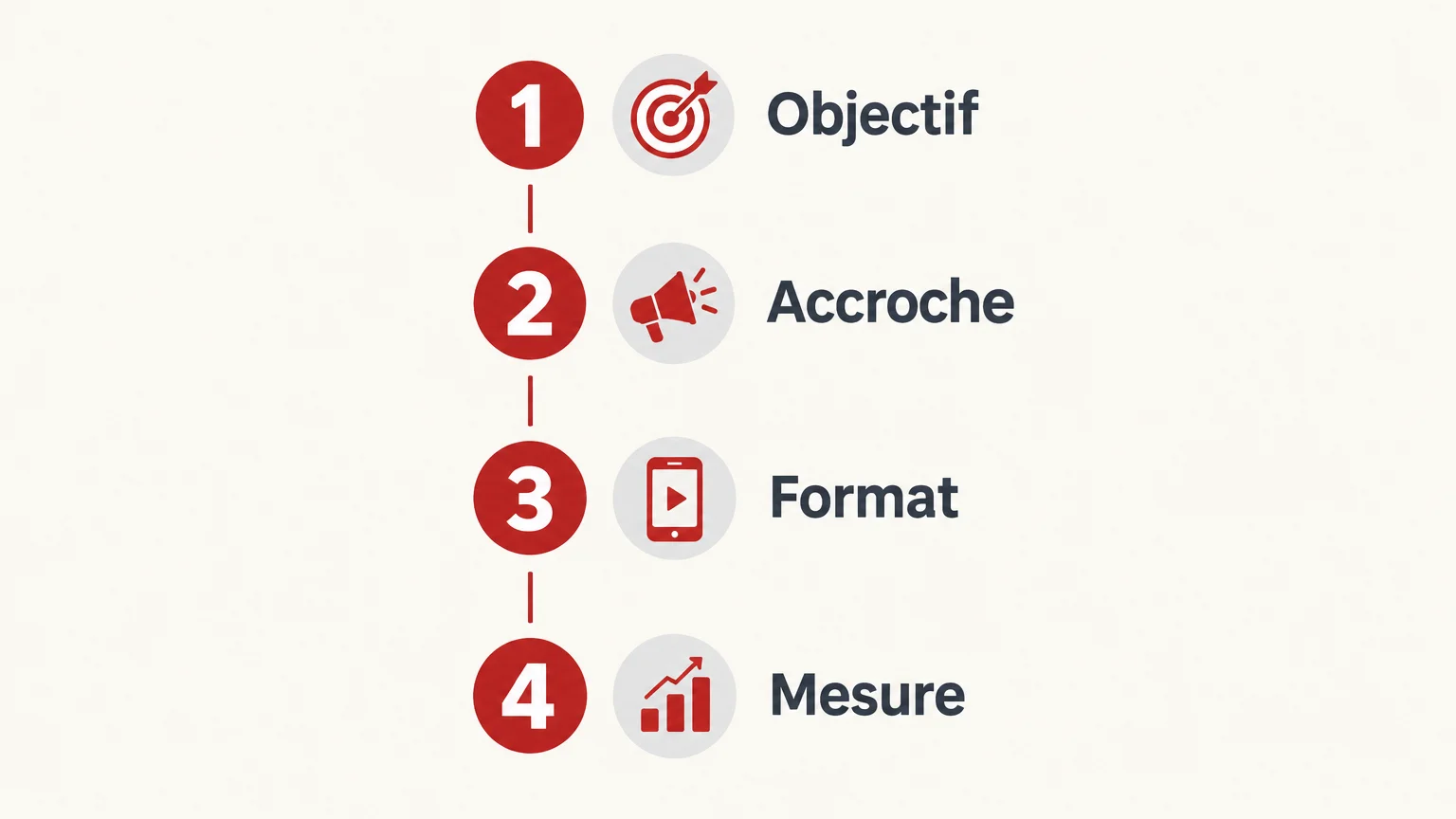
You can compare the results of two hooks without changing the audience, the budget and the landing page at the same time. This approach makes the results easier to interpret. When a team lacks the time to write, shoot and adapt its content, we can take care of production alone or combine it with media management.
What Budget Should You Plan for the Video and Its Distribution?
Plan for two separate lines: the production cost and the media budget spent on the platform. The latter funds the campaign's distribution; it does not pay for scriptwriting, the shoot or the edit. To understand the items that affect the cost of a campaign, see our page on the cost of a Facebook ad.
In France, video advertising spend reached €1.63 billion in the first quarter of 2026, accounting for 42% of the overall advertising market, according to the BUMP report published by IREP and its partners. This estimate covers the video market as a whole, across all channels, and is not an indication of the budget to allocate to Facebook.
For brands moving beyond the testing phase, we often use a media budget of €1,500 to €3,000 per month as a starting benchmark. This amount does not include creative production and is not mandatory for every campaign. Set your budget according to your objective, your margin, the expected volume of conversions and the time needed to compare variants.
Key Takeaways for Your Video Campaign
A Facebook video ad starts from a clear objective, then is built around a clear hook, a format suited to the placement and a consistent call to action. Prepare the variations you need, check how they render before going live and measure results with the metric that matches your objective, without confusing interactions, views and conversions.
Get Your Creatives Produced and Your Campaigns Managed
From scriptwriting to editing, an ad creative requires coordination between message, shoot and variations. We support brands from vertical video production through to Meta Ads campaign management, according to the scope defined for each project.
We have worked with more than 350 brands. Our cumulative figures show over €50M in revenue generated and 500M views; these totals are neither an average per client nor a promise of results. To discuss your objectives and media set-up, discover our support as a Meta Ads agency.
Frequently Asked Questions
What format should I choose for a Facebook video ad?
Choose the framing according to the intended placement: vertical for full-screen delivery, square or a less elongated vertical format for the feed. Check each preview in Ads Manager before launch.
How long should a video ad be?
Keep only the length needed to present the idea and prompt action. A simple demonstration can be short, whereas a testimonial or an explanation sometimes needs more time.
Should I add subtitles to my video?
Yes, subtitles let viewers follow the message when the sound is off. Make sure they remain legible and don't hide the product or important information.
Which metric should I track to measure a video campaign?
Choose the metric linked to your objective: views for attention, clicks for traffic, or purchases for conversion. Views alone are not enough to assess sales.
Can video production be separated from media management?
Yes, production and media management are separate services that can be carried out together or independently. We can produce the creatives, support the Meta Ads campaign, or combine both depending on the project.