

Can a fifteen-second video hold attention if it carries no clear idea? Short form is not a strategy in itself: you need to choose a message, a format and an action. To move from concept to production without losing that consistency, we provide TikTok video production for brands that want content tailored to the platform.
Snack content, or easily consumable content, gets an idea across in little time or space. It can take the form of a vertical video, a carousel, a story, an infographic or a short piece of text. The right format depends on the subject, the audience and what you want them to understand or do next.
What Does Snack Content Mean?
A tutorial in a few shots, a Q&A or a series of captioned images can all count as snackable content. What they have in common is not a shared maximum length. It is their ability to present one main idea clearly, in a format that can be skimmed quickly.
So the term does not refer only to viral videos, nor to a type of post reserved for one social network. A short clip explaining how to use a product, a carousel summing up three tips or a brief quote with commentary can all serve this purpose. The content stays useful when it can be understood without forcing the audience to piece together the context of a long video.
In 2026, a summary by Arcom states that 70% of French people aged 15 and over watch videos on social networks or video-sharing platforms. It distinguishes in particular between use on social networks, at 62%, and on video-sharing platforms, at 57%, two practices that can overlap. These figures show the importance of video, without meaning that every message should become a short video. The Arcom summary sets out this scope.
Which Short Formats Suit Which Message?
To show how to use a product, a filmed demonstration can make the gesture visible. To compare several options, a carousel gives readers time to look through them. To prompt a response, a question in a story or a short talking-head clip may work better than an infographic.
Platforms support different uses, even when the formats look alike. In an opinion published in 2026, the Autorité de la concurrence reports that, among 201 creators surveyed, 61% cite short formats as their dominant video format, compared with 26% for long-form video and 8% for live streaming. This result describes these creators' answers, not how well the formats perform for every brand. It is also a reminder that a widespread format is no substitute for choosing a relevant angle. To refine a TikTok-specific approach, read our article on TikTok content for brands.
Why Isn't Brevity Enough on Its Own?
A brief sequence can still be confusing if it contains too many ideas. Before filming or creating a visual, sum up in one sentence what the audience should remember. That sentence then guides the hook, the examples chosen and the conclusion.
A simple structure helps keep the message sharp: an opening that sets out the subject, a demonstration or useful piece of information, then a suitable next step. For a cosmetics brand, a single piece of content can show a texture, an application gesture and the relevant benefit. It does not need to tell the whole story of the range in the same video.
Nor does brevity mean that every piece must adopt a spontaneous tone or the same look. A presenter-led video, a highly graphic visual and a scripted ad meet different needs. Presenter-led content: definition and costs helps distinguish a person speaking on camera from the short format itself. A brand can combine these approaches without confusing them.
What Can You Hand Over to a Social Media Video Agency?
An agency can step in from the scoping stage: understanding the objective, choosing topics, developing scripts, organising the shoot and editing the content. It then prepares versions adapted to each platform, rather than automatically posting an identical version everywhere. This continuity helps keep the message recognisable from brief to delivery.
Production can end with the handover of files or include other elements, such as managing posts and running paid campaigns. It is worth specifying these needs from the outset. The number of videos, the use of actors or creators, shoot locations and the level of follow-up all affect the scope of the project.
To see these steps in practice, watch how a team organises a day of creation and shooting.
How Do You Choose a Partner and Measure the Work?
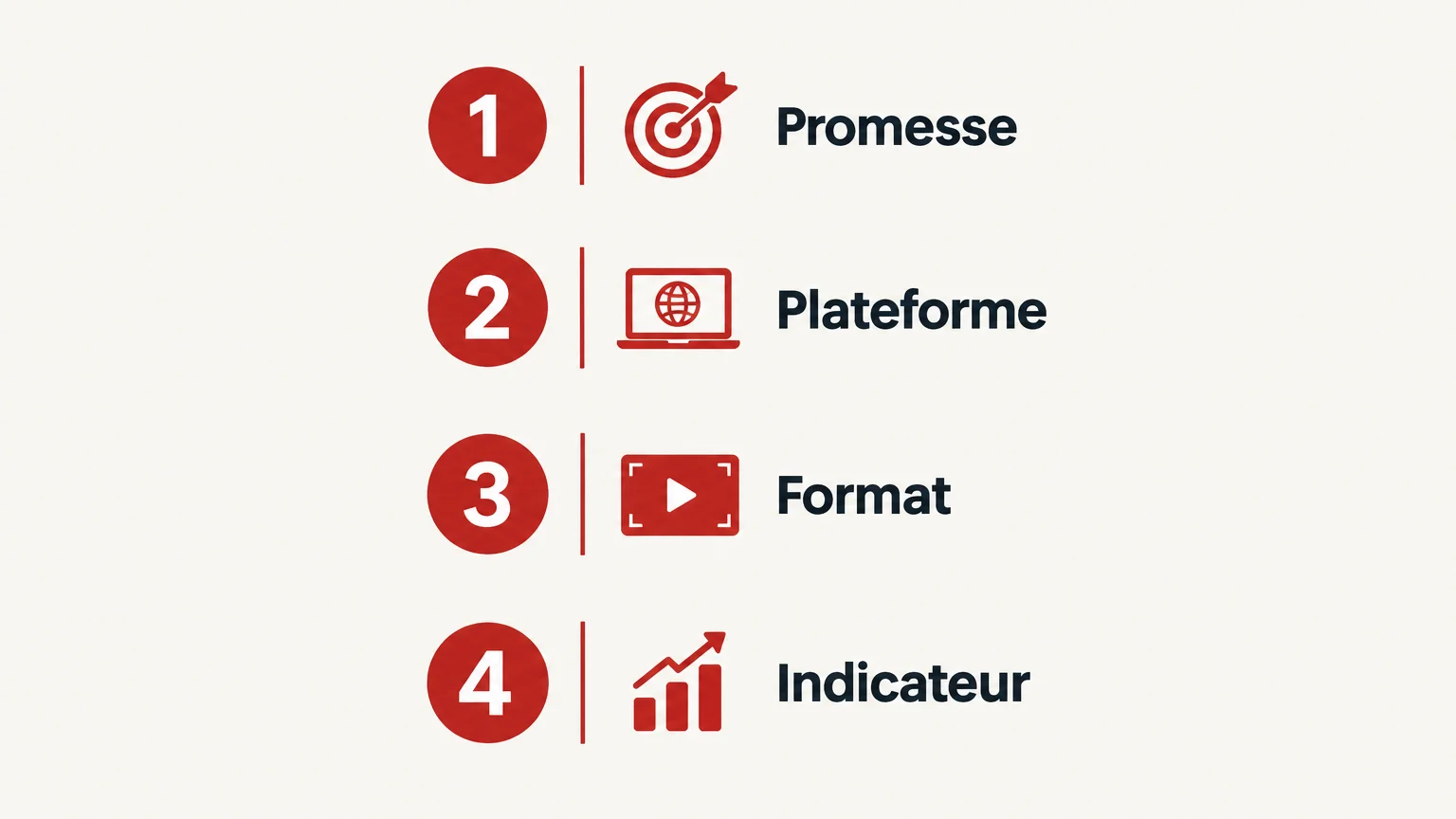
Before choosing an agency, check how it links creative work to your audience and objectives. Ask for a sample script, the approval stages, the formats delivered and the metrics tracked. For a food brand, topics might start from a cooking technique, a tip or a product. A study carried out in March 2026 by Webedia and Episto among 1,004 people in France reports that 54% of 18 to 64-year-olds, and 62% of 18 to 34-year-olds, would like to see more food content on social media. These figures relate to expectations around food content, not to campaign performance. See the Webedia and Episto study for this specific context.
Next, choose metrics that match the role of each piece of content. Retention and completed views tell you about attention; interactions show whether the topic sparks a reaction; clicks and conversions shed light on the response to a campaign. An awareness piece and an ad aimed at driving purchases should therefore not be judged by the same primary metric.
At Esekai, strategists, videographers and editors cover production from script to delivery. We distinguish between ad creatives, UGC-style videos and organic content, then adapt each piece to the conventions of each platform. To compare proposals, ask who writes, who shoots, who edits and who analyses the results, rather than looking only at the number of videos.
Snack Content: The Key Takeaways
Relevant short content fits into one clear idea, uses a format suited to the message and serves a specific objective. To assess an agency, look at its ability to connect strategy, writing, production and measurement, then check that the deliverables match your platforms and audiences.
Short Videos Tailored to Your Social Channels
Want to turn your ideas into short content without losing your brand's consistency? The choice of topics, the level of production and the variations should match your objectives and how your audience uses each platform.
We have worked with more than 350 brands. Our in-house team of strategists, videographers and editors handles scripting, shooting, editing and delivery. We produce creative ads, UGC videos and organic content, tailored in particular to TikTok, Instagram Reels and YouTube Shorts. Discover our vertical video production, on its own or combined with media or social media support. Each project is quoted according to the volume of videos and the level of management required.
Frequently Asked Questions
What Is Snack Content?
It is short, easy-to-skim content built around one main idea. It can be video, text or graphic.
Does Snack Content Always Have to Be Video?
No, a carousel, an infographic, a story or a short text can also get a message across quickly. The format depends on the subject and the audience.
What's the Difference Between Snack Content and UGC?
Snack content describes short, easily consumable content. UGC refers to a style of delivery inspired by content from creators or users, and can also be short.
How Do You Measure the Effectiveness of Short Content?
Choose a metric linked to its objective, such as retention for attention or clicks for traffic. For a conversion campaign, also track the actions taken after the click.
What Can a Social Media Video Agency Handle?
It can support you from strategy and scriptwriting through to shooting, editing and delivery. Depending on your needs, the service can also include social media management or media buying.