

The right format is never chosen in isolation: it must serve the action you expect and match your ad's placement. To stop a visual being cropped or losing its message on mobile, start from the destination aspect ratio and prepare suitable variations, particularly 9:16 and 4:5 video formats for advertising.
Facebook ad formats cover image, video, carousel and experiences designed for Stories, Reels or lead generation. The format describes the creative, whereas the placement refers to where it appears. This distinction helps you choose a consistent message, framing and call to action, rather than running the same file everywhere.
Which Facebook ad formats should you use?
To choose, start with the content you want to show. The image format presents an offer or an idea at a glance. Video lets you show a use case, a demonstration or a story. The carousel spreads several visuals across cards that users swipe through.
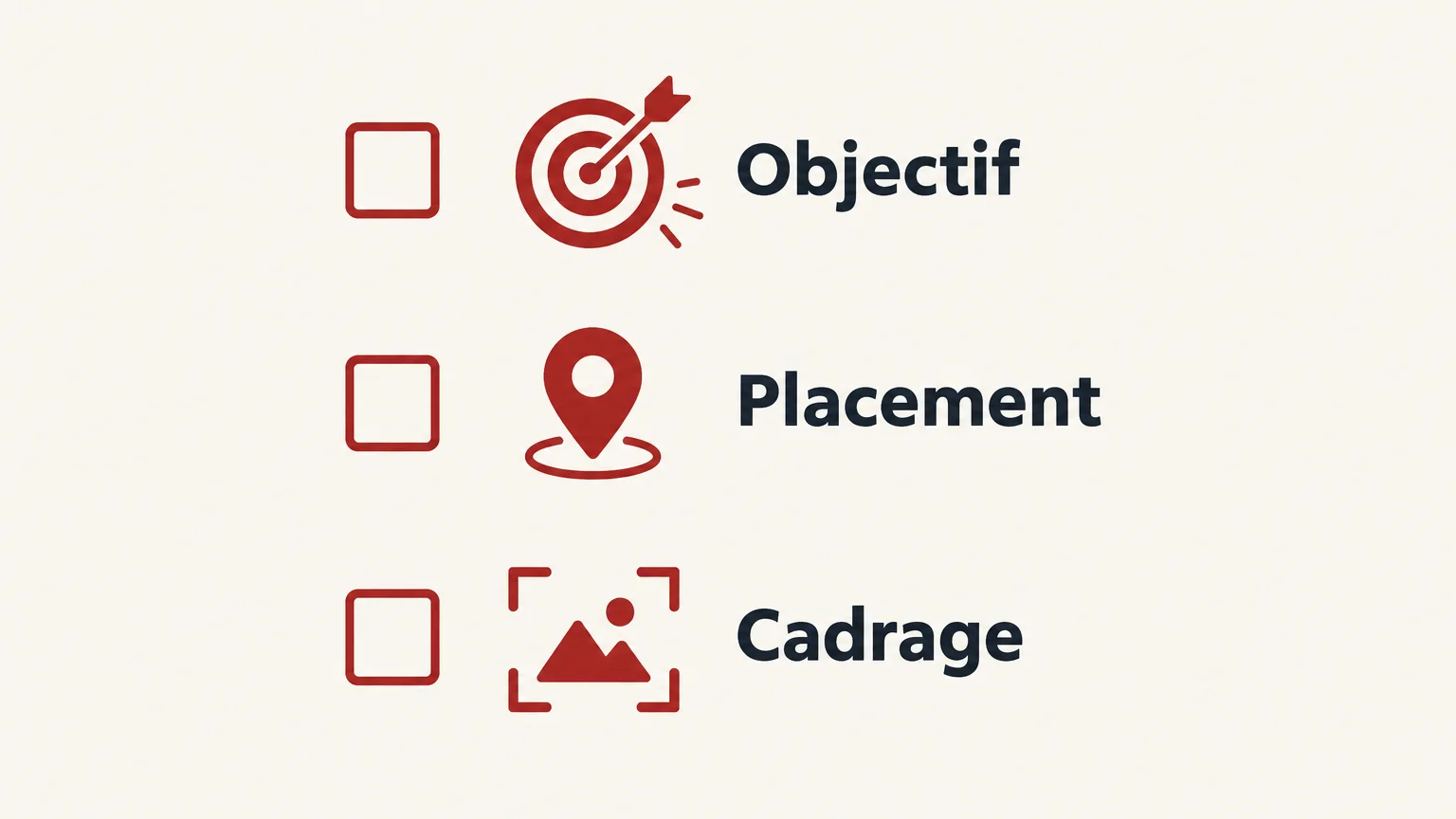
Collections and Instant Experiences round out these options for presenting more in-depth content. The guide to Facebook ad formats lists these creative types along with their main placements. Above all, remember that the campaign objective, the creative and the placement are linked, but they are not the same thing.
An ad designed to raise awareness of a product doesn't need the same flow as a creative aimed at generating enquiries. For a simple offer, a clear image may be enough. To explain a process or showcase several products, a video or a carousel gives the story more room.
Placement determines how the creative is framed
Picture a square visual designed for the Feed, then displayed full screen in a Story. The subject may end up too small or badly framed. Planning for the placement from the design stage keeps the product, the text and the call to action visible.
In a specifications summary checked in 2026, Kitchn.io pairs the 4:5 format with the Feed and 9:16 with Stories and Reels. The same page states that carousels contain between 2 and 10 cards. Check the Meta Ads specifications and confirm the options available in your Ads Manager before preparing your final files.
If you also run ads on Instagram, adapt the framing to how the Feed and full-screen placements are used, rather than automatically duplicating the creative. You can compare Instagram ad formats to plan these variations ahead.
Image, video or carousel: which should you choose?

A single offer and a precise promise often lend themselves to a static image. Show the main benefit, keep the on-image text short and place the call to action clearly. This approach makes for an ad that is easy to scan in the Feed.
To explain a use case or grab attention with a demonstration, choose video. Adapt the pace and framing to the placement, and keep the main message visible even with the sound off. A vertical video creative may need a separate version for the Feed.
The carousel works well when each card brings useful information: different products, steps of use or product features. Make sure you create a coherent sequence, with a logical link between the cards. If several cards repeat the same promise, a single image or video will often be easier to read.
How do you match the format to lead generation?
Are you looking for enquiries rather than simple views of your ad? Pair a direct visual with a clear call to action and a form or contact journey suited to your campaign. Choosing the format is no substitute for choosing the experience offered after the click.
An image can present an offer and its benefit in a few seconds. A video can explain who it is for and what people can expect. In both cases, only ask for the information you really need and make sure the ad content matches the rest of the journey.
To connect creative and distribution, we work on strategy, variations and campaign management. A specialist Facebook Ads agency can also structure testing and targeting around your brand's objectives.
How do you test creatives before scaling them?
Before comparing results, make sure each creative suits its placement. Metadata.io's documentation, consulted in 2026, advises keeping key elements away from interface areas that may overlap Stories and Reels. Read its formats documentation and check the preview of each ad.
Then test one variable at a time, such as the visual or the hook, so you understand what sets the versions apart. Compare the metrics that match your objective, such as clicks for a traffic campaign or enquiries for a lead campaign. We can also design video retargeting sequences on Meta to tailor messages to audiences who have already engaged.
Keep tracking simple: name each variant, note its placement and link it to its result. If you then scale a creative, check that its framing still suits the chosen placements.
Key takeaways for choosing your format
To choose consistent Facebook ad formats, start from the action you expect, then select a creative that expresses your message clearly. Image, video and carousel meet different needs. Prepare aspect ratios and framing according to placements, check every preview and test variants against a measurable objective.
Prepare creatives tailored to your campaigns
The format is easier to choose when the message, placement and objective are defined together. A creative designed for its placements from the outset avoids last-minute adaptations at launch.
We support brands from strategy and scriptwriting through to shooting, editing and creating variations. We can also handle media management, including targeting, testing and retargeting. Having worked with more than 350 brands, we tailor our work to the objectives and content of each project. Discover our Meta Ads agency to discuss your campaigns.
Frequently asked questions
What are the main Facebook ad formats?
Common options include image, video and carousel ads, as well as experiences such as collections. The best format depends on the message and the chosen placement.
Which format should you choose for a Feed ad?
An image suits a simple offer, whereas a video more easily shows a product in action. The carousel lets you present several items in a single ad.
What aspect ratio should you use for a Story or Reel ad?
The vertical 9:16 ratio is designed for full-screen placements. Check the recommendations that apply to your ad and review how it looks in the preview before publishing.
Is a lead form ad a visual format?
The form is the conversion journey, whereas the image or video is the visible creative. Combine the two with a clear, consistent call to action.
How do you produce variations suited to Meta Ads campaigns?
We can handle content strategy, scripts, shooting, editing and ad variations. Media management can complement production depending on the project's needs.