

A UGC video can grab attention without contributing to the commercial objective if its role has not been defined. To optimise your UGC marketing campaign with a checklist, start from the result you want, then link each piece of creative to a measurable action. We also cover the KPIs to track to measure UGC performance, so that creative choices and the final review rest on the same criteria.
User-generated content takes many forms: testimonials, demonstrations, reviews or real-life scenarios. For a campaign to be usable, you need to plan the creative work as carefully as the distribution and evaluation arrangements. A checklist helps your team keep these elements aligned, from the initial scoping to the adjustments after launch.
What objectives should you set before contacting a creator?
Start by specifying what the campaign needs to achieve. Are you trying to raise awareness of an offer, drive visits, generate sales or feed your social accounts? A video designed to present a product will not necessarily have the same scenes or the same call to action as a piece of creative built for conversion.
Choose one priority objective, then express it in concrete terms. For example, a sales campaign might aim to generate purchases on a product page, while an awareness campaign is primarily about introducing something new. This choice will guide the message, the format, the channel and the main indicator.
Next, describe the target audience: its needs, its questions and the objections that might hold back its decision. For a cream, the content could show its texture and how it is applied. For a service, it could explain a step that is often misunderstood. These details stop you from asking the creator for a generic video with no clear link to the purchase journey.
A Precise Brief Turns an Idea into Usable Content

Imagine two creators given the instruction to “talk about the product”. One records a testimonial, the other films a demonstration; without further guidance, you cannot tell which one meets the campaign’s needs. A creative brief clarifies the message without dictating every move or erasing the creator’s voice.
Specify the elements that genuinely shape the creative: the audience, the problem the product solves, the benefits to present, the available proof points and the wording to avoid. Add the expected scenes, the format, the target length, the number of versions and the approval schedule. An example of a video opening or tone can steer the production without imposing a rigid script.
Also state the agreed usage rights: platforms, duration, territory and any advertising use. Separate deliverables intended for organic posting from those planned for a paid campaign. If you are looking to structure these guidelines, see how to brief a UGC creator. Choosing the right profiles matters too: the protocol for casting UGC creators can help you compare applications based on how well they fit the project.
How do you adapt content to each platform?
The same idea can be rolled out across several channels, but an identical copy does not always suit each one. Take into account the required format, subtitle placement, editing pace and the way the audience discovers videos. Check these elements before the shoot to avoid endless rounds of revisions.
Plan reusable elements, such as several hooks or additional shots, if you want to compare versions. Keep a clear link, however, between each version and its objective. Swapping only the music while keeping a poorly suited message is not a meaningful test.
TikTok’s creative guide notably lists UGC-style testimonials among the ad formats available on the platform. Use each channel’s own recommendations to check the creative requirements, then adapt the content without assuming that a format will perform identically everywhere.
Measure Results Beyond Views
A piece of creative can be seen by a lot of people without generating clicks or sales. So define a measure for each stage: retention or qualified views for attention, click-through rate for interest, then conversions and cost per result for action. Compare each indicator against the chosen objective rather than against an isolated figure.
In a survey conducted in June 2026 among 209 decision-makers investing in creator marketing, 51% of respondents said they tracked awareness and 51% tracked campaign sales. These findings, from the 2026 Medill study, show the value of distinguishing between the objectives tracked rather than reducing the review to a single metric.
For a paid campaign, track advertising data and conversions using a consistent method. If you are comparing several pieces of creative, keep the other parameters as comparable as possible. How to measure creative performance helps you organise this analysis beyond the simple view count.
The Launch and Optimisation Checklist
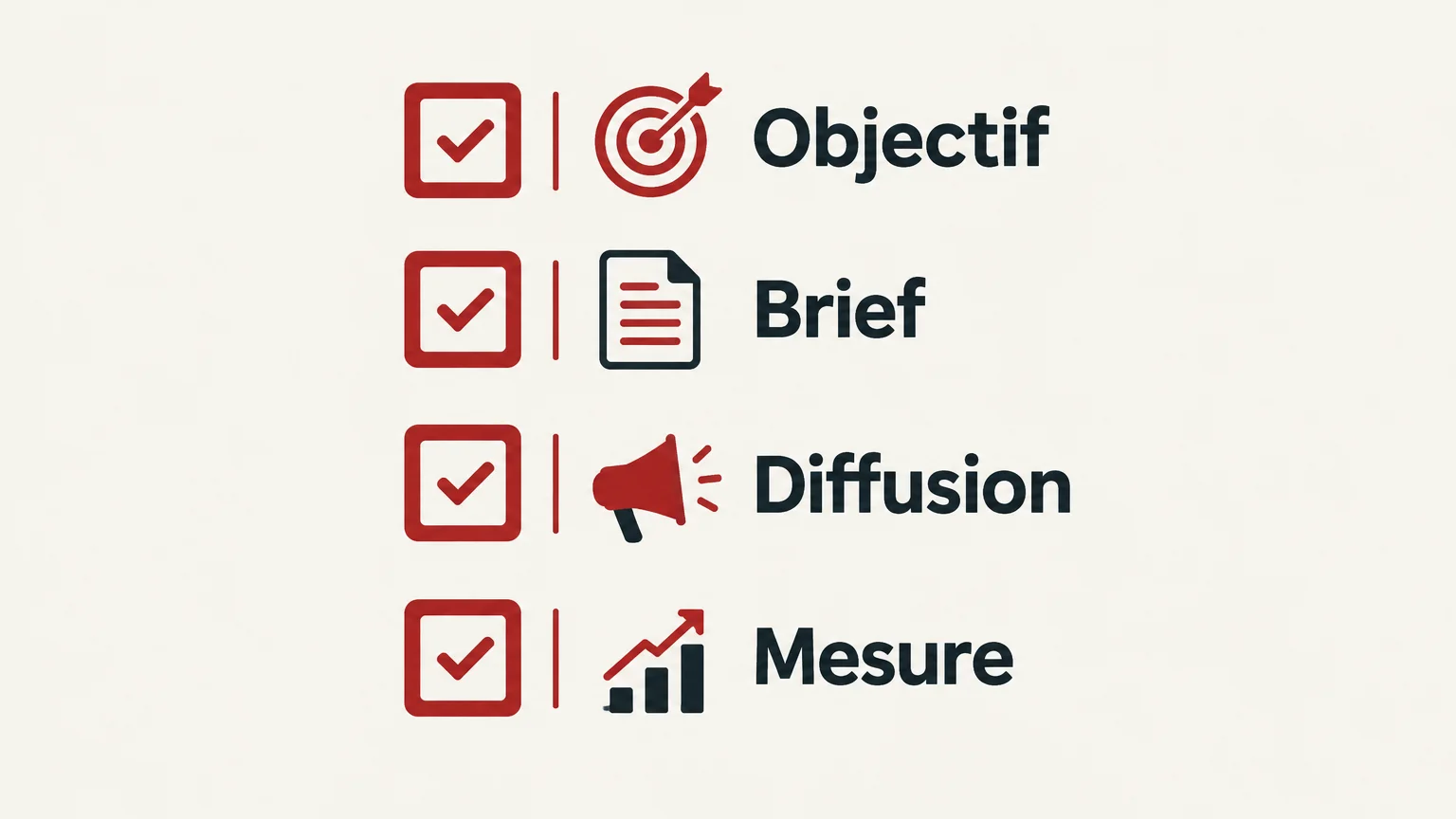
Just before going live, gather the essentials in a single document. This final check catches production oversights and makes decisions easier once the first results come in.
- Objective: the audience, the offer and the expected action are clearly defined.
- Brief: the messages, scenes, deliverables, approvals and rights are specified.
- Distribution: each version is adapted to its channel and linked to a relevant link or landing page.
- Measurement: the main indicator, the secondary indicators and the observation period are defined.
- Optimisation: the results are reviewed to decide what to keep, change or test next.
Organise your tests around a specific question: does the hook, the demonstration or the call to action explain the offer best? Avoid changing several elements at once if you want to understand what influences the result. The IAB research report published in September 2026 also addresses measurement difficulties and the lack of a standardised unit. This issue reinforces the value of defining your indicators and method before launch.
Finally, carry the lessons from one campaign over to the next: the audience’s questions, the scenes that hold attention and the formats that meet the objective. This record saves you from starting from scratch and helps you write better briefs. It does not replace new tests, as creative that works in one context is not automatically suited to another.
A Checklist to Link Creative and Results
To optimise a UGC marketing campaign, align the objective, the brief, the distribution channel and the measurement before producing the content. Then test specific variations and base your decisions on the indicators linked to the result you are after. The checklist makes the process clearer and the adjustments easier to explain.
Move Your UGC Project Forward
When scoping, scripts, the shoot and measurement need to progress together, our team can support you from preparing the videos to adapting them for social media and digital advertising. We have worked with more than 350 brands. This figure describes our overall experience, without specifying the period or the results attributable to each campaign.

We produce UGC videos and creative ads, with formats tailored to the chosen platforms and your brand’s objectives. A free 30-minute meeting lets us discuss your content, your opportunities and a suitable content plan, with no commitment. Discover our UGC production service.
Frequently Asked Questions
What should a UGC campaign checklist include?
It covers the objective, the audience, the brief, the formats, usage rights, distribution and indicators. Add a pre-publication check and a stage dedicated to adjustments.
What is the difference between UGC and a UGC creator video?
UGC refers to user-generated content, whereas a UGC creator video is produced for a brand following the conventions of creator content. How the content is used depends on the agreement reached and the campaign.
Should you use the same video on every platform?
You can reuse an idea, but check the format, pace and conventions specific to each channel. Adapted versions let you tailor the message without losing its consistency.
Which KPIs should you track for a UGC campaign?
Choose them according to the result you are aiming for: retention and qualified views for attention, clicks for interest, conversions and cost per result for action. Keep organic metrics separate from advertising results.
How can Esekai support a UGC campaign?
We can handle content strategy, scriptwriting, the shoot, editing and adapting the videos into different versions. The scope is defined according to your objectives and the level of support you want.