

TikTok video production for brands means the full chain that turns a brief into vertical creatives ready to run: strategy, casting, shoot, editing, variations and iteration. In 2026 it is managed by throughput, not by the video: a creative runs out of steam in one to two weeks, which means 8 to 20 assets a month. The right metric is not the unit price but the cost per creative validated by performance. Everything else, the headline price of a video, the number of deliverables promised, the beauty of the portfolio, follows from this arithmetic or contradicts it. According to TikTok, quoted by Music Business Worldwide in September 2025, more than 200 million people now use the platform regularly in Europe.
What exactly is TikTok video production for a brand?
It is a chain of six links: creative strategy, casting, shoot, editing, variations, and iteration on the data. Remove a link and you are no longer buying production, you are buying a piece of production that someone will have to complete, most often you.
The word “production” is sold by three different trades, and that is where 80% of the quote misunderstandings we see begin. At an ad sales house or an official partner, producing means filming and editing within an already defined framework. At a media agency, producing means dressing up the delivery: the creative exists, you cut it down, subtitle it, push it as Spark Ads. At a vertical studio, producing means running the whole chain, from the concept to version 14 of a hook that worked.
The six links in detail, in the order in which they cost money:
- Creative strategy: choosing the angles, the promises, the objections to address. Around twenty written concepts for a month of production, not three.
- Casting: profiles, age, accent, product credibility. It is the most underestimated line and the one that makes CPA vary the most with identical creative.
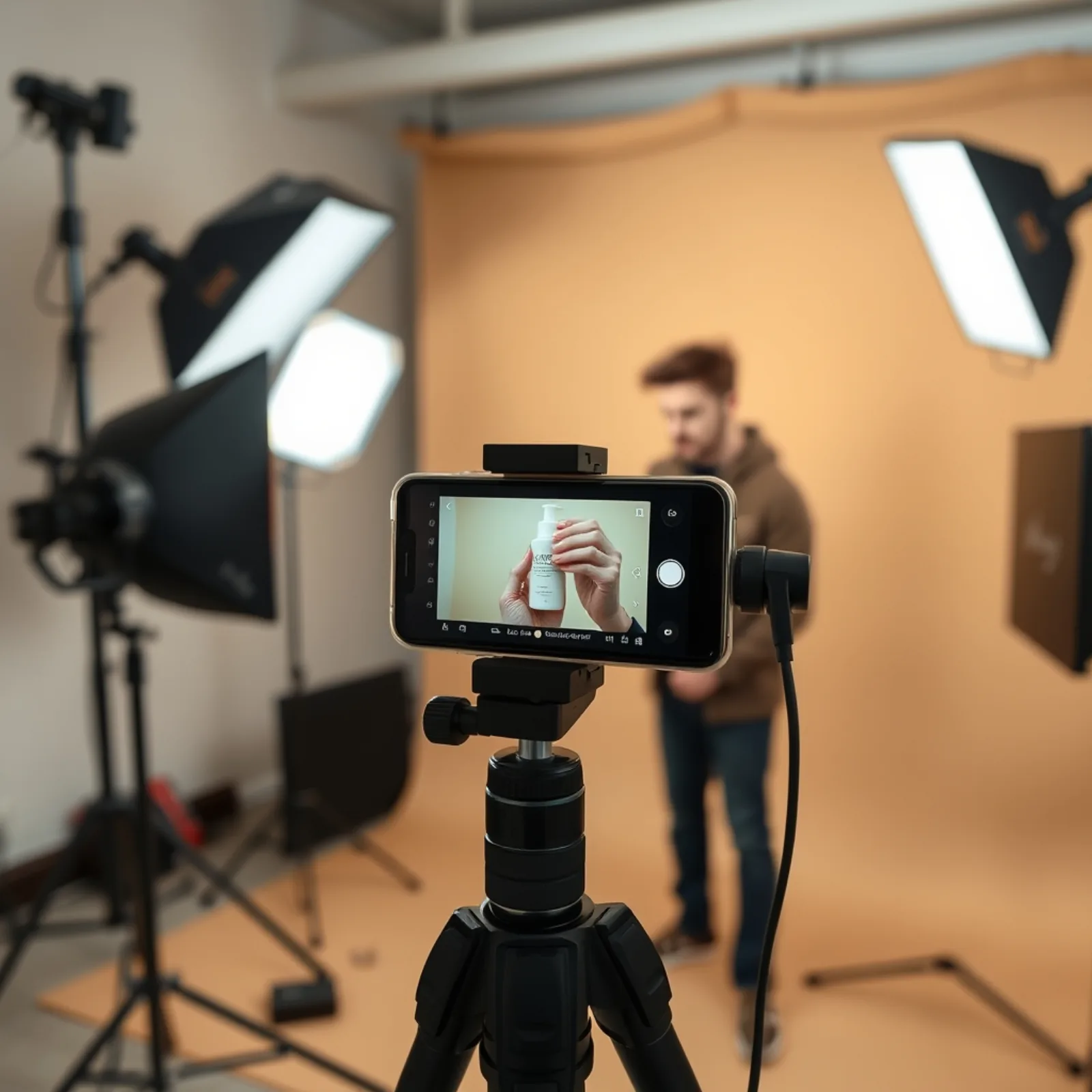
- Shoot: studio, at home, outdoors, on site at the client's. A well-prepared shoot day yields 6 to 12 usable concepts.
- Editing: the master, that is, the reference version of each concept.
- Variations: alternative hooks, lengths, text hooks, no-voice versions, aspect ratios. One master gives 3 to 8 variants.
- Iteration: we read the data at D+7, keep the angles that hold up and reshoot the rest. This is the link that gets cut first when budgets tighten, and it is the most expensive mistake. According to the TikTok Ads help centre, a campaign's volatility generally starts to fall after around 25 results or 7 days spent in the learning phase.
Before comparing prices, check which of these three trades your contact actually practises. We wrote an entire article on the five trades covered by the term TikTok agency; it reads like a sorting grid before a first meeting.
Why think in monthly throughput rather than number of videos?
Because a TikTok creative runs out of steam in one to two weeks (VeniseActivation, August 2026): buying ten videos once means buying two weeks of delivery, then nothing. Throughput, the number of usable assets the chain turns out each month, month after month, is the only unit that protects a brand from a creative air pocket.
The arithmetic is brutal. If you run 4 to 6 creatives in parallel and each lasts two weeks, you need 8 to 12 replacements a month just to maintain your setup. Above €300 of daily budget, that rises to 15 or 20. The iteration rhythm recommended by Agence Moiré (May 2026) points the same way: 3 to 5 native videos per test, with a weekly review. Multiply by four weeks and you land on the same range.
That leaves the part nobody puts on an agency landing page: not everything that is produced will run. Here is the funnel we observe on our e-commerce accounts, on average, over monthly production cycles; these are our internal figures, not a published statistic:
Out of 100 concepts written: around 60 are shot, 45 edited, 30 put live, and 5 to 8 clear the performance threshold that qualifies them as validated creatives. The real waste rate of a healthy vertical production chain sits between 55% and 70%. An agency that claims otherwise is not measuring, or not running ads.
This waste is not a malfunction, it is the price of volume. A chain with no waste is a chain that produces too little variety to find the winning angle. The calculation that matters then becomes the cost per validated creative: monthly production budget divided by the number of assets that actually passed the CPA threshold. We detail how this ratio works in how the cost per winning creative is calculated.
One honest caveat: we do not set this validation threshold alone. It depends on your average basket, your margin and your attribution window. For a client with a €45 basket, a creative at €22 CPA is a success; for another at €900, the same creative is an accident. Any agency that sells you a “creative success rate” without knowing your P&L is improvising.
Which type of video works best on TikTok?
No format wins durably; what wins is a diversified batch of five creative functions running in parallel. Ranking videos by “what goes viral” helps no one. Ranking them by function, acquisition cost and lifespan before wear-out does.
The five production functions
- Hook-driven: the video exists to test a hook. Shortest lifespan, lowest production cost, highest waste rate. It is the ammunition of volume.
- Product demo: the gesture, the result, the texture, the unboxing. Lasts longer, adapts well, demands a careful shoot. On our accounts, it is the function that survives best beyond three weeks.
- UGC testimonial: addresses a named objection. Effective mid-funnel and in retargeting, less so on pure cold traffic.
- Founder-led: the founder speaks. Marginal cost close to zero if the person is available, strong credibility, low volume ceiling: nobody films 20 videos a month to camera without tiring of it.
- Spark Ads on validated organic: you put budget behind content that has already performed natively. The best cost/performance ratio when there is organic volume to select from. In April 2026, DigitalApplied reported a Spark Ads CPM of $11.85, above standard in-feed at $9.16, but with a social signal that compensates.
The arrival of automated campaigns changes things on the production side. With Smart+, TikTok's AI handles targeting, bidding and creative selection (Junto, June 2026). The direct consequence: the diversity of the batch you supply matters more than the perfection of any one video. An algorithm that chooses needs material to choose from. In 2025 we stopped delivering three highly polished films a month; we deliver mixed batches, with deliberately contradictory angles, because that is what automated arbitrage rewards. For Smart+ App campaigns, TikTok's best-practice guide recommends adding at least 4 to 6 creatives when the campaign is set up, so that ad iteration is possible.
A hard truth we stand by: “deliberately ugly” content is not a strategy. What works is not poor quality, it is low emotional distance. A sharp image, clean sound, framing that leaves room for native text, and a delivery that does not sound like an ad spot. Blur and noise never make up for bad casting.
What is the price of video editing for TikTok?
On our 2026 quotes, a vertical master edit is between €250 and €600, a hook variation between €40 and €90, and subtitling with sound design between €60 and €150 per asset. These are orders of magnitude drawn from our rate cards and from what we see circulating in tenders, not a public reference tariff.
The real breakdown of TikTok post-production has four items, and they do not carry the same weight:
| Post-production item | Observed range (per asset) | What makes the price vary |
|---|---|---|
| Master edit | 250 – 600 € | Volume of rushes, number of revision rounds, motion design |
| Hook variations | 40 – 90 € | Whether alternative rushes were shot on the same day |
| Subtitling + sound design | 60 – 150 € | Music licences, voice-over, extra languages |
| Format versioning | 30 – 60 € | Number of aspect ratios and target platforms |
Pure editing is the cheapest line in the chain, and the most overbilled in the market. The reason is simple: it is the only one the client can picture. People pay “editing fees” where most of the real cost lies in preparation, casting and the shoot day.
2026 accelerates this shift. TikTok is expanding its Symphony suite (launched in 2024) with creative agents built on ByteDance's video models; check the official announcements before quoting a date. Generating a video is becoming free. So is generating a video that is flagged: assets produced by these tools carry automatic AI labels, invisible watermarks and C2PA Content Credentials (DigitalApplied, June 2026). As early as May 2024, TikTok's newsroom announced that it would read C2PA Content Credentials, metadata that lets the platform instantly recognise and label AI-generated content.
What this shifts: the value of human production moves out of editing and into the real shoot, casting and rights. A shot of your product, filmed, with your hands, your textures, your workshop, cannot be generated, and carries no label. A clean edit, on the other hand, is visibly becoming a commodity. If your supplier mostly bills editing, its model has a timing problem.
How much does a month of production cost, line by line?
An honest TikTok production invoice fits on four lines: concept development, capture, post-production, rights and usage. Any quote that shows only a global flat fee and a number of videos is hiding one of the four, most often the last.
Market benchmarks to treat as orders of magnitude: La Fabrique du Net reported in 2026, on a sample of only eleven budgets, a TikTok Ads audit between €300 and €1,500, flat-fee management at around €3,000 a month and a median service budget of about €30,000, with a stabilised CPA of €18. Eleven budgets is not a market: it is an indication. We cite it because it is public, not because it is solid.
The real exercise is to compare the headline price with the cost per validated creative. The next two tables cover six production models; the volumes, waste rates and costs are the ranges we observe when auditing French e-commerce advertisers, not published data.
| Model | Billed unit | Usable assets / month | Observed waste | Cost / validated creative |
|---|---|---|---|---|
| Freelance editor (rushes supplied) | The edited video | 8 – 15 | 70 – 85 % | 500 – 1 200 € |
| Live UGC creator | The delivered video | 3 – 6 | 50 – 70 % | 600 – 1 500 € |
| UGC platform / marketplace | Subscription + per video | 10 – 20 | 60 – 75 % | 700 – 1 500 € |
| Media agency with creative included | Management fee | 4 – 8 | 40 – 60 % | 1 000 – 2 500 € |
| Vertical production studio | Monthly asset throughput | 12 – 25 | 55 – 70% (accepted) | 600 – 1 400 € |
| 100% AI (Symphony, Creative Studio) | Included in Ads Manager | Unlimited in theory | > 90% | Close to €0 in direct cost |
Reading the last line too quickly leads to a stupid decision. That is why the second table exists:
| Model | Brief → delivery | Rights & usage | Data iteration included | AI label mandatory |
|---|---|---|---|---|
| Freelance editor | 3 – 7 days | You supply the rushes, so the rights | No | No |
| Live UGC creator | 10 – 21 days | To be negotiated line by line, term often 6 – 12 months | No | No |
| UGC platform | 7 – 15 days | Standardised, rarely whitelisting | No | No |
| Media agency + creative | 7 – 20 days | Often limited to the length of the media contract | Yes, on the media side | No |
| Vertical studio | 5 – 12 days, then continuous flow | Set out in the contract, rushes assigned | Yes, weekly | No |
| 100% AI | A few hours | No real person, no enforceable testimonial | Auto-selection via Smart+ | Yes (label + C2PA) |
The AI model wins on direct cost and loses on the two columns that matter in 2026: rights and labelling. A food supplement brand cannot have a generated face say “I've been using it for three months”, C2PA label included. This is not a question of taste, it is a question of risk. To see how these four lines translate onto real documents, we published four real invoices, broken down.
What media budget do you need for the production to be of any use?
Without €50 a day for at least seven days, a TikTok production cannot be evaluated (Feelnet, 3 August 2026): you produce, but you learn nothing. Production and media form a single system. Funding one without the other is like buying an engine without fuel.
Three benchmarks we use when scoping, and nothing more, because campaign structure deserves its own article:
- TikTok advises a daily budget of roughly 10 times the target CPA to start (about €250/day for a €25 CPA), and at least 20× the CPA for a reliable A/B test.
- Change nothing during the learning phase: it ends when the ad group reaches about 50 conversions within 7 days, which means several days depending on volume. Half of the “creatives that don't work” we audit were killed before the end of learning.
- Advertising studies (Nielsen, Meta) attribute roughly half of a campaign's effect to the creative, a major weight, but not 70%. That is the argument for shifting budget from media to production, not the other way round.
Where we differ from the rest of the market: stop steering your production on public CPMs. Here is what three sources announce for the same year.
| Source | Announced CPM | Scope | Date |
|---|---|---|---|
| Lebesgue | 4,80 $ | E-commerce, CTR 0.61%, CR 1.92% | March 2026 |
| DigitalApplied | $9.16 (in-feed) | The in-feed CPMs quoted by blogs hover around $9, but reserved formats such as TopView are negotiated as a flat fee, not at that CPM level | April 2026 |
| Adintime | 3 – 8 € | France, CPC €0.20 – 0.80 | June 2026 |
A gap of 1 to 3, same year, same platform. None of the articles competing for the first page of Google on this subject flags this inconsistency, and yet they quote these figures as truths. Add the 12.28% year-on-year rise in TikTok advertising costs reported by Stackmatix in August 2026, and global spend of $5.8bn in the first quarter, up 32% on the year (DigitalApplied, April 2026): auction competition is rising, and yesterday's reference value is out of date today.
A public benchmark frames a starting budget. It never validates a production. The only CPM that counts is your account's, per creative, over the last seven days. For a finer sector-by-sector reading, we maintain our CPM and ROAS benchmarks by sector with the methodological caveats that come with them.
How do you collaborate with brands (and with creators) on TikTok?
A TikTok collaboration is won or lost in the contract, not on gut feeling: scope of rights, term, territory, whitelisting, exclusivity. On the brand side there are three sourcing channels; on the creator side, one thing brings an advertiser back: reliability of delivery.
Brand side: three channels, three logics
- TikTok Creator Marketplace: volume, verified audience data, fast negotiation. Little creative control, very variable quality.
- Agency or studio: filtered casting, brief respected, contractual deadlines, rights settled once and for all. Higher unit cost, often lower cost per validated creative.
- Direct: the richest relationship, the slowest, and the one that needs a lawyer. Reserve it for profiles you want to keep for two years.
Creator side: what a brand really expects
Not millions of views. A deadline met, horizontal rushes never delivered, clean sound, three hooks shot instead of one, and an invoice that clearly states the usage rights assigned. The creators who work continuously with our clients are almost never the most followed: they are the ones who deliver in five days with the variants requested.
The sticking point remains contracting. A video delivered with no mention of paid advertising use is not a creative: it is organic content you cannot legally push. In 2025 as in 2026, we have seen entire batches of videos unusable in Ads for that reason alone. The four clauses to lock down: term of assignment, territory, platforms, right to modify (essential for adapting hooks). Add whitelisting if you want to run ads from the creator's account. The subject is covered in detail in the difference is contractual, not aesthetic.
What we don't know: how long creators will accept 12-month assignments for fees equivalent to those of 2024. Native pay pushes the other way, €0.50 to €1.20 per 1,000 views via the Creator Rewards Program according to Swello (March 2026), relayed by Sortlist, whereas the former Creator Fund capped at €10–40 per million (Brand Advocacy, September 2025). A creator who monetises their audience seriously negotiates their advertising rights differently. The 2026 rate cards will shift.
What we refuse to sell, and why
We refuse “X videos a month” packages sold to a brand that does not have the media budget to test them. It is the easiest sale in the industry and the surest way to burn a client in three months: ten beautiful assets, €400 of ad spend, no data, and a renewal that never comes.
TikTok video production for brands is an operation with measurable yield. It has a throughput, a waste rate, a cycle time and a cost per validated unit, exactly like a manufacturing line. The pages that sell you “scroll-stop” and “#ForYou” publish none of these four indicators, because they don't have them.
One last thing, and it goes against our immediate commercial interest. If you spend less than €3,000 a month on TikTok media, do not sign a monthly production contract. Put your founder on camera for one day, with a day-rate supplier. Twelve raw concepts, three hooks each, and in a fortnight you will know whether the angle exists. Industrial throughput comes after the proof, never before.
Frequently asked questions
- What is the price of 1,000 views on TikTok?
- Two unrelated figures are constantly confused. On the creator side, the Creator Rewards Program pays €0.50 to €1.20 per 1,000 qualified views (Swello, March 2026, relayed by Sortlist). On the advertiser side, 1,000 impressions are not sold, they are bought: that is a CPM, estimated at €3 to €8 in France (Adintime, June 2026). A creator's income is not a media cost.
- How many TikTok videos should you produce a month?
- Between 8 and 20 usable assets a month for a brand that spends regularly on media. The calculation starts from wear-out: a creative runs out of steam in one to two weeks (VeniseActivation, August 2026), so keeping 4 to 6 creatives live requires 8 to 12 replacements a month. Above €300 a day of budget, it rises to 15 to 20.
- Should you worry about a production studio's waste rate?
- A waste rate of 55 to 70% is normal on a healthy vertical chain; it is what we observe across our production cycles. The worrying signal is the opposite: a supplier who claims everything they deliver gets run is either not measuring the performance of their assets, or not producing enough variety to find the winning angle.
- Do TikTok's AI tools replace video production?
- Not for brand advertising. Symphony Agent, powered by Seedance 2.0, is accessible in Ads Manager without a separate subscription (DigitalApplied, June 2026), but the generated assets carry automatic AI labels, invisible watermarks and C2PA Content Credentials. A product testimonial, a texture demo, an enforceable real person: none of these three can be generated.
- How much does TikTok video editing alone cost?
- On our 2026 quotes, allow €250 to €600 for a vertical master edit, €40 to €90 per hook variation, €60 to €150 for subtitling and sound design. Editing is the cheapest line in the chain: if it accounts for most of your invoice, you are paying for post-production where the real cost lies in the shoot.
- What is the minimum media budget to test a TikTok production?
- €50 a day for at least seven days; €20 a day is not enough to generate readable data (Feelnet, 3 August 2026). A complementary scoping rule: a daily budget of about ten times the target CPA (Agence Moiré, May 2026), without interrupting the 48 to 72 hour learning phase.
Let's talk throughput, not number of videos
You now know that a TikTok creative wears out in two weeks and that the only useful metric is the cost per validated creative. Esekai is a vertical video studio: creative ads, UGC and organic content for TikTok, Reels and Shorts, with a dedicated Creative Strategist, in-house shooting and editing, and weekly iterations. A thirty-minute meeting: formats, budget, action plan. No agency pitch deck.
Book a meeting →30 minutes to talk formats, budget and action plan.