

In 2026, having a specialist studio produce an Instagram Reel costs between €400 and €1,200 excl. VAT per video in France, and drops to between €120 and €350 excl. VAT per video in batch production (8 to 15 Reels on a single shoot day). Editing alone, from footage you supply, runs between €40 and €250 excl. VAT. Three items move the quote: the shoot, the script writing and the advertising usage rights. The rest, subtitles, formats, exports, weighs very little. What follows breaks down a real quote, line by line. According to Médiamétrie's internet audience figures published by The Media Leader, Instagram reached 41 million unique visitors in France in September 2025.
What is the price of an Instagram Reel in 2026?
There is no single price, but three distinct markets that share the same name. Editing from existing footage starts at a few dozen euros. Full production, shoot included, sits between €400 and €1,200 excl. VAT per video according to our market observations and our own 2026 rate cards. And batch production divides that figure by three or four. When a buyer compares €36 with €1,200, they are not comparing two suppliers: they are comparing two things that have almost nothing in common.
The first thing to settle before reading a quote: production, distribution and influence are three separate budget lines. Producing a Reel means making a video file. Distributing a Reel means buying impressions from Meta. Paying a creator to post on their own account means buying an audience. A good part of the confusion around this search comes from there: influencer rate cards circulate as if they were about production, when they actually price the right to speak to followers.
| Buying model | Price excl. VAT / video | Who writes the script | Shoot included | Variants delivered | Paid rights |
|---|---|---|---|---|---|
| Marketplace / micro-freelance (editing only) | 25 à 80 € | You | No | 1 | Not covered |
| Experienced freelance editor | 80 à 250 € | You, or co-written | No | 1 à 3 | To be negotiated |
| UGC creator | 130 à 350 € | Brand brief | Yes, at home, smartphone | 1 to 2 + hooks | Option: +50 to +200% |
| Vertical studio, single video | 400 à 1 200 € | Studio | Yes | 2 à 4 | Included or optional |
| Vertical studio, batch day | 120 à 350 € | Studio | Yes | 8 to 15 videos + variations | Included |
| Premium production / short film | 1 500 à 5 000 € | Studio + art direction | Yes, full crew | 3 à 6 | Included, broad |
| AI generation (own tool) | €20 to €100 / month | You | No | Theoretically unlimited | Depends on the tool's licence |
| Buying model | Typical lead time | Use case where it's the right choice |
|---|---|---|
| Marketplace | 24 à 72 h | Recycling footage you've already shot |
| Freelance editor | 3 to 5 days | Brand that already films in-house |
| UGC creator | 7 to 14 days | Product proof, angle tests in ads |
| Studio, single video | 10 to 15 days | Product launch, signature format |
| Studio, batch | 15 to 20 days | Ongoing supply for organic + ads |
What does a Reels production quote actually contain?
A Reels production quote comes down to six lines, and four of them are almost always missing from low-cost offers. When a supplier sends you a single figure with no breakdown, they are not hiding their margins from you: they are hiding the scope. Ask for the breakdown, even a rough one. A studio that genuinely produces can tell you how many hours go on writing and how many on shooting.
1. Pre-production and script
This is the most underestimated item and the one that decides performance. Writing a Reel is not drafting 30 seconds of text: it means choosing an angle, a hook, a promise, a payoff, and writing the three variants of the first second. On our productions, writing accounts for 15 to 25% of a batch budget. When a €90 quote doesn't include this line, you are the one covering it, on your own time.
2. Shoot
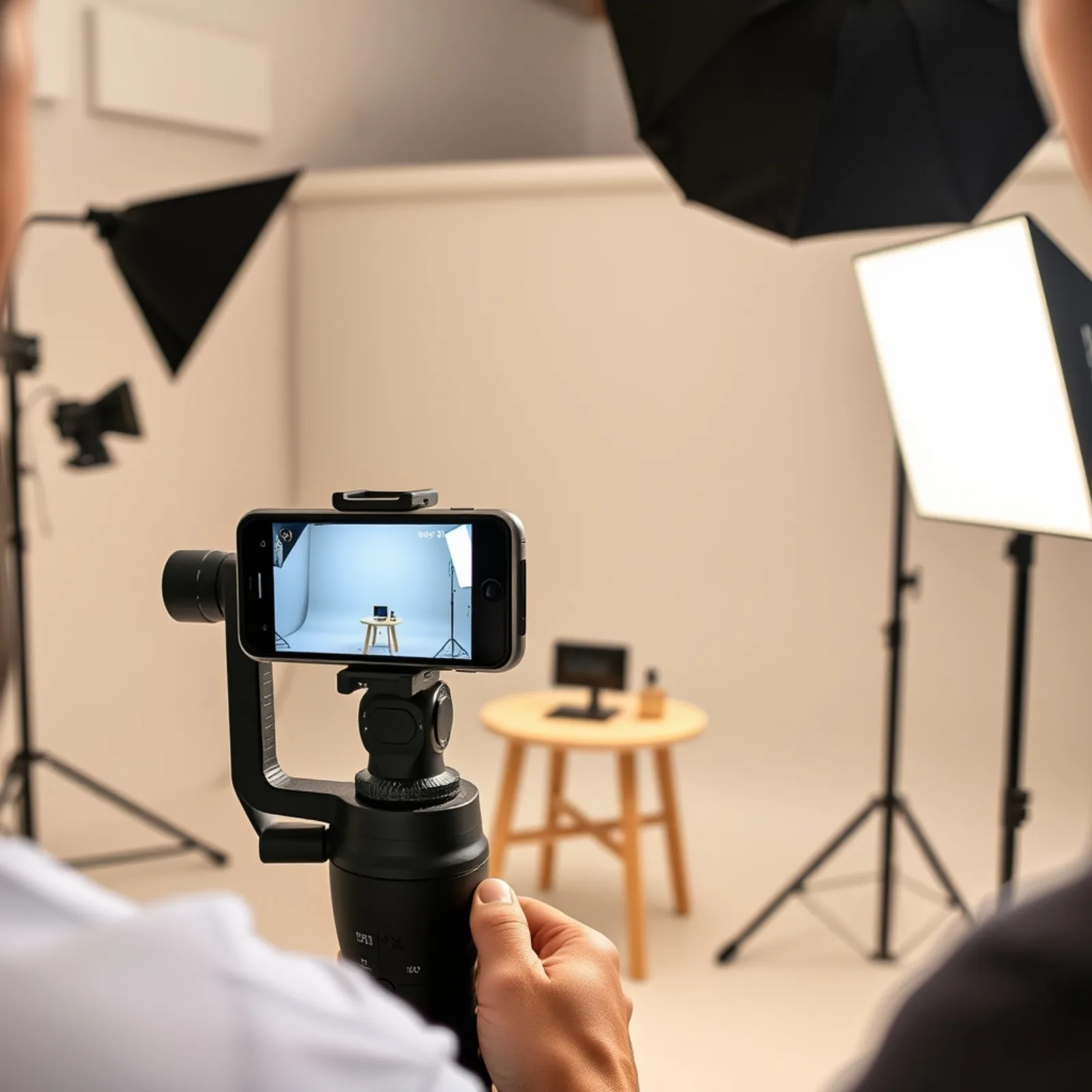
The most readable item. A shoot day in Paris with a camera operator-director pair and equipment is negotiated at between €640 and €1,000 excl. VAT according to Topo Vidéo (article of 27 December 2025); FLF Studio quotes €600 to €1,200 per day for a freelance videographer in France (May 2026); some American comparison sites put a beginner videographer at around $300 a day, a benchmark that doesn't transfer as-is to the French market. The gap between €280 and €1,200 doesn't measure talent, it measures the number of people on set and the level of lighting demands.
3. Post-production
Editing, colour grading, sound design, subtitles, motion. For vertical, allow 2 to 5 hours per finished video, less in batches because the subtitle templates and the motion guidelines are reused. This is what marketplaces sell, on its own, out of context.
4. Variants and variations
A video delivered in a single version is unusable in advertising. You need at least three different openings on the same edit to find out which one hooks. At our studio, an extra hook variant is billed between €30 and €60 when it is produced straight after the main edit, and much more if we reopen the project three weeks later. Check whether the quote counts variants as full videos: it is the most common way to inflate an advertised volume.
5. Usage rights
The line that costs the most retroactively. Content produced for organic and then pushed into ads with no clause in place exposes you to a renegotiation, especially if a person appears on screen. The creator rate cards from Ruche & Pollen (May 2026) give the market's order of magnitude: +50% for 3 months on one platform, +100% for 6 months across several platforms, +200% for perpetual use. We detail these mechanics in the breakdown of usage rights and their impact on price.
6. Format adaptations
9:16 for Reels and Stories, 4:5 for the feed, 1:1 for certain Meta placements, muted subtitled versions, short 6-second versions. An inexpensive line when planned from the start, a pain when it arrives after the fact.
Three lines we never bill separately, because they are part of the job: the first scoping call, bringing the exports into line with Meta's specs, and the first round of corrections within 7 days of delivery. A supplier who bills for them is making you pay for their own organisation.
Before you sign anything, run the quote through the filter of the 12 questions to ask before approving a quote. Half of the nasty surprises can be settled in ten minutes on the phone.
Why does a €36 Reel often cost you more than €300?
Because the advertised price covers only the editing, and the remaining 80% of the work lands on you without ever appearing on an invoice. The offers at $23 or €36 that surface for this search don't sell a video: they sell an assembly of footage that you have to supply, from a script that you have to write, about a product that you have to film or ship.
Let's do the maths honestly, valuing your internal time at €45 per fully loaded hour, which is low for a marketing profile in France.
| Item | Billed by the supplier | Paid by you without seeing it | Estimated full cost |
|---|---|---|---|
| Brief and script | 0 € | 1 h 30 of your time | ~70 € |
| Footage and product shipped | 0 € | Product + postage + filming | 40 à 150 € |
| Editing | 36 € | , | 36 € |
| Approval back-and-forth | 0 à 20 € | 2 to 3 h spread over 10 days | ~110 € |
| Videos never published (waste) | Already paid for | 30 to 50% of volume | +40% on the useful cost |
| Format variations | €10 to €25 each | Coordination | 30 à 80 € |
You end up between €290 and €450 for one published video. The advertised figure was €36. Nobody lied: the unit of account was the wrong one.
The costliest item remains invisible: the rework after delivery when the brief was incomplete. On our 2025-2026 projects, a serious rework, the kind that forces a reshoot or a deep re-edit, represents 15 to 25% of the initial budget for the batch concerned, and above all a two- to three-week slip in the publishing calendar. The delay costs more than the rebilling. In 2025 we stopped launching any shoot without written sign-off on the angles: the rework rate dropped markedly, and it is the only cost optimisation that took nothing away from quality.
A word on the waste rate, which nobody publishes. On a vertical production of 12 videos, we observe that around 7 to 9 are actually published or pushed into ads within 60 days. The others drop out of the plan: product out of stock, angle abandoned, season changed. That isn't breakage, it's the normal functioning of a creative pipeline. But if you calculate your cost per video on the volume delivered rather than the volume used, you are off by about 40%.
What is the rate for vertical video production: per video, per day or by subscription?
Per video below 4 Reels per quarter, per day between 8 and 15 videos, by subscription beyond 4 videos a month over twelve months. The tipping point is not a question of total budget, it's a question of frequency. A shoot has a fixed cost, travel, set-up, lighting, product preparation, that doesn't change whether you shoot 3 or 12 videos.
Take a real day. Arrival at 8:30, set-up until 10:00, first lighting and set setup. On our e-commerce productions, a single-set day with 2 to 3 product setups yields 10 to 14 usable Reels; a multi-set day with outfit changes and moves drops to 6 to 8. The total cost of the day, crew and post-production included, falls in a range of €2,500 to €4,500 excl. VAT depending on the production level. Divide: €180 to €350 per video in the first case, €400 to €700 in the second. That is why batching isn't a sales argument, it's arithmetic.
Subscription models have multiplied. Virage Media lists €350 excl. VAT per month for one clip and €560 excl. VAT for two (2026 rate card). Sieweb quotes €500 to €3,000 per month for Instagram content creation by an agency, excluding ad budget (July 2026). These plans have one merit: regularity. They have a structural flaw: they sell a number of files, not a creative result. One clip a month allows no serious angle testing, and it certainly doesn't allow you to feed a Meta campaign.
At the other end, Plateya cites €1,200 to €5,000 excl. VAT for a standard video service in Paris with one shoot day and editing (2026), and Flashbiz gave €500 to €1,500 for a short 15 to 30-second video in Paris, but those figures date from 2025, before native vertical became widespread, and they mostly describe reformatted corporate video. To compare sector by sector, we have compiled detailed rate cards by industry.
A nuance that works against the sale: if you publish one video a month and have no media budget, don't hire an agency. Buy a tripod, a lavalier mic and two hours of training. Outsourced production becomes profitable once the video has to perform in front of a paid audience, or sustain a pace your team won't keep up.
How much does an ad Reel cost compared with an organic Reel?
An ad Reel costs 30 to 60% more to produce than an equivalent organic Reel, for two reasons: the mandatory variants and the usage rights. The shoot is the same. What changes is the specification around it.
An organic Reel has to please an audience that already follows you. It can be imperfect, contextual, perishable. An ad Reel speaks to people who don't know you, goes through a moderation system, has to exist in several versions to be tested, and will run for months. Three hooks, two lengths, one subtitled version for muted sound: that's six exports where organic asked for one.
| Budget line | What you buy | Unit of measurement | 2026 order of magnitude |
|---|---|---|---|
| Video production | Usable files | Cost per creative used | €120 to €1,200 excl. VAT |
| Media buying | Impressions | CPM, CPC, ROAS | Dedicated monthly budget |
| Creator fee | A face and an audience | Price per post | €50 to €800 (nano to micro) |
| Usage rights | The right to run it as paid | % of the fee, by duration | +50 % à +200 % |
The only honest metric on the ad production side is not the price per video. It's the cost of the video that runs. If you produce 12 creatives at €250 and only one goes to scale, your winning creative cost you €3,000. If you produce 12 at €400 and four make it, it cost you €1,200. The cheapest quote is almost never the one that wins this trade-off. We develop the calculation method in the article on thinking in cost per winning creative rather than price per video.
Order of magnitude observed across our e-commerce client accounts: about one hook in five holds up beyond the testing phase. That's why we never deliver a video with a single opening. Billing three hooks instead of one adds €60 to €120 to the quote and completely changes the chances of something happening.
Should you pay an agency when AI generates Reels for €25 a month?
Today, AI replaces repetitive post-production, not the capture of a real product in real hands. HeyGen lists $29 a month for its Creator plan ($24 billed annually) and Pro from $49 (2026 pricing), with a free tier limited to three watermarked videos. The question any marketing director legitimately asks in 2026: why pay €900 for a video I can generate for the price of a subscription?
The answer comes in two parts. What AI does well, and what we use ourselves every day: automatic subtitling, translation and dubbing, format variations, generating dozens of text variants to test hooks, audio clean-up, sometimes ambience or context shots. On those tasks, it has eliminated billed hours. Our post-production quotes have come down on the technical items between 2024 and 2026, and that's a good thing.
What it doesn't do: show your product from the right angle with the right material, film a texture that catches the light, capture the reaction of a person who genuinely uses the object, and above all serve as proof. A sales Reel rests on a credible demonstration. A generated demonstration demonstrates nothing. There is also the question of rights and advertising compliance: platforms are tightening the rules on synthetic content featuring people, and a brand that builds its entire presence on avatars exposes itself to a trust problem that no production saving can offset. According to Meta's newsroom (February 2025), when its generative AI advertising tools add a photorealistic AI-generated human, the AI label appears next to the “Sponsored” label and not behind the three-dot menu.
- AI is enough when you are adapting an existing asset, testing hooks, localising into several languages, producing explainer formats without a physical product, or filling a B2B calendar.
- AI costs you more when you are selling a physical product, when the credibility of the person on screen carries the argument, when you need solid rights for long-term paid, or when you pile up hours of prompting for a result that three hours of shooting would have delivered better. In its February 2024 announcement on labelling AI-generated content, Meta indicated that it would require users posting organic content to disclose any photorealistic video or realistic audio created or altered digitally.
What we don't know yet, and we'd rather say so: we don't have enough statistically clean hindsight to claim that a generated creative underperforms a shot creative under equal conditions in French e-commerce. Our tests lean clearly in favour of shooting for products people touch, and are neutral on explainer formats. Ask for these figures from anyone selling you either one. If they answer with certainty, be wary. The trade-off between testing volume and brand quality is covered more broadly in what you are really buying between creative ads and brand content.
What is the rate for an Instagram post when you go through a creator?
Between $50 and $300 per Reel for a nano-influencer, $200 to $800 for a sponsored Reel from a nano, $800 to $6,000 from a micro, and these amounts buy a post, not a reusable video. Influee (March 2026) puts the Instagram nano-influencer at $50 to $300 per Reel and $25 to $150 for a static post. InfluencerFee (2026) gives a wider scale for the sponsored Reel: $200 to $800 for nano, $800 to $6,000 for micro, $3,000 to $30,000 for mid-tier, $20,000 to $150,000 for macro. At 2026 exchange rates, $1 is worth about €0.86: convert before comparing, and read these amounts as orders of magnitude.
French pricing for UGC production is steadier. Influence4You (January 2026) gives a baseline of around €180 for a UGC video, €130 to €160 for Instagram creators, €350 to €400 on YouTube. Ruche & Pollen (May 2026) puts the static Instagram post at €80-200 for nano, €250-800 for micro, €800-3,000 for mid.
The rule to remember fits in one sentence: the fee pays for the post, the rights pay for the reuse. A brand that pays a creator €250 for a Reel and runs it on Advantage+ for six months without a usage clause is in the wrong, and usually finds out at the least convenient moment. Negotiate the rights at the first quote, never afterwards. The surcharge is +50% on average at that point; it doubles or triples if you reopen the discussion once the video is performing.
How much does 1 million views on Instagram cost, and how much does it earn?
Instagram does not pay for views in a way you can plan around in France in 2026, and buying a million impressions in Reels Ads costs the equivalent of a few thousand euros of media depending on targeting. The Reels bonus programme, which had people dreaming in 2022, is no longer a revenue source to build into a plan according to InfluencerFee's analysis published in 2026. A million organic views earns awareness, followers, sometimes sales, never a predictable cheque from Meta.
Let's flip the question to the advertiser's side, the only useful version. You have two ways of getting a million views. The first: produce content good enough for the algorithm to push it. Production cost, time, high uncertainty. On the accounts we support, one Reel in ten to fifteen does more than ten times the account average, and nobody, us included, can say in advance which one. The second: buy the impressions. Predictable cost, known growth ceiling, measurable result.
The brands that win do both, and above all they don't attribute the same value to each. A million organic views on an entertainment Reel can generate zero euros in revenue. A hundred thousand targeted impressions on a product demonstration creative can generate a lot. A view is a vanity unit until it's tied to intent.
The question to ask your supplier is not “how many views will you get me”. It's “how many testable creatives do you deliver me per month, and at what unit cost once the waste is deducted”. The first question has no honest answer. The second does.
How do you read a Reels production quote in five minutes?
Look for five pieces of information: the number of master videos, the number of variants, who writes, who shoots, and the duration of the paid rights. If all five are there, you can compare two quotes. If one is missing, you are comparing apples and oranges, and the cheapest will always win for the wrong reasons.
- A quote announcing “20 videos” without distinguishing masters from variations often hides 5 shoots and 15 reframes.
- A quote with no “writing” line means either you write, or nobody does.
- A quote with no mention of rights is usable for organic only, whatever you are told verbally.
- A quote with no number of included correction rounds is an open invoice.
- A lead time under 7 days on a production with a shoot means no pre-production is planned.
On the price of Instagram Reels video production, the reasoning that makes you money is not “what is the market rate”. It's “how much does a video that I actually publish cost me, hooks included, rights included, waste included”. Most advertisers have never calculated that figure. Those who do usually stop two things the following month: single orders at €900, and €40 batches that never make it to publication. If your production is concentrated in Île-de-France, shoot logistics also weigh in the equation, and the subject deserves its own trade-off: choosing a Reels studio in Paris.
Frequently asked questions
- What is the price of an Instagram Reel?
- In 2026 in France, a Reel produced by a specialist studio costs €400 to €1,200 excl. VAT per video, shoot and editing included. In batch production of 8 to 15 videos on a single day, the unit cost drops to €120-350 excl. VAT. Editing alone, from supplied footage, runs from €40 to €250 excl. VAT.
- What is the daily rate for vertical video production?
- A shoot day in Paris with a camera operator-director pair and equipment is between €640 and €1,000 excl. VAT according to Topo Vidéo (December 2025), and €600 to €1,200 for a freelance videographer according to FLF Studio (May 2026). With post-production for a full batch, allow €2,500 to €4,500 excl. VAT for 10 to 14 Reels delivered.
- What is the rate for an Instagram post?
- For a nano-influencer, Influee puts the Reel at $50 to $300 and the static post at $25 to $150 (March 2026). Ruche & Pollen gives €80-200 for nano and €250-800 for micro for a static post in France (May 2026). That amount buys the post, not the right to rerun the video as an ad.
- How much does 1 million views on Instagram cost?
- Instagram does not pay for views in a plannable way in France in 2026: the Reels bonus is no longer a reliable revenue line according to InfluencerFee (2026). On the advertiser side, a million impressions can be bought in Reels Ads for a few thousand euros depending on targeting and season. In organic, the cost is that of production, with no guarantee of reach.
- What is the price of editing a 1-minute video?
- Between €40 and €250 excl. VAT in France in 2026 for a one-minute vertical video, from supplied footage. Below €60, you get an assembly with automatic subtitles. Above €150, the editor reworks the pacing, colour grading and sound design, and generally delivers two to three hook variants.
- How much does a freelance Instagram video editor cost?
- An experienced freelance editor specialising in vertical charges €80 to €250 excl. VAT per video, or €250 to €450 excl. VAT per day. Marketplaces go down to €25-40, but the writing, the footage and the direction remain on you. The full cost of a published video through this route often exceeds €300 once internal time is valued.
Let's work out your real cost per published Reel
You now know that a price per video means nothing until waste, hooks and rights are in the equation. Esekai is a vertical video studio: creative ads, UGC and organic content for TikTok, Reels and Shorts, with a dedicated Creative Strategist, shooting and editing in-house, and fast iterations. Thirty minutes on the phone: formats, budget, action plan. No agency pitch deck.
Book a call →30 minutes to talk formats, budget and action plan.