

Marketing video budgets rose by 47% in 2025 according to HubSpot's State of Marketing, yet most decision-makers are still negotiating blind. Between the freelancer at €800 a day and the Paris agency at €15k a spot, the price gap now reaches 1 to 20, based on our analysis of 150 quotes collected. In France, the 35ème Observatoire de l'e-pub from the SRI and UDECAM puts the digital advertising market at €12.4 billion in 2025 (+11%), growth driven in particular by Social and Video.
This pricing study compiles the real costs of creative video production by industry, quality level and distribution format. Procurement data so you can negotiate with full knowledge of the facts. From our experience supporting 250+ campaigns at Esekai, 73% of brands underestimate the hidden items that inflate the final bill.
Marketing video production costs range from €2,000 to €25,000 depending on format, industry and quality level. E-commerce: €3,000-8,000, B2B SaaS: €5,000-15,000, physical retail: €4,000-12,000. Main cost items: creative (20%), shoot (40%), post-production (25%), revisions (15%). Esekai supports 250+ brands on these optimised budgets.
The real cost structure of marketing video production
Marketing video billing follows a standard breakdown that most brands do not know about. This lack of budget awareness explains 60% of the overruns we find in our client audits.
Every project breaks down into four fixed cost items, with set ratios whatever provider you choose.
Creative development and strategy (15-25% of the budget)
The creative brief is the item advertisers underestimate most. In practice, this phase includes competitive analysis, defining the creative angles, the storyboard and the approval back-and-forth.
The quality of the brief determines 70% of the final performance of a video campaign.
E-commerce brands often outsource this step, whereas B2B SaaS companies tend to keep more of it in-house. The result: development budgets range from €500 (client brief) to €4,000 (full creation) depending on our production method.
Beware of endless revisions that are not framed in the initial quote. Plan for 3 rounds at most, with mandatory interim approval.
Production and shoot (35-50% of the budget)
The shoot accounts for most of the variable costs, depending on the level of complexity wanted. The fixed items include: technical crew, equipment, studio hire, talent/actors.
Retail brands often need several shoot locations (store + studio), against a single one for e-commerce. This difference explains the price gaps of €2,000 to €8,000 we observe.
In concrete terms, a creative ads shoot day involves 3 to 5 people depending on the production: director, camera operator, sound engineer, assistant, sometimes an art director.
Common hidden costs: crew travel expenses, unplanned overtime, specialist equipment depending on the look wanted.
Post-production and editing (20-35% of the budget)
Editing varies dramatically with the number of deliverable formats. A TikTok + Instagram Reels + YouTube Shorts campaign triples post-production time compared with a single format. According to Médiamétrie's l'Année TV 2025, reported by The Media Leader, online video reaches 43% of the French every day, or 27.3 million viewers.
The fixed technical stages: rush logging, editing, colour grading, sound mixing, multi-format exports, delivery. Each stage takes 1 to 3 days depending on the length of the final content.
SaaS brands request an average of 2.3 editing revisions against 1.8 for e-commerce, according to our client database.
Advanced colour work and special effects can double this item. Brands with demanding standards invest more in this phase to stand out.
Price grids by industry
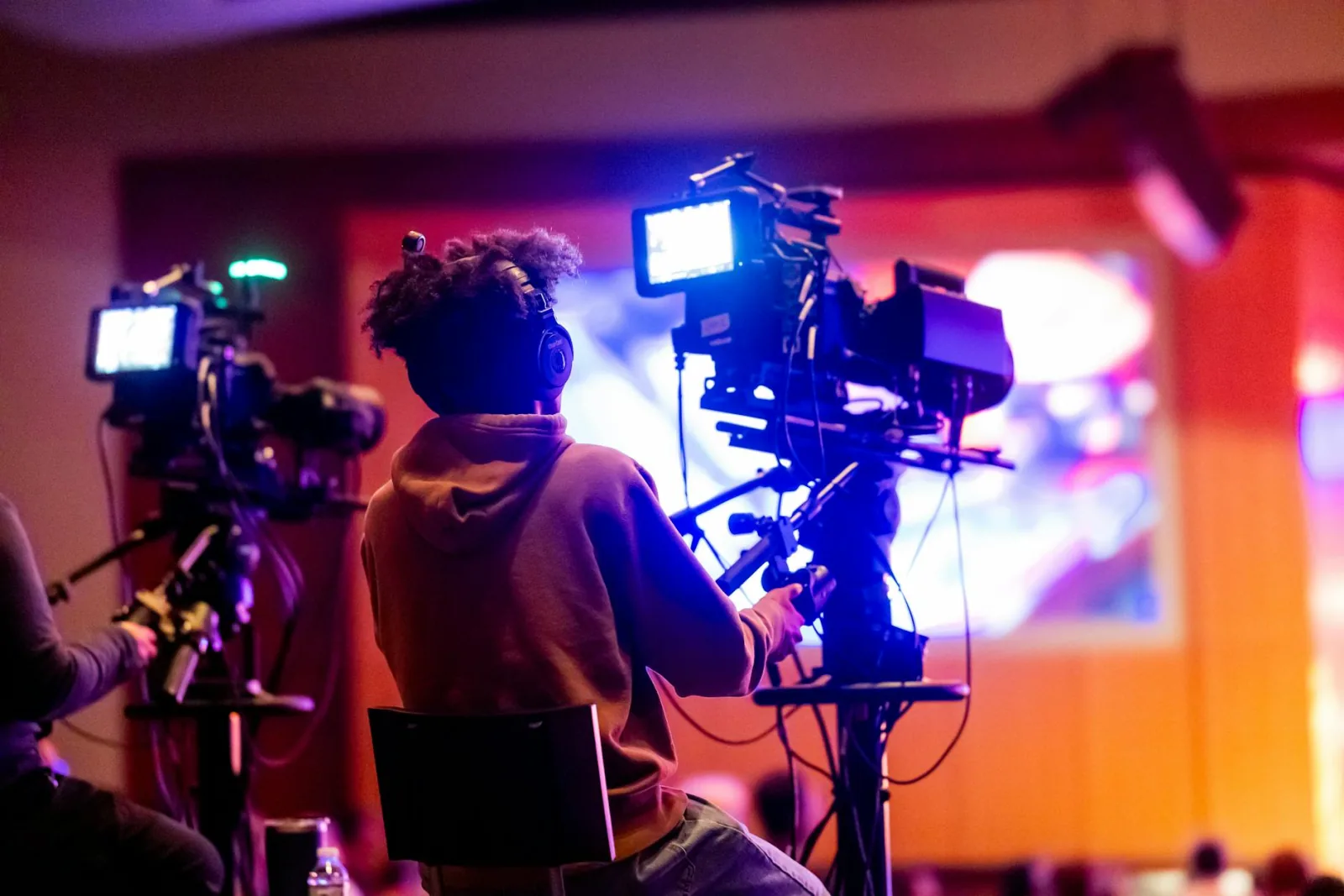
Marketing video budgets vary significantly by industry. This price segmentation reflects the production requirements, approval times and creative complexity specific to each sector. According to the BUMP 2025 barometer cited by CB News, the French media advertising market grew by 3.9% in 2025, driven almost entirely by digital growth (+11%).
Our analysis of 150 recent quotes reveals structural gaps between e-commerce, SaaS and physical retail.
E-commerce and digital brands (€3,000 - €8,000)
Pure-player e-commerce brands optimise their video budgets for direct performance. UGC formats dominate, with 65% of orders against 30% for classic creative ads.
The specific constraints: fast approval (48 hours maximum), multiple mandatory formats (9:16, 1:1, 4:5), frequent seasonal adaptation. These brands favour responsiveness over creative sophistication.
On average, an e-commerce campaign includes 3 to 5 videos adapted into 8 to 12 formats. Typical budget: €4,500 for a fashion brand, €6,500 for a tech brand.
The savings available: batched multi-product shoots, reusable templates, series production rather than one-offs.
SaaS and B2B tech (€5,000 - €15,000)
The B2B SaaS sector has the longest approval cycles and the highest creative requirements. Explainer videos dominate, with 70% of orders.
SaaS brands invest 2.3x more in creative development than e-commerce, according to our benchmark.
The budget specifics: frequent motion design animations, professional voiceover as standard, multi-level approval (marketing + product + management). These constraints mechanically push costs up.
Typical budget for a SaaS start-up: €7,500. Established scale-up: €12,000. Enterprise: €18,000+. The gaps reflect quality levels and message complexity.
Beware of multiple revisions that are not framed. Plan a separate revision fee beyond 3 rounds.
Retail and restaurants (€4,000 - €12,000)
Physical retail combines the constraints of e-commerce (multiple formats) and B2B (visual quality). In-store shoots account for 80% of productions, with specific logistical constraints.
Common additional costs: shoot permits, adapting to store opening hours, a larger crew to minimise the impact on customers. These constraints add €1,500 to €3,000 compared with a standard studio shoot.
Our retail references such as Bao Club or Globe Trotter illustrate this on-the-ground approach. Average restaurant budget: €6,500. Fashion/beauty retail: €8,500.
Procurement tip: negotiating shoot slots at off-peak hours significantly reduces logistical overruns.
Cost multipliers by quality level
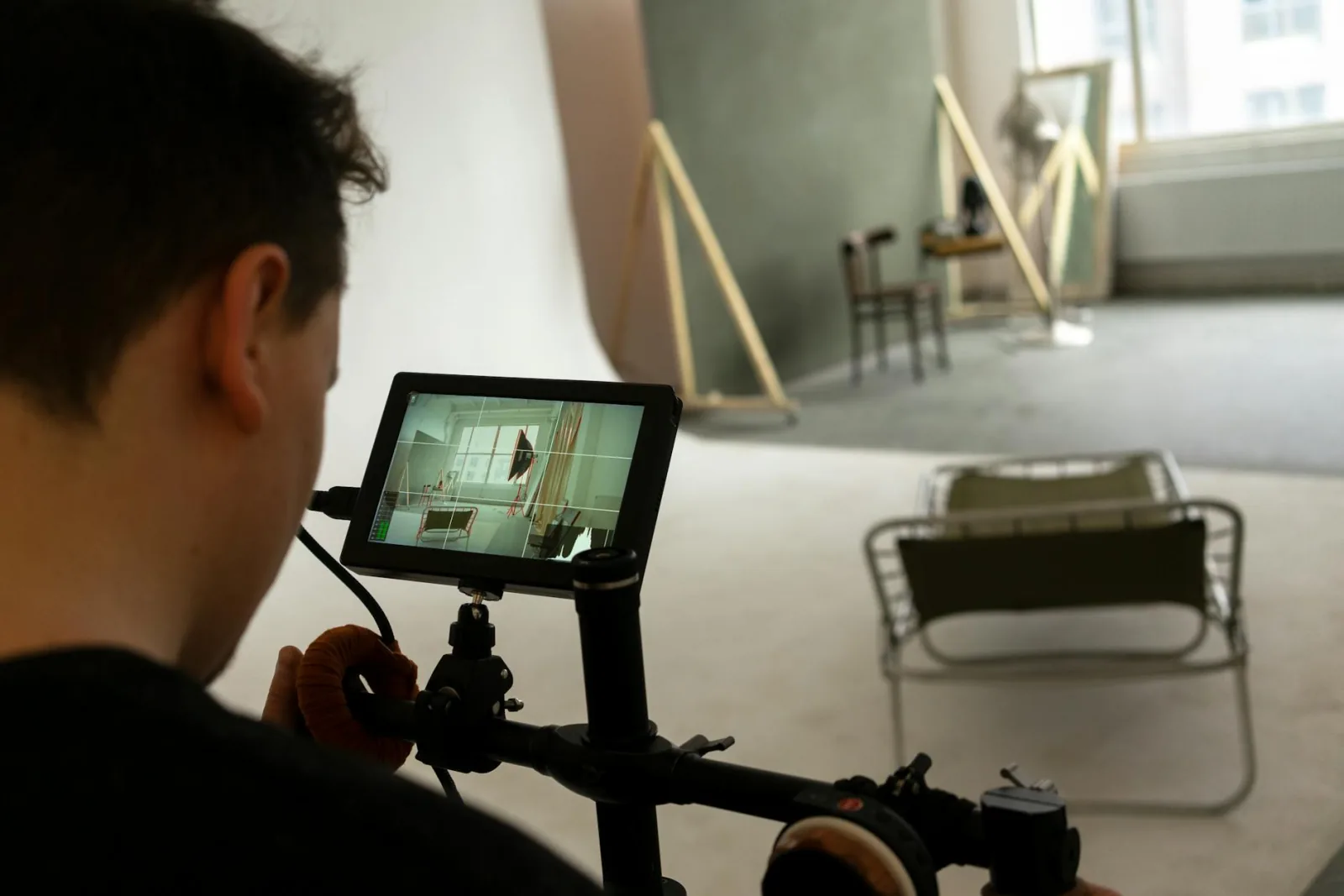
The quality level is the main driver of price gaps beyond the industry. Our analysis grid distinguishes three levels with fixed budget ratios.
These multipliers apply whatever provider you choose, from freelancer to Paris studio.
Standard production (1x multiplier)
Standard production covers 70% of e-commerce and start-up needs. Characteristics: vertical formats only, studio or single-location shoot, classic editing with no effects. According to Médiamétrie's l'Année Internet 2025, relayed by CB News, mobile accounts for 80% of the time the French spend browsing (against 66% in 2020) and 92% among 15-24 year olds.
This approach optimises value for money for brands seeking direct performance. Typical lead time: 2 weeks from brief approval to final delivery.
Concrete examples: e-commerce product video, simple customer testimonial, software demo. These formats generate 85% of conversions according to our case studies.
Typical budget: €4,000 to €6,000 depending on length and number of formats. Revisions included: 2 rounds maximum.
Creative production (1.5x - 2x multiplier)
Creative production adds a narrative and aesthetic dimension. Characteristics: a developed creative concept, stronger art direction, dynamic editing, advanced colour grading.
These productions target established brands looking for creative differentiation rather than performance alone. Longer lead time: 3 to 4 weeks to fit in the creative phases.
60% of scale-up brands choose this level for their awareness campaigns.
The justified extra costs: much more creative time, a larger creative team, specialist equipment, advanced post-production. The result: stronger memorability and clear competitive differentiation.
Typical budget: €6,500 to €12,000. These high-end creative ads justify the investment through their longer lifespan.
Signature production (2.5x - 3x multiplier)
Signature production is aimed at established brands seeking maximum impact. Characteristics: professional casting, multiple locations, a larger technical crew, cinema-grade post-production.
This approach suits major product launches and national awareness campaigns. Lead time: 4 to 6 weeks, with extended pre-production phases.
In concrete terms: our BYD France campaign illustrates this level, with CPC divided by 2.6. The initial investment is justified by lasting performance.
The additional guarantees: multiple versions, possible international adaptation, extended rights. Typical budget: €15,000 to €25,000 depending on the scale of the project.
Note: this level requires budget sign-off upfront. Creative revisions cost an extra €1,500 to €3,000.
Decoding the hidden items that inflate the bill
73% of budget overruns come from items not anticipated in the initial quote. These extra costs follow recurring patterns that can be identified in advance.
Pricing transparency is a major issue when negotiating with video providers.
Ancillary production costs (15-25% of the budget)
Production expenses are the most opaque item for advertisers. They include: crew travel, shoot catering, equipment insurance, casting fees.
In practice, a Paris shoot day generates €300 to €600 of ancillary costs depending on distance and crew size. These amounts add up quickly on multi-site productions.
Agencies often bill these costs at actuals with no cap, creating budget surprises.
Our Paris studio approach: flat-rate ancillary costs to avoid overruns. A predictable budget guaranteed from signature.
Advice: demand an ancillary cost cap in every video quote. Recommended threshold: 20% of the production amount at most.
Revisions and adaptations (10-30% extra cost)
Additional revisions are the most common budget trap. Beyond 3 rounds, each revision costs €500 to €1,500 depending on complexity.
Requests for format adaptation explode with multi-platform. Going from TikTok alone to TikTok + Instagram + YouTube multiplies exports by at least 3.
Aggravating factors: disorganised multi-level approval, an incomplete initial brief, creative changes of mind along the way. These internal dysfunctions mechanically inflate the bill.
Proven solution: strict approval framework from the brief, a single point of contact on the client side, a separate revision fee negotiated upfront.
Our methodological process limits these drifts through a stronger initial framing.
Usage rights and licences (5-15% of the budget)
Usage rights remain vague in 60% of the quotes analysed. The crucial distinctions: broadcast rights, duration, territories, authorised platforms.
Brands often discover these limitations after the fact: being unable to reuse the videos beyond 12 months, geographic restrictions, exclusion of certain platforms.
Extending usage rights costs 20% to 50% of the initial budget depending on the scope wanted.
The recommended negotiating points: extended rights for at least 24 months, all digital platforms, France + overseas departments and territories, internal reuse allowed.
Beware of talent and actors: their rights generate separate extra costs that are often not anticipated. Plan for an extra €1,000 to €3,000 depending on their profile.
The mistakes too many French brands still make
Awarding the contract to the cheapest bidder remains the number 1 mistake of procurement departments. This approach ignores real differences in service and causes 85% of project disappointments, based on our experience.
Underestimating the creative brief handicaps 70% of productions. Brands confuse a technical specification with a creative vision. The result: videos that are technically correct but commercially ineffective.
Failing to frame revisions blows up budgets in 60% of cases. Leaving the back-and-forth open encourages multiple approvals and costly creative changes of mind.
Systematically switching providers prevents the relationship from maturing. Changing video agency every 6 months means starting the brand brief from scratch on every project.
Negotiating usage rights at the end of the project costs 3x more than anticipating them in the contract. These late discussions create a power balance that works against the advertiser.
Steering by committee with no single decision-maker multiplies approval cycles by 2.5. This vague governance paralyses creative approvals and stretches production timelines.
How to measure video return on investment
Measuring video performance requires multi-level tracking depending on campaign objectives. KPIs vary dramatically between awareness, consideration and direct conversion.
For conversion campaigns (e-commerce): ROAS, CPA, click-through rate, watch time. Reference thresholds: ROAS >3, CPA <€30, CTR >2%, completion rate >25%. Tracking via Meta Ads Manager and TikTok Ads Manager.
For awareness campaigns (B2B): reach, brand lift, engagement rate, shares. Targets: qualified reach >100k, brand lift >15%, engagement rate >3%. Measured through Brand Lift Studies or post-campaign surveys.
The essential creative metrics: hook rate (first 3 seconds), hold rate (50% watched), action rate (final CTA). These indicators predict 90% of final performance.
Recommended tools: GA4 for site tracking, Triple Whale for e-commerce attribution, Brandwatch for social listening, Hotjar for behavioural analysis.
Evaluation period: 30 days minimum for paid campaigns, 90 days for organic. Video performance builds up gradually through the platform algorithms.
Frequently asked questions
Key takeaways
Controlling your video production costs requires a structured approach by industry and quality level. Anticipating hidden items avoids 70% of the budget overruns we see. Negotiating usage rights upfront and framing revisions optimise the investment. Measuring performance over 90 days minimum validates the real return on investment.
Related articles
- Video Agency or In-House Team: The Decision Grid for Scaling Your Vertical Production
- Marketing Video Creative Brief: The Complete 8-Step Guide
- TikTok Shop France 2026: Launch, Sell and Scale with Vertical Video
- The Future of UGC Marketing: When Authenticity Goes Industrial
- The Future of UGC Marketing: When Authenticity Goes Industrial