

The TikTok algorithm doesn’t pick videos: for each viewer, it picks the videos to show them. It tests every post on a small audience, measures three families of signals, user interactions (watch time, completion rate, replays, shares), video information (sound, caption, hashtags) and account settings, then widens or cuts distribution. Watch time and completion rate weigh the most; follower count is not a direct ranking factor. What follows turns each of these signals into a decision for the brief, the shoot or the edit. In its official note How TikTok recommends videos #ForYou, published in June 2020, TikTok states that neither follower count nor whether an account has previously posted high-performing videos are direct factors in its recommendation system.
How does the TikTok algorithm actually work?
The system doesn’t give your video a score: it estimates a probability of interest for one specific pairing (this video, this viewer), then distributes in stages for as long as that probability holds up. The same video can therefore be “good” for 40,000 people and completely invisible to the next 40,000.
TikTok’s documentation names three families of signals: user interactions, video information, and device and account settings. That last family, language, country, device type, is explicitly given the lowest weight. Hootsuite, in its January 2026 update, confirms the same hierarchy: engagement signals, with watch time and completion rate at the top, weigh more than everything else.
The detail that changes how you read your stats: engagement that happens after a full view is worth more than a like dropped at second 2. Darkroom Agency puts it plainly in its 2026 guide, and it matches what we see on our own client accounts: a video with 3,000 likes and 28% completion plateaus, while a video with 900 likes and 61% completion is still running three days later.
The distribution loop, in studio language
Publication. A test on a restricted audience, chosen by how closely their interests match the detected content (sound, objects on screen, text, caption, account history). Measurement. If the signals hold, the circle widens. If they collapse, distribution stops, with no notification, no penalty, no message. It is this silence that creators read as a punishment.
The operational consequence, and the heart of this piece: the phrase “my video is good” has no algorithmic meaning until you’ve said “good for whom”. A very informative 42-second edit can be excellent for an audience that’s already convinced, and disastrous at the top of the funnel, where nobody owes you three seconds of attention.
What does TikTok really document, and what do agencies repeat without a source?
TikTok documents families of signals and principles, never numerical thresholds: all the figures going around (“test on 200 to 500 users”, “65% completion”, “the first two hours”) are practitioners’ rules of thumb, useful but not guaranteed. Mistaking them for official information means building your dashboard on sand.
Let’s lay the two columns out side by side.
Documented by the platform or by reference sources: the three families of signals and their hierarchy; the fact that neither follower count nor past success is a direct ranking factor (webtonic, noted late 2025); the fact that finishing a long video is a stronger indicator of interest than a weak signal such as sharing the same country as the creator; the stability of the main signals despite continuous, unannounced updates (Hootsuite, 2026).
Agency folklore, to be labelled as such: the figure of 200 to 500 initial testers (ruche-pollen, noted 2026); the magic 65% completion threshold; the two-hour window; the 75-100% completion range as a “favourable threshold” put forward by some 2025 analyses. None of these numbers is confirmed by the platform. We use them ourselves as working benchmarks. We don’t build a contract on them.
The most stubborn myth, still found on well-ranked French blogs: TikTok supposedly sends new videos into a “pool of popular content checked by human moderators” before distributing them. No. Human moderation handles reports and flagged content; it doesn’t arbitrate the distribution of your Tuesday-morning Reel.
What we don’t know, and need to own up to: the exact weighting between completion, replays and shares isn’t public anywhere, and it probably isn’t fixed; it depends on the content vertical, the format and the platform’s internal trade-offs. When someone gives you a percentage to the decimal, ask for the source. There isn’t one.
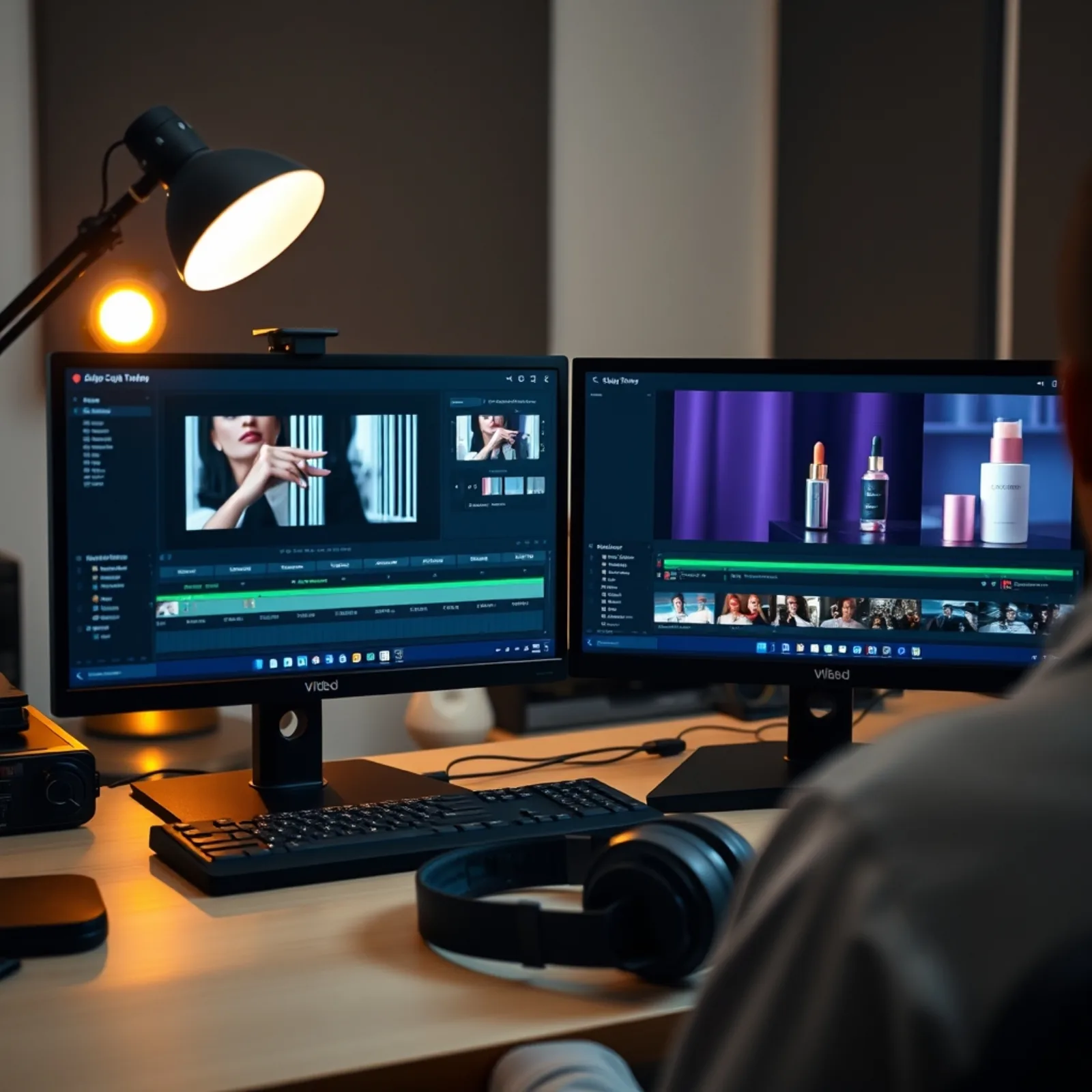
Why is my TikTok account ineligible for recommendation?
Ineligibility is a technical status attached to a video or an account, visible in the post’s statistics, and triggered by identifiable causes: unoriginal content, screenshots or reposts, sensitive subject matter, breaches of the community guidelines, repetitive serial content. It is not a subjective opinion on the quality of your marketing.
Marketing teams constantly confuse four situations. They need to be separated before panicking.
- Video ineligible for the For You feed. The post exists and is visible on your profile and to your followers, but it doesn’t enter recommendation. A message in the video’s stats mentions it.
- Account not eligible for recommendation. Rarer and more serious: all your posts are affected, usually after repeated violations. In the announcement of its updated penalty system, published in February 2023, TikTok states that accounts accumulating a high number of strikes, across all rules and features, are permanently banned, and that each strike expires from the account’s record after 90 days.
- Supposed “shadowban”. A creator term, not a platform term. In 4 of the 5 cases we have had to audit for clients, it was actually the fourth case.
- Simple under-distribution. Nothing is blocked. The content just didn’t convince at its first stage. It is the most frequent situation, and the only one that gets fixed in the edit.
The 48-hour reflex nobody writes about
Appealing a moderation decision or an ineligibility status is time-limited in the app. Check the deadline shown in your safety centre at the moment you do it; it has changed several times over the past two years, and we won’t publish a figure we can’t verify today. An internal working rule, however: we check the status of every video within 48 to 72 hours of publication. Not after two weeks, when the appeal window has closed and the account has already put out six more posts.
A real case from 2025, a food supplement brand: three videos in a row flagged as ineligible, reach divided by ten, and the in-house team concluded the algorithm had changed. The real cause: a health-benefit claim in the on-screen text, identical across the three edits because it came from the same template. Text removed, new versions published, and the curve returned to its previous level within a week. No algorithmic mystery in there. Just a template that hadn’t been proofread properly. According to the EFSA, the European Union adopted in December 2006 a regulation governing the use of nutrition and health claims on foodstuffs.
What is the best time to post on TikTok?
There is no universal ideal time, and posting time is the most overrated lever on the subject: a system that tests then widens over several days makes the time slot marginal compared with length, hook and completion rate. The “post at 6:47pm on Tuesday” infographics recycle old sector benchmarks, often with no stated methodology or collection period.
What we observe on the accounts we run: the performance gap between two time slots on the same video is far smaller than the gap between two different edits of that video. When a brand asks us to optimise its posting schedule while its hooks take seven seconds to get to the point, we decline the trade-off. It would be selling fine-tuning on an engine that isn’t running.
Build your own time slot in 14 days rather than copying someone else’s
The method comes down to four points, and it has the advantage of producing data that belongs to you:
- Open the “followers” tab of your native analytics and note the actual active hours of your audience, not those of a sector benchmark.
- Set two candidate slots, at least four hours apart. Not five. Two.
- Alternate over 14 days, with format and length held constant. Same type of content, same cut length, otherwise you’re measuring the edit and not the time.
- Compare median views at 72 hours, not averages. A video that breaks out into wide recommendation overwhelms any average.
The normalisation logic is exactly the one we apply on the media side when building cost benchmarks: same protocol, same duration, same conditions. If the subject interests you, our method for building your own CPM benchmarks in 14 days details the framework, which transposes as is to organic.
What matters more than the time: consistency. An account that posts four times a week produces enough data points to read something into. An account that posts three times a month has no usable data, just noise.
How do you make a good TikTok video for the algorithm?
A good TikTok video, in the algorithmic sense, is a video people watch to the end and that triggers an action after it finishes: replay, comment, share, follow. Everything else, image quality, framing, graphic identity, only serves those two things.
The problem with most articles on the subject: they list the signals and stop there. Knowing that “watch time matters” has never made a video win. What makes it win is knowing which production gesture activates which signal, and at what point in the chain that gesture is decided.
| Signal | What it really measures | Production lever | Where it’s decided | Cost of the lever |
|---|---|---|---|---|
| Completion rate | As much duration as interest | Length of the final cut | Edit | Low |
| 0-3 s retention | The opening promise, not the beauty of the shot | Visual hook + spoken hook written in advance | Brief | Low |
| Replays | Information density per second | Punchline or key information placed at the end | Edit | Low |
| Shares | Practical value or social identification | Creative angle (“that’s so you”) | Brief | Medium |
| Comments | An explicit reason to react | A question asked, a binary choice, an admitted mistake | Script | Low |
| Post-view follows | How legible the account’s promise is | Repeated editorial line, recognisable format | Strategy | High |
| Negative feedback | A gap between the promise and what follows | Honest hook, no bait | Brief | Low |
| Thematic consistency | How clear the signal sent to the system is | Editorial cadence and density | Schedule | High |
You don’t aim for completion, you cut for it
This is the least written-about workshop truth in the trade. Nobody “briefs” a 60% completion rate. You edit, you measure, you cross-check. On the rushes of a facial skincare brand shot in 2025, we put out four versions of the same shoot: 44 s, 31 s, 22 s and 17 s. The ranking by completion rate followed exactly the inverse order of duration. The ranking by views did too, except for the 17 s version, which lost out on shares because the product argument no longer fitted. The clear winner: 22 s. An internal reading from a single case, not to be generalised into a law. But it is exactly this kind of test that no generic article can run for you.
On the hook, there’s nothing to reinvent here: we have already published the 8 hooks that stop the scroll in under 3 seconds, and the question of measurement, at what point a hook counts as “good”, and with what ratio, is covered in how we measure a hook. What to remember here is that Hootsuite presents watch time over the first few seconds as the strongest ranking signal: anything that delays getting to the subject is paid for immediately in distribution.
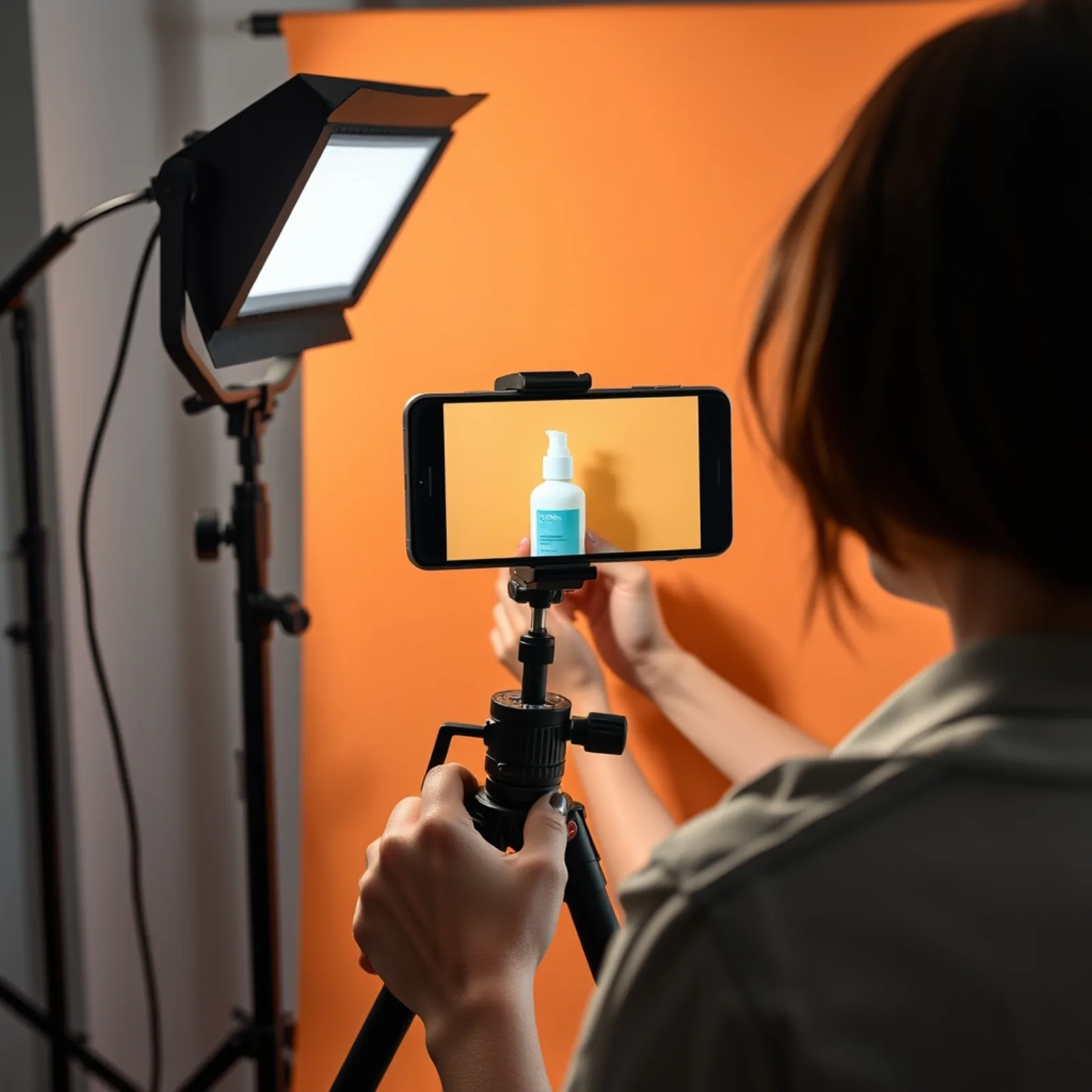
Are the organic algorithm and the advertising algorithm the same system?
No. In organic, TikTok estimates a probability of interest and gives you the audience; in Ads, you enter an auction where placement is won on an eCPM, your bid multiplied by the predicted conversion probability. Two logics, two cost units, two decision rhythms.
This distinction is missing from almost every page that covers the TikTok algorithm. Yet it explains half the misunderstandings we meet in meetings. When an e-commerce director says “our best video doesn’t work in ads”, they aren’t describing a bug: they’re describing two systems that don’t score the same thing.
| Criterion | Organic (For You) | TikTok Ads |
|---|---|---|
| Nature of the decision | Interest prediction per viewer | Auction arbitrated on predicted conversion |
| What you pay for | Production, nothing more | Production + CPM |
| Speed of the verdict | 48 hours to several weeks, in stages | A few days, depending on the budget committed |
| Volume of creatives required | Continuous cadence, high volume | Batches renewed at a pace dictated by fatigue |
| Role of followers | Not a direct ranking factor | None, the audience is bought |
| Stop signal | Distribution that no longer picks up | Frequency climbing, CPA drifting |
| Who decides on your side | Social media / content | Acquisition / media |
An example that serves as an internal warning. Late 2025, for a fashion client, an organic video with 310,000 views, a humorous format, a punchline at the end, widely shared. Put into ads untouched: decent CPM, decent hold rate, weak conversion. The reason came down to one line: the video made people laugh, it never showed the product being worn for more than two seconds and gave no reason to buy. It had optimised for sharing, not intent. We re-cut a version with the same hook and an eight-second product block added. Organic down, paid performance up. Two objectives, two edits.
The budget consequence is simple: if you count on your organic content to feed your ads without touching anything, you’ll lose time. Rushes can be shared; edits can’t.
“The algorithm has changed”: how do you check instead of just believing it?
Before concluding the platform has changed, rule out four more likely causes: too little publishing volume to conclude anything, technical ineligibility, creative fatigue, a change of audience. Hootsuite points out that the main ranking signals remain stable from one update to the next, even when the platform adjusts its system continuously and without announcement.
The five-cause grid, in the order we work through it
- Cause 1, volume. How many comparable videos over the period? Below about ten, you’re reading variance, not a trend. Two videos at 400 views after one at 90,000 is statistically unremarkable. It’s also the most common mistake in Reddit threads on the subject: comparing your latest post with your best post.
- Cause 2, ineligibility. Open the stats of each video concerned and check the status. Ten minutes of work. If a notice appears, you no longer have a mystery, you have an action.
- Cause 3, creative fatigue. Same hook, same structure, same setting for six weeks? Your audience has memorised the format and scrolls before second 2. The mechanism, its thresholds and the false positives that come with it are covered in detail in our piece on telling creative fatigue from an algorithm change.
- Cause 4, audience change. Content that spreads widely attracts off-target viewers, who don’t react to what follows. Reach rises, then collapses. Nothing is broken: your thematic signal has become blurred, and it cleans itself up in a few consistent posts.
- Cause 5, a real platform change. It exists. It is rare. It shows up across several accounts, several sectors, several weeks. If you’re the only one seeing it, it’s one of the four previous causes. On 6 February 2026, the European Commission concluded preliminarily that TikTok’s addictive design breached the Digital Services Act, targeting infinite scroll and autoplay in particular.
The rule we impose in steering committees: no strategic conclusion on fewer than ten comparable videos published in the same window. Comparable means: same format, same target length, same type of angle. Changing format every three videos and analysing the results is measuring your own indecision.
This rule has a budget implication brands don’t like to hear: if you publish four videos a month, you need two and a half months before you can say anything at all. That is exactly the subject of the monthly output that makes your numbers readable: below a certain production rhythm, you’re not buying data, you’re buying hope.
What really moved in 2026
One point is worth flagging, because it is documented and it changes briefs. Hootsuite noted a shift in early 2026: alignment with an identified community would weigh more than wide, random virality. In concrete terms for a brand: aiming for 80,000 relevant views in your niche is worth more than 600,000 views from the merely curious. In 2025 we stopped proposing “viral potential” concepts detached from the product, because the client accounts that published them climbed in views and stagnated in sales.
One last thing, and it’s an unpleasant one. The TikTok algorithm is the most discussed and least controllable variable in your marketing. You can act on neither its weightings, nor its updates, nor the profile of the first 300 viewers. What you control entirely: the length of your cuts, the quality of your first three seconds, your publishing cadence and your ability to diagnose in ten minutes instead of speculating for three weeks. That makes four levers. It’s more than enough to stop being at its mercy.
Frequently asked questions
- How does the TikTok algorithm work?
- It doesn’t pick videos: for each viewer, it picks the videos to show them. Every post is tested on a small audience, then assessed on three families of signals, user interactions, video information, account settings. Watch time and completion rate weigh the most. Follower count is not a direct ranking factor.
- Why is my TikTok account ineligible for recommendation?
- Because a technical rule has been triggered: unoriginal content, repost or screenshot, sensitive subject, breach of the community guidelines, overly repetitive posts. The status appears in the statistics of the video concerned. Check it within 48 to 72 hours of publication: the appeal window in the app is time-limited.
- What is the best time to post on TikTok?
- No universal time works. The system tests then widens over several days, which makes the time slot marginal compared with the length of the edit and the retention over the first three seconds. Build your slot by alternating two times over fourteen days, with a constant format, and compare median views at 72 hours.
- How do you make a good TikTok video?
- A video people watch to the end and that triggers an action after it finishes. In practice: get to the subject before second 3, cut every dead moment, place the strong information at the end of the edit to prompt a replay, and give an explicit reason to comment. Length is decided in the edit, not in the brief.
- How many views does it take to say a video worked?
- There is no absolute threshold. Compare each video with the median of your last ten posts of the same format and length, not with your record. A video that beats your median by 50% is a usable signal; a single video at 300 views after one at 100,000 is normal variance.
- Does follower count influence a video’s reach?
- Not directly. Neither audience size nor past success is a ranking factor, which is why a first post can reach further than an account with 100,000 followers. Followers help indirectly: they provide a first stage of viewers who are already interested, and therefore faster engagement signals.
Let’s turn your signals into editing decisions
You now know that distribution is decided by cut length, the first three seconds and cadence. You still need to produce enough variants to check it. We are a vertical video studio, creative ads, UGC, organic TikTok, Reels and Shorts, with a dedicated Creative Strategist, in-house shooting and editing, and fast iterations. Thirty minutes on the phone: formats, budget, action plan. No agency pitch deck.
Book a call →30 minutes to talk formats, budget and action plan.