

Can a recipe do more than rack up views? Yes, when it makes a product desirable, shows how to use it and leads to a simple action. For a brand, food content brings inspiration and trial closer together, without converting automatically. This approach can draw on our vertical videos for restaurants, designed around how people use social media.
Food recipes on social media become a commercial lever when the content, the offer and the purchase journey are aligned. A food brand, for example, will aim to prompt a product page visit or a purchase. A restaurant will rather aim for a booking, an order or a visit to the venue.
Why does a recipe attract a relevant audience?
A recipe puts a product in context. The audience sees not only the packaging, but also the imagined taste, the preparation and the occasion for eating it. This demonstration makes the offer more tangible than a standalone product presentation.
The potential reach is real, but its value depends on the audience reached. In a 2026 survey by Linéaires on food accounts, 37% of the 1,033 people surveyed followed at least one type of food-related account on social media. Food brands were followed by 18% of respondents, and creators who make recipes by 16%. The survey on food accounts thus distinguishes brands' audiences from those of food creators.
This difference matters when choosing who carries the message. Content published by the brand strengthens its presence and keeps the message under control. A collaboration with a creator can place it within an editorial world that already has followers. Either way, the format must match the objective, not just a trend.
From Content to Purchase: Building a Frictionless Journey
Conversion doesn't happen only in the video. It also depends on what the person can do next. A recipe featuring an ingredient should lead to a product page, a point of sale or an easy-to-understand offer.
Campaigns sometimes combine several channels, so their results need to be read carefully. In its 2025 activity report, Interfel describes a campaign running four recipe ideas on Facebook and Instagram alongside radio. It reports an 11% rise in sales volume among exposed households. This result relates to the campaign as a whole: it does not allow the change to be attributed to the recipes alone or to social media alone. Interfel's activity report nonetheless provides a documented example of a campaign linking recipe ideas to a purchase objective.
To apply this approach, define one main action before the shoot. A sauce manufacturer can invite viewers to see the full recipe, then direct them to the page for the product used. A restaurant can showcase a dish and offer a booking or an order. In the restaurant sector, content must also take into account the area served and seating capacity.
Choosing a Format That Shows the Product in Action
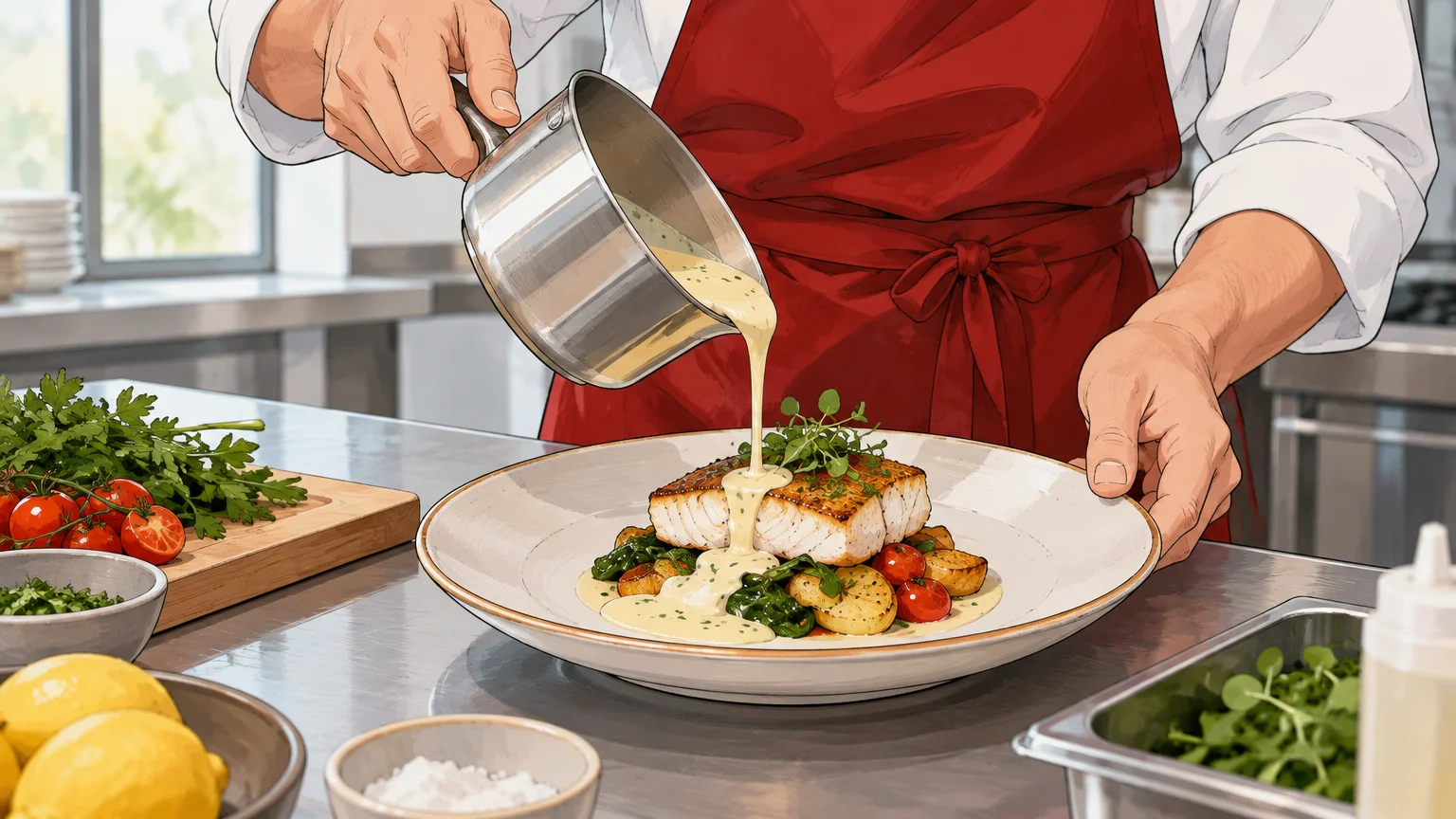
A useful format shows enough steps to make the recipe understandable and enough of the product to connect it to the brand. A short vertical video can stage a preparation, while a carousel can break down steps or ingredients. The right choice depends on the recipe's complexity and the expected action.
Plan one central idea per piece of content. For example, a pasta brand can show a recipe that's doable on a weeknight, then reveal the packet at the moment it's actually used. Avoid piling up messages, products and calls to action in a single post: the audience should immediately understand what the recipe offers them.
The purchase journey also depends on the sales model. Some brands direct their audience to their online shop or to a point of sale. Others may consider an integrated commerce solution, such as TikTok Shop in France. Either way, the content must clearly state where it's sending people.
Designing a Recipe Around a Measurable Action
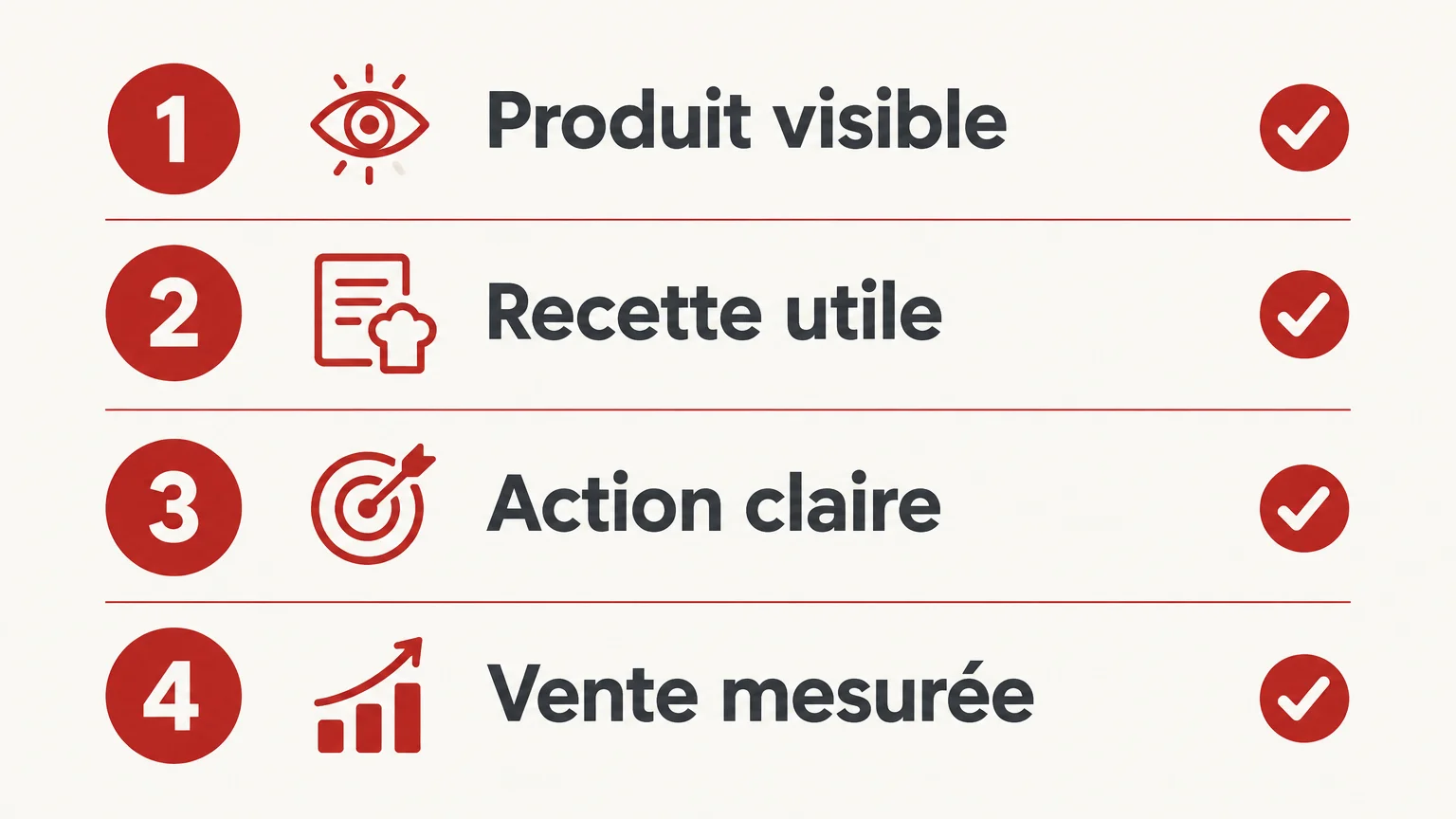
A conversion-focused recipe must give a reason to stop scrolling, useful information and an achievable next step. Before publishing, check these four elements:
- Visible product at the moment it comes into the recipe.
- Clear usage, with steps and quantities suited to the format.
- Explicit action, such as viewing the full recipe, ordering or booking.
- Consistent destination, with a page that matches the offer and the content.
Transparency also boosts credibility. If the post is part of a commercial partnership, say so clearly and make sure the opinion expressed is consistent with the experience shown. A product that's visible but absent from the recipe, or a link leading to an unrelated page, undermines trust and the journey.
For a restaurant brand, the content can be part of a series rather than a one-off post. Our Bao Club case study offers an example of content dedicated to a restaurant business, without drawing conclusions about results not documented here.
Measuring Sales Rather Than Stopping at Views
Views indicate distribution, not purchases. To understand a recipe's contribution, track several stages of the journey: reach, retention, saves, clicks, page visits and conversions. A rise in interactions can signal interest, but on its own it doesn't prove that sales have grown.
A benchmark helps put content results in context. Published in 2026, Socialinsider's analysis covers 49,068 Facebook and Instagram posts from 2025, including 5,000 posts from food brands and 5,000 from restaurants and cafés. It looks in particular at engagement by content theme. This kind of comparison sheds light on observed interactions, not directly on the sales generated by a recipe. The analysis of social posts can therefore complement internal tracking without replacing conversion data.
To link a post to a sale, use tagged links, dedicated landing pages, promo codes or order data where possible. Then compare the results with a relevant baseline period or control group. Also note the measurement window: a recipe saved today may lead to a visit or purchase later.
At Esekai, we have worked with more than 350 brands. Depending on each campaign's objectives, we track metrics such as retention, engagement, clicks and conversions. This analysis helps distinguish content that grabs attention from content that moves the sales journey forward.
Recipes: Content to Connect to the Purchase Journey
Social media recipes for brands can support conversion when they show real usage, reach the right audience and lead to a simple action. To assess their contribution, link content metrics to clicks and sales, then refine the format and destination based on the results observed.
Creating Food Videos Designed for Conversion
A recipe requires a balance between desirability, clear usage and an effective journey. The choice of format, the way the product is showcased and the proposed action must all serve the same objective, whether it's an order, a booking or a visit to a point of sale.
We create organic content, UGC videos and creative ads for TikTok, Instagram Reels and YouTube Shorts. Our team supports brands from strategy through to shooting and editing, with metric tracking tailored to each campaign. We have worked with more than 350 brands, and every project is quoted individually based on volume and level of support. To discuss your needs, discover our video production for restaurant brands.
Frequently Asked Questions
Do recipes posted on social media drive sales?
They can contribute to sales if they clearly feature a product and lead to an accessible action. Measure clicks and purchases, not just views or likes.
Which call to action should you choose for a brand recipe?
Choose an action that fits the journey on offer: viewing a product page, ordering, booking or finding a point of sale. Keep one main call to action per piece of content.
Should you post the same recipe on every platform?
You can reuse an idea, but adapt the edit, length and presentation to how each platform is used. Also check that the link and call to action remain relevant on each channel.
Which metrics should you track to evaluate a recipe video?
Track reach and retention first, then meaningful interactions, clicks and conversions. The right metric depends on the business objective set before publishing.
How can Esekai support a food brand?
Our services cover strategy, vertical video production and, depending on the project, media buying or social media management. Scope and pricing are quoted individually based on content volume and the level of support required.