

How much should you invest to find out whether a video ad can convert, without confusing media spend with production? The media budget for a video ad is the money spent on distribution across the platforms, separate from the shoot, editing and campaign management. To frame these cost items, see also our article on the cost of a creative ads campaign: media budget and production, which looks specifically at how they fit together.
The market provides context, but not a rate to apply to every campaign. In the first quarter of 2026, video advertising investment in France reached an estimated €1.63 billion net, or 42% of the overall advertising market, according to figures from Kantar Media. This total describes the scale of the sector, not the budget your business needs.
Separate Media Spend From Video Production Costs
A campaign can draw on several separate budgets: media buying, video production and, depending on the project, campaign management. The media budget is paid to the platforms to distribute the ads. The shoot, editing and creative variations fall under a different cost item.
In 2026, our usual starting benchmark for moving beyond initial tests is around €1,500 to €3,000 of media per month. This amount excludes creative production and varies according to objectives. It is therefore neither a universal threshold nor a guarantee of results.
To estimate a suitable budget for social media, start from your objective, the number of videos to test and the campaign period. Our resource explains how to set your social media video budget and media floor without mixing up media and production spend.
Calculate the Budget From the Result You Want
Let’s take an example: a business wants to generate quote requests. It sets €40 as the maximum acceptable cost per request and aims for 20 requests. Its test media budget is therefore €800, spread over the period set for the campaign.
The starting formula is simple: target results × acceptable cost per result. For an awareness objective, use a target cost per view or per thousand impressions instead. For a sales campaign, start from a cost per acquisition that works with your margin.
This calculation gives you a budget, not a certainty about the number of results. Check that the budget allows you to compare the chosen creatives and audiences. If the total is too small to produce readable data, reduce the number of variables tested rather than spreading the spend too thinly.
Choose Platforms Based on the Campaign Objective
Two businesses with the same budget should not necessarily invest in the same channels. A campaign designed to generate views is not built in the same way as a traffic or conversion campaign. The budget is allocated according to the target audience, the format and the action you expect.
Metricool’s Social Ads 2026 study analyses 628,969 campaigns run by 44,355 advertisers on Meta and TikTok. In this international sample, average spend per campaign was $1,309 on TikTok and $718 on Meta. These averages describe the campaigns studied, not a recommended minimum budget for France. Use the Social Ads 2026 study as a point of comparison, not as your calculation rule.
First, identify the platform that lets you reach your audience in the right context. Then split the budget between channels only if you can compare their results against a common objective. To help you make these choices, we can build a media plan tailored to video advertising.
Set Aside a Budget for Testing Formats and Creatives

Imagine your campaign gets very few clicks. If you have run only one creative, you won’t know whether the problem lies in its hook, its format or the targeting. A test budget should let you compare clearly defined variants, without making too many changes at once.
Format also matters when allocating budget. In its Q1 2026 benchmark, Tinuiti reports that Shorts accounted for 18% of spend on the YouTube video campaigns studied, compared with 63% for skippable in-stream ads. These proportions describe the scope of the benchmark, not a recommendation valid for every advertiser. They show why it is worth distinguishing between formats when reading results, as detailed in Tinuiti’s YouTube benchmark.
For your tests, define one hypothesis per variant, such as a different hook or a shorter edit. Keep the same objective and comparable targeting. Also plan a separate production budget, as new videos or variations are a different need from media buying. Our guide helps you calculate your monthly creative budget and media threshold.
Track Your Metrics Before Increasing Spend
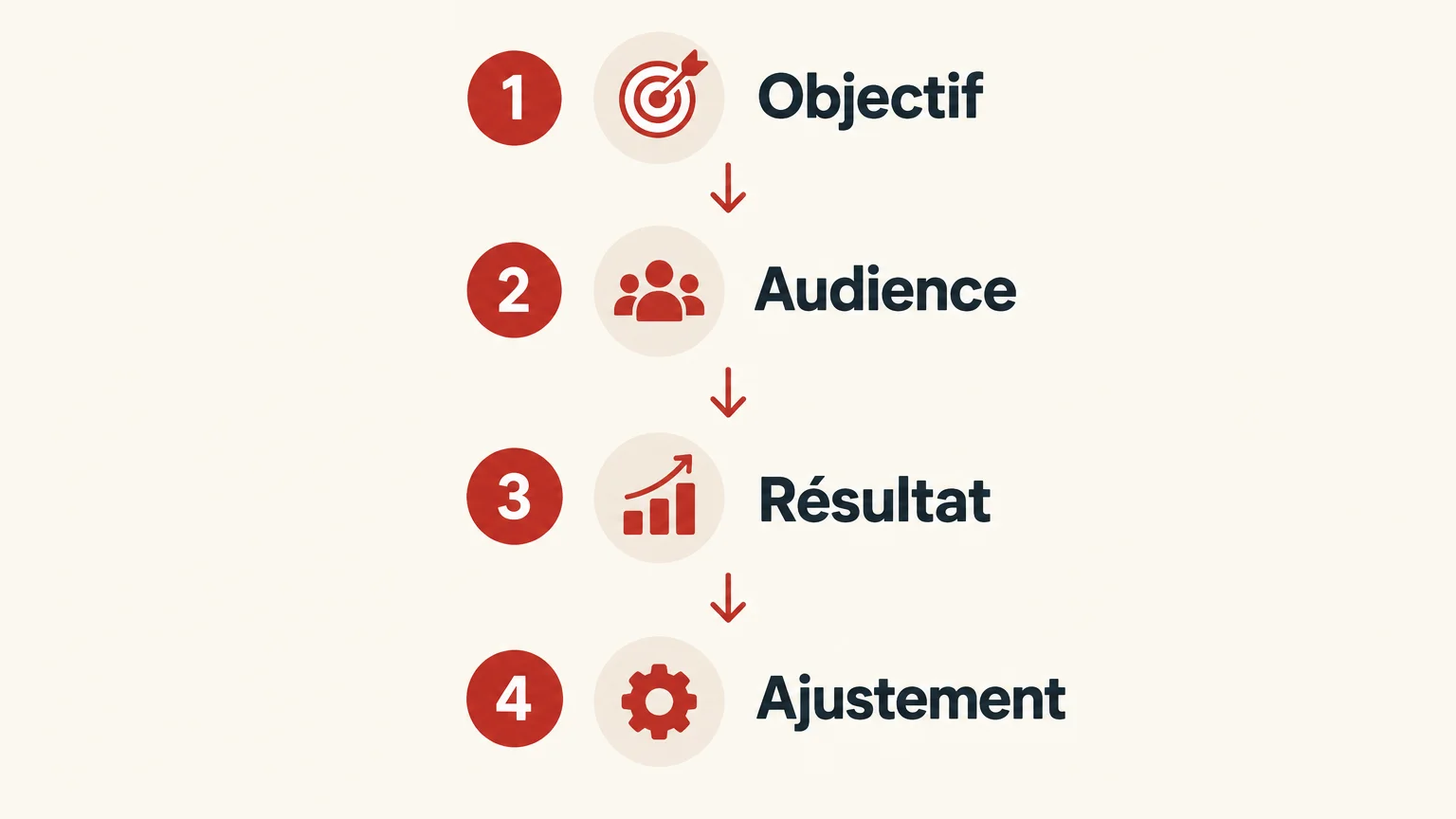
What should you measure? Choose one primary metric based on the objective, then a few diagnostic metrics. For awareness, track reach, views and retention. For traffic, look at clicks and the visits generated. For sales or enquiries, monitor conversions and their cost.
Compare variants over the same period and using consistent criteria. If a creative attracts views but doesn’t drive the expected action, don’t be too quick to conclude that it is effective. Identify the stage where results drop off, then adjust the message, audience or format concerned.
Increase investment when the results meet your objective and tracking is sufficiently clear. Then reallocate part of the budget to the audiences and creatives that best fulfil the role you set. Our media management can include campaign structure, targeting, A/B tests, retargeting and optimisation.
Settle on a Method Before Setting the Amount
To set a video media budget, start from the objective and the acceptable cost per result. Then separate media buying from production, choose the formats and audiences to test, and track a suitable metric for each campaign. A monthly benchmark can help frame your starting point, but only a budget tied to your objectives and results will guide your adjustments.
Let’s Build a Joined-Up Creative and Media Strategy
Setting a budget is more useful when creatives, objectives and campaign management are planned together. Our team supports brands from strategy and scriptwriting through to the shoot, editing and delivery of videos designed for digital advertising.

We can also combine production with campaign management, including media structure, targeting, A/B tests and results analysis according to the needs of the project. To discuss your content and the options that suit your brand, you can explore our video creative ads offer. An initial 30-minute meeting is free and with no obligation.
Frequently Asked Questions
Does the media budget include video production?
No, it covers distribution spend on the platforms. The shoot, editing and creative variations should be budgeted separately.
How do you set a budget with no campaign history?
Set an objective, estimate the maximum acceptable cost per result and define the volume you want to achieve during the test. Start with a simple hypothesis, then adjust based on the data collected.
Should a video ad run on several platforms?
Not necessarily. Choose your channels based on your audience and objective, then expand distribution if you can compare results consistently.
Which metric should you use to evaluate a video campaign?
It depends on the objective: views and retention shed light on awareness, while clicks, conversions and their cost help evaluate an acquisition campaign. Track one primary metric rather than judging the campaign on views alone.
When should you increase a campaign’s budget?
Increase it when the results match the objective and tracking lets you identify the effective creatives and audiences. Do so gradually and check that the quality of results remains stable.