

Does your campaign choose its channels because they meet a specific objective, or because they feel familiar? A media plan turns communication choices into organised actions, with consistent audiences, budget and timeline. To build a lasting social presence, you can also prepare a six-month social media strategy.
The challenge is not to be everywhere. It is about prioritising the channels that serve the message, planning the resources required and measuring what each channel contributes. Your plan therefore needs to be precise enough to guide execution, yet flexible enough to take results and shifting priorities into account.
What result do you expect from your campaign?
Start by defining the change the campaign needs to bring about. Building awareness, driving store visits and generating quote requests are different objectives. They do not call for the same messages, the same channels or the same success criteria.
Then set measurable objectives with an expected result and a deadline. For example, replace “improve visibility” with “increase reach among our priority audience during the campaign”. Only add a target figure if your baseline data allows you to set a credible ambition.
Describe the people you want to reach: their needs, how they get their information, where they are located and the barriers that may slow their decision. Distinguish priority audiences from secondary ones. This hierarchy helps you avoid an overly generic message and keep resources for the audiences that matter to the objective.
Finally, separate the desired outcome from the planned actions. “Post on Instagram” is a task, not an objective. “Raise awareness of a new offer among a defined audience” sets a direction to which posts, ads and KPIs can then be linked.
Which media and formats suit your audience?
Imagine a brand that wants to reach business decision-makers in a specific region. A very broad national outlet is not necessarily the most relevant. A trade publication, a targeted social campaign or a combination of local channels may serve this need better, depending on the audience’s habits and the message.
Compare media using three questions: does your audience use them, does the format suit the message, and can you feed them properly? The answers let you choose a few priority channels rather than spreading your efforts too thin. Also distinguish between paid media, brand-owned spaces and coverage earned through partnerships.
To select press titles, rely on dated audience data suited to your target audience. The ACPM has published OneNext Insight 2026, which brings together press audience, digital usage and consumption data, among other things. Some of the digital data is based on audiences measured between September and November 2025, so check the period and scope before comparing titles.
Lastly, assess how well the formats complement each other. A short video can grab attention, while a detailed page answers questions and makes it easier to get in touch. Keep the same core message, but adapt its presentation to how each channel is used. Consistency does not mean publishing identical content everywhere.
How do you link the media budget to creative production?

A campaign can set a distribution budget without having defined the content to promote. To avoid this mismatch, distinguish the media budget, spent on buying distribution, from the cost of producing the creatives and the resources needed to adapt them.
In the first half of 2026, net advertising revenue across all media in France grew by 5.6% compared with the first half of 2025, while digital rose by 12%. These trends appear in the BUMP for H1 2026. They describe the market, not the performance a business can expect from a particular channel.
Next, allocate resources according to the role of each action: building awareness, generating interest or driving conversions. Specify the amounts and resources assigned to each channel, as well as the creative costs. This view stops you comparing an ad-buying budget with the total cost of a campaign that also includes production.
Creative work and campaign management can be coordinated or handled separately. At Esekai, we can combine ad content production with media management, or work on just one of these areas. To estimate the cost items of a campaign, see the media budget for a Creative Ads campaign and our guidelines for calculating the monthly creative budget and media tier.
How do you turn your choices into an execution timeline?
A channel choice only becomes an action once its date, duration and owner are defined. Build a media calendar showing key moments, campaign periods, approval dates and production deadlines. Leave room for adjustments rather than filling every week in advance.
For each action, record the channel, audience, format, message, planned budget and the person responsible for execution. Add the expected result and the associated KPI. A shared spreadsheet is enough as long as everyone can quickly see what is planned, in progress, approved or completed.
Frequency must remain in line with the resources available. If a brand plans to publish videos every week, it needs to schedule the scriptwriting, shoot, editing, approvals and any adaptations required. For a video campaign run by an SME, our budget guidelines help you set an SME’s social media video budget.
Also schedule review points. A regular check-in helps you spot delays, reschedule a placement and clarify trade-offs before they hold up the campaign. Explicitly assign the final decision, even when several teams contribute to preparation and approval.
Which KPIs should you track to adjust the plan?
Choose your key performance indicators based on the objective, not on the most prominent figures in a platform. For awareness, track reach or impressions, for example. For an acquisition campaign, look at clicks, enquiries and their cost, making sure the data covers the same period.
Before launch, decide when results will be reviewed and who can change the spend. If a channel generates attention without producing the expected actions, first check the targeting, message, format and post-click journey. Changing the budget alone will not fix a poorly suited ad.
Habits vary by sector and audience. A 2026 study by the French Ministry of Culture and Arcom on news consumption in France found that most respondents combine more than two channels and use more than nine online media brands. This study on news consumption covers how people consume news, not all purchasing behaviour. Nevertheless, it highlights the value of testing how channels complement each other, without generalising its findings to every audience.
After each review, record the lessons learned and the decisions taken: keep a channel, change the creative, adjust the frequency or reallocate part of the budget. The plan thus becomes a management tool rather than a fixed calendar. Keep a record of the reasons for changes so you can compare campaigns and make better decisions next time.
A useful media plan stays manageable
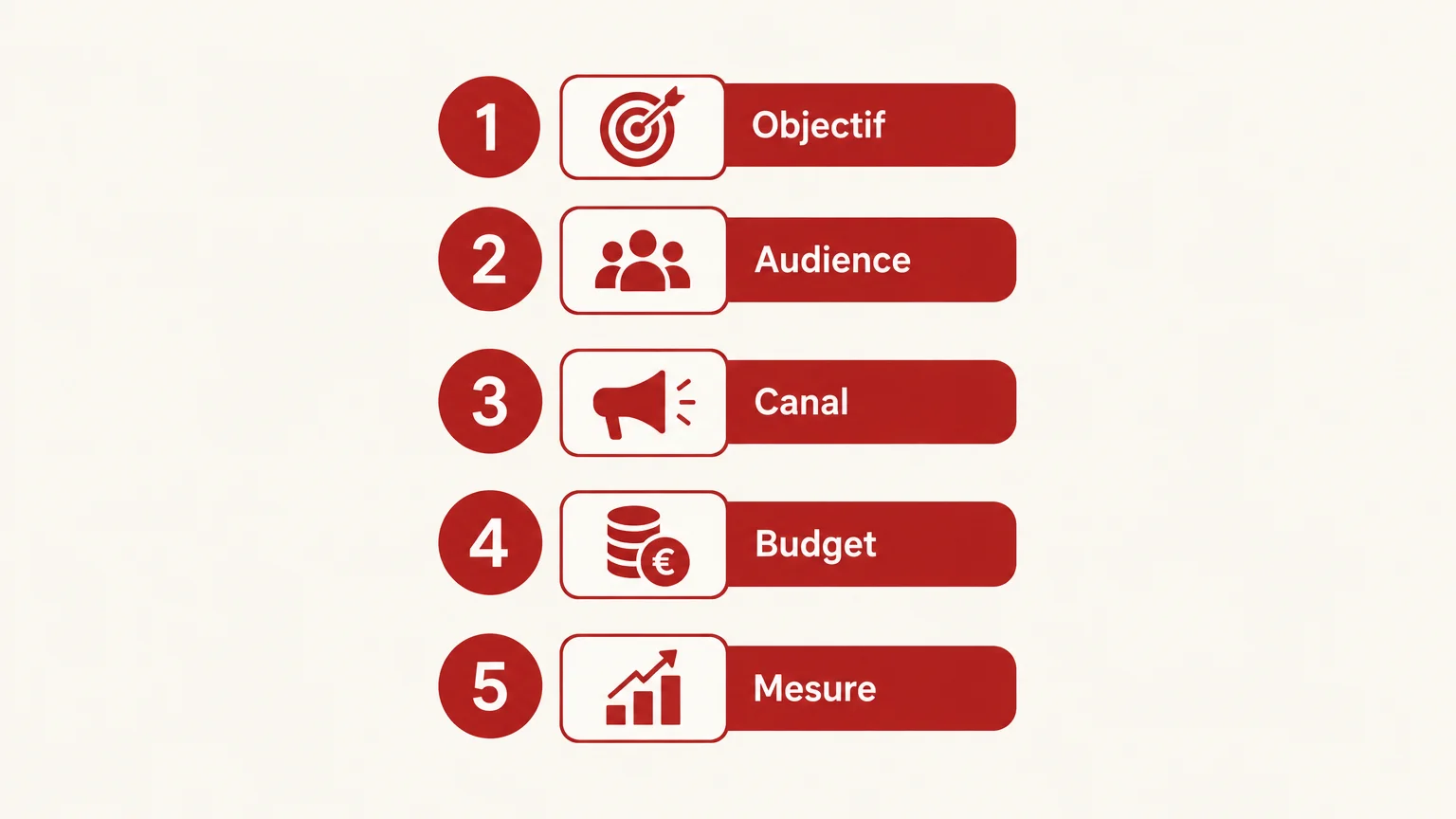
An operational media plan links a clear objective to a defined audience, suitable channels, a complete budget and a realistic timeline. Assign each action a KPI and an owner. Review results at regular intervals, then adjust the set-up according to what the data genuinely allows you to conclude.
Structure Your Meta Ads Campaigns
When your plan includes social media advertising, ad creation and distribution management work best when coordinated. At Esekai, we support brands from strategy through to vertical video production, with media management that can be combined with creative work or handled separately. We have worked with more than 350 brands and can point to €50M in revenue generated and 500M cumulative views. These figures are aggregated and do not break down the results attributable to each client.

To frame your campaign, its audiences, creatives and KPIs, talk to our Meta Ads agency. The set-up is defined according to your objectives and the resources required, with a media budget kept separate from production costs.
Frequently Asked Questions
What is the difference between a media plan and a communication plan?
The communication plan sets out the overall strategy, audiences and messages. The media plan specifies the distribution channels, formats, timeline and associated spend.
What should a media plan include?
It brings together the objectives, audiences, channels, formats, budget, timeline and tracking KPIs. It also sets out responsibilities and how adjustments will be made.
How do you choose the right channels?
Compare your audience’s habits, how well the format suits the message and the resources needed to sustain the campaign. Prioritise the channels that best meet the defined objective.
Is the production budget included in the media budget?
No. The media budget pays for distribution, while production covers content creation. Plan for both to estimate the full cost of the set-up.
How do you coordinate ad creatives and campaign management?
From the planning stage, define the role of the creatives, the tests planned and the KPIs to track. At Esekai, we can combine ad content production with the management of Meta Ads or TikTok Ads campaigns.