

A vertical video agency produces a steady flow of 9:16 formats for TikTok, Instagram Reels and YouTube Shorts, billed by cost per creative. A 360 agency manages all of a brand's channels (print, web, media, events) and bills per project, plus fees. The deciding criterion is not scope but throughput: below 8 videos a month, a 360 agency is enough; above that, a specialist studio becomes cheaper per usable creative. The rest of this article gives you the method for converting both quotes into the same unit, and the cases where we ourselves recommend the 360 agency. According to the 35th Observatoire de l'e-pub from the SRI and UDECAM published in 2026, the French digital advertising market reached €12.4 billion in 2025 (+11%), driven in particular by social and video.
We regularly work downstream of 360 agencies: they own the brand platform, we produce the vertical flow. As a subcontractor, we see both rate cards, both rhythms, and the friction points that always appear in the same places. This article starts from there.
What is a production agency, and why is a vertical studio not one?
An audiovisual production agency is a structure that brings together project managers, directors, camera operators, editors and motion designers in-house to deliver a finished film, from brief to release. Its unit of work is the film. It knows how to write a script, scout a location, cast actors, hire lighting, manage a crew of six to twelve people over a shoot day and deliver a graded master with a sound mix.
A vertical studio does not have that org chart. It has a creative strategist who reads performance data, creators who film on a smartphone at home or in a light studio, social editors who turn out three to six edits a day, and often a creative analyst who looks at which hooks hold after 3 seconds. Nobody scouts locations. Nobody manages a production crew.
The two trades share the word “video” and almost nothing else. Here is where the difference shows in practice.
| Role | Traditional production agency | Vertical studio |
|---|---|---|
| Director / director of photography | Present, central | Rare, replaced by a reusable reference framework |
| Creative strategist | Absent (replaced by an upstream strategic planner) | Present, drives the iteration plan |
| Production management / executive production | Present, a heavy cost line | Almost non-existent |
| Social editor (subtitles, 9:16 pacing) | Subcontracted or improvised | Heart of the workshop |
| Creative analyst / reading ad metrics | Absent, or on the media side rather than production | Present, shapes the next brief |
| Dedicated colour grading and sound mixing | Listed as separate items on the quote | Built into the edit, rarely billed separately |
Neither is better than the other. A production agency will always make an employer-brand film or a founder film better than a vertical studio. The reverse is true on a plan of 30 creatives a month.
What is 360-degree communication, and what does a “360 agency” really cover?
360-degree communication means coordinating all of a brand's touchpoints, digital and physical, around one consistent message and a single customer journey. The definition is taken as is by the agency Kerencia in its 2026 guide, and by most players in the market. In practice, “360 agency” and “full-service agency” mean the same thing: a structure that takes on the brand as a whole, covering identity, print, website, media, social, events and sometimes PR.
The French advertising market is worth around €18 billion in net revenue, with digital accounting for roughly 60% (Observatoire BUMP, latest published year). A 360 agency sells precisely the ability to arbitrate between these channels without the brand having to piece things back together. It is a real service, and a hard one to deliver. According to the Irep's BUMP 2025, France Pub and Kantar Media, as reported by The Media Leader, net advertising revenue across all media reached €19.795 billion in 2025, up 3.3% year on year.
Here is the nuance nobody writes down: 360 describes coverage, not depth. A full-service agency guarantees that your print, your website and your Reels tell the same story. It does not guarantee that it will produce 25 Reels a month. Those are two separate promises, and confusing the two is behind most of the contract breakdowns that reach us second-hand.
A typical case: a brand signs a 360 retainer at €4,500 excl. VAT a month in fees, and gets a solid brand platform, a brand book, a rebuilt website and three vertical videos a month. With €10,000 of monthly media spend on Meta, three creatives are not enough to feed even a single ad set properly. The problem is not the agency's competence. It is the unit of purchase.
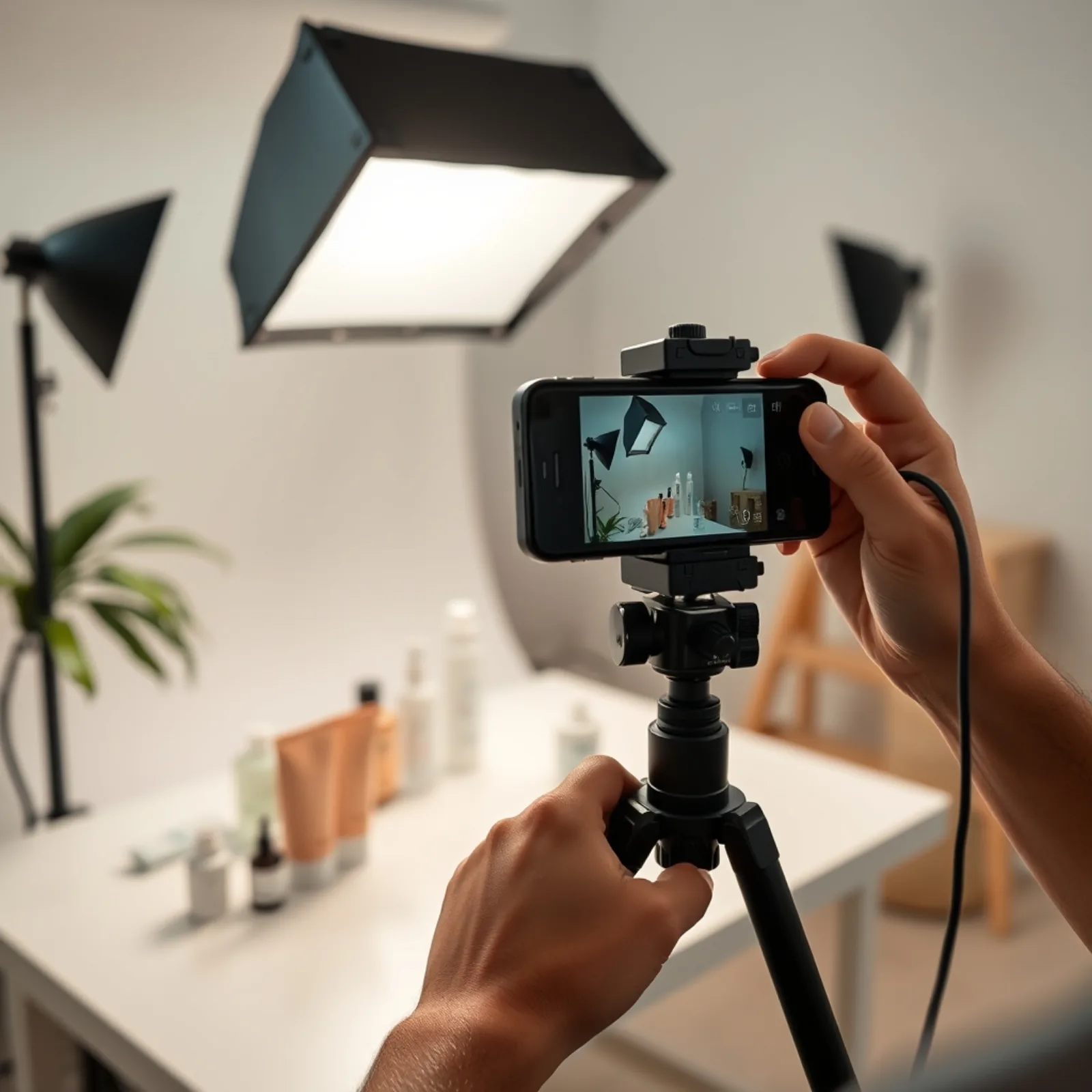
How do you make a 360 video, and why is that not what a 360 agency sells?
An immersive 360° video records the scene in every direction at once, using an omnidirectional camera or a multi-lens rig, then stitches the feeds together for playback as a virtual tour or in a VR headset. The definition comes from Wikipedia's “immersive video” article, consulted in 2026. It has nothing to do with 360-degree communication. Same word, two markets.
The process comes down to five steps: choosing a single viewpoint (you cannot reframe afterwards, so camera placement is the weightiest decision); capture with an omnidirectional camera such as an Insta360, or a rig; stitching the lenses to obtain a seamless sphere; cleaning up the nadir, where the tripod appears; and exporting in equirectangular format and integrating into a compatible player or headset. Real-world uses are property, tourism, factory tours and industrial training.
| 9:16 vertical video | Immersive 360° video | |
|---|---|---|
| Equipment | Smartphone or hybrid camera, LED panel | Omnidirectional camera, multi-lens rig |
| Post-production | Social editing, subtitles, variants | Stitching, spherical assembly, nadir |
| Distribution | TikTok, Reels, Shorts, Ads | VR headset, virtual tour, product page |
| Objective | Acquisition, conversion | Immersion, discovering a place |
| Unit of purchase | The creative | The set-up / the experience |
Straight verdict: immersive 360° video has no role in a TikTok, Reels or Shorts strategy. YouTube and Facebook do play the sphere, but no vertical social placement (Reels, TikTok, Shorts) makes use of 360°, and feed usage remains marginal. If a supplier offers you immersive content to “do social”, ask them which placement they plan to run it on. The silence that follows is instructive.
What is the real difference in business model between a vertical video agency and a 360 agency?
A 360 agency sells you campaigns, billed per project with management fees; a vertical studio sells you throughput, billed at a cost per creative that falls with volume. The two quotes cannot be compared line by line because they do not describe the same thing.
On the corporate side, the published benchmarks converge. Topovideo quotes €1,200 to €15,000 excl. VAT for a 1 to 3 minute company video (2026). WePlus gives €1,200 to €8,000 excl. VAT, with a simple video starting between €800 and €2,500 excl. VAT (2026). Vision Plus puts SME video production between €800 and €10,000 excl. VAT depending on format and technical resources (2026). Over a year, Suprahead Studio prices a corporate programme of 6 to 12 videos at €25,000 to €80,000 excl. VAT with a Paris-based or national agency (2026 benchmark).
Look at the cost structure, not just the total. WePlus breaks down the budget of a corporate video like this: 10 to 20% on pre-production, 30 to 40% on post-production, with the shoot absorbing the rest. The shoot is the core of the cost. In vertical, it is the opposite: a creator films at home or in a 15 m² studio, logistics are marginal, and the value is concentrated in editing, subtitles and variants. Sortlist also notes that in 2026 AI tools sped up rush sorting, transcription and cut-outs, which mechanically pushes the unit cost of social editing down, with no equivalent effect on a shoot day with a crew of six.
| Criterion | Vertical video studio | 360 agency (full-service) | What it means for you |
|---|---|---|---|
| Unit of purchase | The usable creative | The project or campaign | You are buying a stock or a film: it is not the same annual budget |
| Billing | Subscription for a monthly throughput | Project quote + management fees | Fees are a fixed cost to fold back into the unit cost |
| Typical monthly throughput | 10 to 40 videos | 2 to 6 videos | Throughput determines your capacity to test angles |
| Unit cost | Falls by volume tier | Stable and high (€800 to €8,000 excl. VAT per video, WePlus 2026) | The two curves cross: that is where the decision lies |
| Native formats | 9:16 and 4:5 designed for each placement | Native 16:9, vertical by cropping | A cropped 16:9 loses legibility and completion rate (Uclic, 2026) |
| Brief to delivery time | A few working days | Several weeks | Determines how fast you can react to a trend or a restock |
| Revision rounds included | 1 to 2, written into the contract | 2 to 3, often vague on the quote | An extra round is billed, and always after signing |
| Link with media buying | Iteration based on performance data | Variable, often with a separate media team | With no feedback loop, you pay for videos that never get improved |
| In-house roles | Strategist, creators, social editors | Art director, planner, project manager, production, media | Check who actually edits your videos, not who signs the quote |
| Rushes and rights | Rushes often handed over, creator rights limited in time | Master handed over, rushes frequently kept | Without rushes, no re-cutting: you are buying a shoot again |
| Coverage beyond video | None or marginal | Print, web, identity, events, PR | If you have no brand platform, the 360 agency builds one |
| Breaking point | Falls short on a brand film, a TV commercial, a need for an identity | Falls short beyond 8 social videos a month | Both models have a ceiling: identify yours before signing |
Sources for the ranges cited in this table: WePlus and Topovideo, corporate video prices 2026; Uclic, Performance Max 9:16 guide, 2026. Monthly throughputs and lead times come from our own observations on our client accounts and on the 360 set-ups we work with; they are field orders of magnitude, not published data.
At how many videos a month should you switch to a specialist studio?
The tipping point is around 8 vertical videos a month: below it, a 360 agency's unit cost remains absorbable; above it, management fees and the cost of project mode make each creative structurally more expensive than at a specialist studio.
The calculation works backwards, starting from media. Take your monthly media budget on Meta and TikTok. Divide it by the number of ad sets you are running. Each ad set needs a minimum of fresh creatives for the algorithm to have something to work with, and regular renewal to keep frequency in check. At €8,000 of monthly media spend, three videos a month means you rerun the same assets for six weeks. Costs rise, and people call it ad fatigue when it is just a production shortage. The SRI, in its summary of BUMP 2025, notes that 35,565 advertisers are present on social networks in France, but that more than half use only one platform among Facebook, Instagram, LinkedIn, TikTok, Snapchat or X.
Three profiles, to decide quickly:
- Fewer than 8 videos a month. Media spend under €5,000, no testing calendar. The 360 agency does the job, and you get consistency across your other channels as a bonus. Switching would add nothing.
- Between 8 and 20 videos a month. The grey zone, and by far the most common. The 360 agency can technically cope, but the cost per creative doubles or triples compared with a studio. This is the tier where the hybrid model from the last chapter becomes the most profitable.
- More than 20 videos a month. No full-service agency keeps up this pace without subcontracting, and that is precisely when we get the call. You may as well contract directly with the workshop that produces.
The pivotal figure to remember: on our own rate cards, beyond 20 creatives a month the unit cost falls by about a third compared with the first tier (an internal order of magnitude, not market data), whereas it stays flat at a project-based agency. We have published the detail by tier in the full cost-per-creative grid by volume, with the exact crossover point of the two curves.
Once you pass this threshold, the next question always comes up: should you hire rather than subcontract? It arises higher up, at around 15 recurring videos a month, and we have covered it in the third option: bringing production in-house.
What we observe internally, on our accounts and on the 360 set-ups for which we are the vertical subcontractor (2026 data, sample limited to our clients, not published elsewhere): the median time from brief to first delivery is 6 working days with us versus 4 to 6 weeks in corporate project mode; we use an average of 1.3 revision rounds per vertical creative, versus 3 or more on a corporate film; and of the videos delivered by a full-service agency that we take over before paid distribution, roughly two out of three need re-editing, reframing, a rework of the first three seconds, or subtitling. This is not a quality flaw: they are films made for a product page, then pushed into a feed.
How do you compare a 360 agency quote and a vertical studio quote when the lines are different?
You never compare two quotes line by line: you first convert them into a common unit, the cost per usable creative, with fees folded back in. We detail the reasoning in the 4-step normalisation method; here is the version applied to the vertical / 360 decision.
1. Bring everything back to cost per usable creative
“Usable” means: ready to be uploaded to the ads manager, in the right ratio, subtitled, with a hook that holds. A 2-minute 16:9 master is not a usable creative. Count it as zero, or count the cost of the re-edit it would need.
2. Fold the fees back in pro rata
Management fees of €3,000 excl. VAT a month spread over four videos add €750 to each. Over twenty videos, €150. It is arithmetic, and it explains almost the whole gap between the two models.
3. Decide whether variants count as deliverables
Is a 9:16 and its 4:5 version one creative or two? Both conventions exist in the market, and quotes never say which one they apply. Decide for yourself, write it in the appendix, and apply the same rule to both quotes. Otherwise you are comparing 12 videos with 12 files.
4. Check the number of revision rounds included
This is the line most often missing, and the most expensive. “Back-and-forth until approval” commits nobody: in practice the supplier sets a limit at the third round, and you find out after paying the deposit. Demand a number, and the price of an extra round.

In which cases is the 360 agency still the best choice?
In five specific situations, we ourselves recommend a 360 agency over a vertical studio, even when the client came to us first.
- A brand launch with no platform. No settled name, no territory, no brand book: producing 30 creatives under those conditions amounts to testing thirty contradictory messages. First you need to know what to say.
- A multichannel campaign with TV, radio or OOH media buying. Coordinating an offline media plan is a trade a vertical studio does not practise. Do not entrust us with an outdoor advertising plan.
- A need for upstream visual and sound identity. Logo, typography, sonic signature, motion guidelines: this work conditions all the production that follows, and it is done once.
- An organisation with no dedicated marketing contact. A studio working in a flow needs a responsive approver. Without that role on the client side, throughput collapses and you pay for a subscription nobody uses. The 360 agency, with its project manager, copes better with that absence.
- Volume below 5 videos a month. Below that, a studio's unit saving does not make up for the loss of overall consistency.
Another axis overlaps with this decision, especially if you have points of sale or a regional employer brand: the choice between a local and a national agency. We have covered it separately in the local / national decision, because the two decisions are rarely taken at the same time.
In passing, a word on the figures that circulate. You read everywhere that vertical video generates “200% more completed views” or that “95% of mobile views are in 9:16”. We found no primary study behind these percentages. What can be stated with a source: mobile accounts for 63% of global web traffic, Google now communicates on connected TV as YouTube's first viewing screen, with mobile still the majority in number of sessions, and a 16:9 asset automatically cropped by Performance Max loses legibility and completion rate (Uclic, 2026). It is less spectacular. It is verifiable. In France, according to Médiamétrie's Année Internet 2025 as relayed by CB News, mobile accounts for 80% of time spent on the internet, up from 66% in 2020.
Can you combine a 360 agency and a vertical studio without paying twice?
Yes, provided you separate the scopes clearly: the 360 agency owns the brand platform and the non-social channels, the vertical studio owns the creative flow, and three clauses lock down the boundary. This is the set-up we practise most often, and the one that works best between 8 and 20 videos a month.
Clause 1: who owns the rushes, and for how long
The studio must be able to re-cut the rushes shot by the 360 agency, and vice versa. Without this clause, you finance two shoots of the same product three months apart. Write: raw rushes delivered to the brand within 15 days of each shoot, with the right of reuse by any appointed supplier.
Clause 2: who approves, in how many rounds, with what response time
The classic trap: the 360 agency, as guardian of the brand, approves the studio's edits. Two structures in the loop, each with its own turnaround, and throughput collapses. Our rule: the 360 agency approves the brand guidelines once, upstream, in the form of written guardrails (logo, colours, tone, no-gos). It does not approve creative by creative. If it insists, bill it for the delay.
Clause 3: who carries responsibility for media performance
A single owner of the CPA. If the 360 agency buys the media and the studio produces, one will blame the other in the first difficult month. Name a single KPI owner in the contract, and give them access to the data on both sides. The details of the commitments to demand are in the 12 questions to ask before signing.
On governance, the set-up that holds up in practice comes down to three lines: a quarterly brand committee with the 360 agency, a 20-minute weekly check-in with the studio, and a single shared folder where rushes, masters and exports land. Nothing more. Set-ups where an extra monthly committee was piled on have all ended up slowing down.
What we cannot tell you: whether your current 360 agency would accept this split. Some take it in their stride and call us back for the next account. Others treat social video as their private preserve and block it, even when their production numbers do not keep up. Ask the question early, before you sign the annual renewal.
What should you do with the quotes already on your desk?
Take them back out, calculate the cost per usable creative with fees included, and compare it with your monthly media budget divided by your number of ad sets. If the result forces you to rerun the same videos for more than three weeks, the quote does not hold up, whatever the quality of the portfolio.
The question “vertical video agency or 360 agency” has no absolute answer, and we are wary of anyone who gives one. It has an answer for each company, and that answer changes when your media budget changes. A brand we have worked with since 2024 went from 4 to 26 creatives a month in eighteen months: its 360 agency is still there, on the platform and the print. It has simply stopped being the place where Reels are edited.
Frequently asked questions
- How much does an hour of video editing cost?
- Between €40 and €90 an hour for a freelancer, i.e. €250 to €600 a day and €150 to €800 per video according to LeCut (2026). Creative Edits reports €25 to €70 an hour and agency packages from €800 a month. Sortlist puts a simple video at €250-500 per edited minute (2026). The gap is mostly explained by the volume of rushes to sort through.
- Can a 360 agency do TikTok properly?
- Yes, up to a certain throughput. Beyond 8 videos a month, most full-service structures subcontract or deliver cropped 16:9s. Ask to see three native 9:16 creatives that ran as paid, with their 3-second retention metrics. A corporate portfolio proves nothing in this specific area.
- What can a vertical studio not do?
- A long brand film, a TV commercial, a complete visual identity, a sonic signature, an offline media plan, an event. We do not do location scouting, actor casting or heavy production management. For those needs, a production agency or a 360 agency will do better, faster and often cheaper.
- How much does an immersive 360° video cost compared with a vertical video?
- They are two different markets. An immersive 360° video is a set-up: omnidirectional capture, stitching, integration into a player or headset, i.e. a project-type budget comparable to a corporate video (€1,200 to €15,000 excl. VAT according to Topovideo, 2026). A vertical creative is bought by the unit, by volume tier, with a unit cost that falls as volume rises.
- Should you choose a monthly or a per-project contract?
- Per project if your need is one-off and identifiable (launch film, corporate video). Monthly as soon as you run ads continuously: refreshing creatives is a flow, not an event. A throughput subscription only makes sense if the number of monthly deliverables is written in black and white, with a mechanism for carrying over unused videos.
- Who owns the rights to the rushes in each model?
- With a 360 agency or a traditional production company, the master is handed over but the rushes frequently stay with the supplier, unless a clause says otherwise. With a vertical studio, the rushes are generally delivered, but creators' image rights are limited in time and by territory. Check both points before signing: that is where your re-cutting costs are decided.
Let's talk throughput, not scope
You are torn between a full-service structure and a 9:16 specialist, and the two quotes cannot be compared. Esekai is a vertical video production studio: creative ads, UGC and organic content for TikTok, Reels and Shorts, with a dedicated Creative Strategist, in-house shooting and editing, and fast iterations on your performance data. Not a 360 agency, and we own that. Thirty minutes on the phone: formats, budget, action plan. No agency pitch deck.
Book a call →30 minutes to talk formats, budget and action plan.