

A video lasting just a few seconds can showcase a product, build a brand image or prompt a purchase. To structure its message, we start from the creative angle, whose fundamentals are covered in The basics of the advertising creative angle. This angle gives direction to the script, the visuals and the tone, even before the format is chosen.
Video advertising covers a wide range of placements, from TV spots to social media and video-on-demand services. In France, estimated net video advertising investment exceeded €3 billion in the first half of 2026, across all channels, according to the Vidéolistic study. This market weight does not make every piece of creative the same: a campaign must meet a defined objective, on a defined channel and for a defined audience.
What Is the Definition of a Video Ad?
A video ad is audiovisual content created to raise awareness of a brand, present an offer or encourage an action. That action might be visiting a website, requesting information, going to a shop or buying a product.
Depending on the context, the term refers both to the creative message and to the video format shown to an audience. An advertising film can therefore take the form of a polished brand spot made for television, a product demo or a short ad on a social network. Its length, style and production level are not enough to define it.
To identify its function, look at three elements: the commercial intent, the target audience and the expected action. A demo video inviting viewers to discover an offer serves an advertising purpose, even if it adopts a spontaneous tone. Conversely, a video published by a brand to inform or entertain without a specific campaign objective is more often organic content.
What Formats and Channels Can It Use?

A campaign can rely on a spot shown before or during a video, an ad placed in a social feed, a story or a product demo. The creative can be designed for a single platform or adapted to several placement formats.
The difference also lies in the viewing environment. A FranceTV Publicité study on video attention examines context, format, device and viewing comfort, among other factors, to be taken into account when analysing ad exposure. Its attention study covers several channels, including television, video on demand and social media.
The same creative concept therefore does not always carry over unchanged from one channel to another. A vertical ad designed for a mobile feed may favour an immediate message, whereas a brand film intended for a larger screen can take time to establish its world. The choice depends on the intended use, not on a universal length.
How Does It Differ from an Organic Video?
Imagine a brand that posts a recipe video on its social account, then pays to promote a version featuring a product to a targeted audience. The subject and visuals may be similar, but the second version is part of a paid advertising campaign.
Organic content is published without buying ad placement. It can inform, entertain or maintain a regular presence within a community. A video ad, on the other hand, is part of a campaign plan in which the budget, audience and distribution objective are defined.
Style alone is not enough to make this distinction. A UGC video, which borrows the codes of creator content, can be published organically or used as ad creative. To tell the difference, ask yourself whether the video is part of a paid campaign and whether its message targets a defined commercial action.
When you need to supply several channels, we can produce scripted, shot and edited vertical videos, distinguishing between creative ads, UGC videos and organic content. A professional's role varies according to the production's needs, as explained in The role of a video ad creator.
How Do You Design and Evaluate Video Ad Creative?
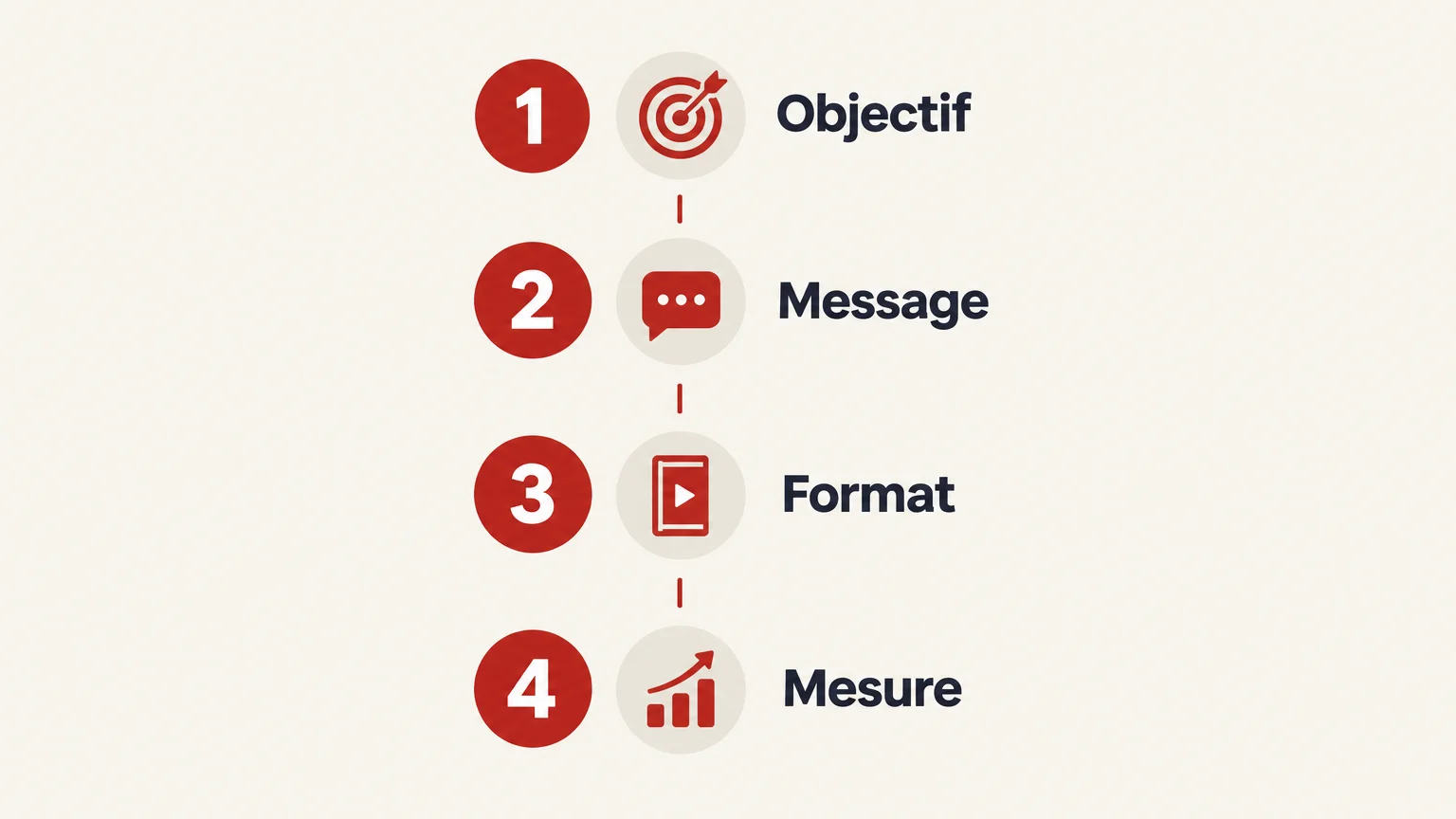
Video ad creative starts with a concrete objective. Decide what you want to achieve, then craft a single message for the target audience. A video meant to present something new will not follow the same structure as an ad designed to drive a purchase.
Next, determine the format and the expected action. A simple script can follow this sequence: grab attention, present the main benefit, then indicate the next step. The visuals, pacing and on-screen text should serve this message rather than being added as decorative elements.
To organise production decisions, How to create a video ad sets out the steps to consider. Our in-house team can handle scriptwriting, shooting, editing and delivery, then adapt the creative to the conventions of the chosen platforms.
Finally, link your metrics to the original objective. Views and retention tell you about viewing, while clicks and conversions shed light on the response to a campaign. The 36e Observatoire de l’e-pub (36th Online Advertising Observatory) reports that in the first half of 2026, the social advertising market in France grew by 16% to reach €2.22 billion, driven notably by video. This market context is no substitute for analysing your own campaign's results.
To compare creatives, look at their performance against the same objective and on the same channel. Analysing a video ad helps you examine the elements of the message and the execution rather than focusing solely on view counts.
Key Takeaways on Video Advertising
Remember that a video designed to promote an offer is defined by its intent and its role in a campaign, not merely by its length or style. Clarify the objective, choose the distribution channel, tailor the message to the audience and measure the metrics that match the desired action.
Shape Your Next Video Campaign
If you need to turn an idea into creative suited to several platforms, we can frame the message, scripts and variations according to your objective. The thinking starts with your brand's needs and your audience's habits, rather than a format chosen out of habit.

We have supported more than 350 brands, from scriptwriting to video delivery. We also report over €50M in revenue generated and 500M cumulative views; these aggregate figures do not break down the results of each campaign. Discover our video creative ads offer.
Frequently Asked Questions
What Is the Difference Between a Spot and a Video Ad?
A spot is one type of video ad, usually designed for a specific placement. Video advertising is a broader category that also includes social formats, demos and UGC creative.
Is a Short Video Always an Ad?
No, its length does not determine its function. It is its objective and whether it forms part of a paid distribution campaign that define it.
Can a UGC Video Be Used as an Ad?
Yes, a UGC-style video can be used in a paid campaign or published organically. The production style alone does not determine how it is distributed.
What Objectives Can a Video Ad Achieve?
It can raise brand awareness, present an offer, attract visitors or encourage a conversion. Define the desired action before choosing the format and metrics.
How Do You Create a Video Ad for Multiple Platforms?
Start with a clear message, then adapt the framing, pacing and call to action to each channel. With our vertical video production offer, we produce creative ads, UGC videos and organic content.