

A restaurant does not grow on views alone: it has to turn curiosity into a desire to come, then into a measurable visit. Customers' visual testimonials show the place as it is actually experienced, beyond the official staging. To organise creator formats suited to your goals, our UGC video production for your brand combines strategy, scriptwriting, shooting and editing.
UGC for a restaurant can include photos, reviews and videos shared by customers. The challenge is to circulate useful content without confusing spontaneous recommendations, paid partnerships and advertising. An effective approach links each post to a concrete goal, such as a booking, a click for directions or a visit. Its impact is judged on observable signals, not on view counts alone.
Why does customer content influence restaurant choice?
Imagine two posts about the same dish. One is a polished photo published by the restaurant; the other shows the dish as a customer received it at their table. The second adds a lived perspective, while the first lets the restaurant present the product in line with its identity. These pieces of content play different roles and work best when planned together.
A 2026 experimental study compared restaurant posts with 314 participants. It found that user-generated content strengthened the links between trust, attitude and purchase intention. Brand content also contributed to initial intention. These results concern intentions measured in an experiment, not bookings actually made.
In everyday usage, organic UGC refers to what a customer creates and shares on their own initiative. A video commissioned from an actor or a creator is more accurately UGC-style content: it looks spontaneous, but its production is organised. This distinction matters when choosing the right message, obtaining the necessary permissions and presenting a paid collaboration honestly.
Which customer content formats suit your restaurant?
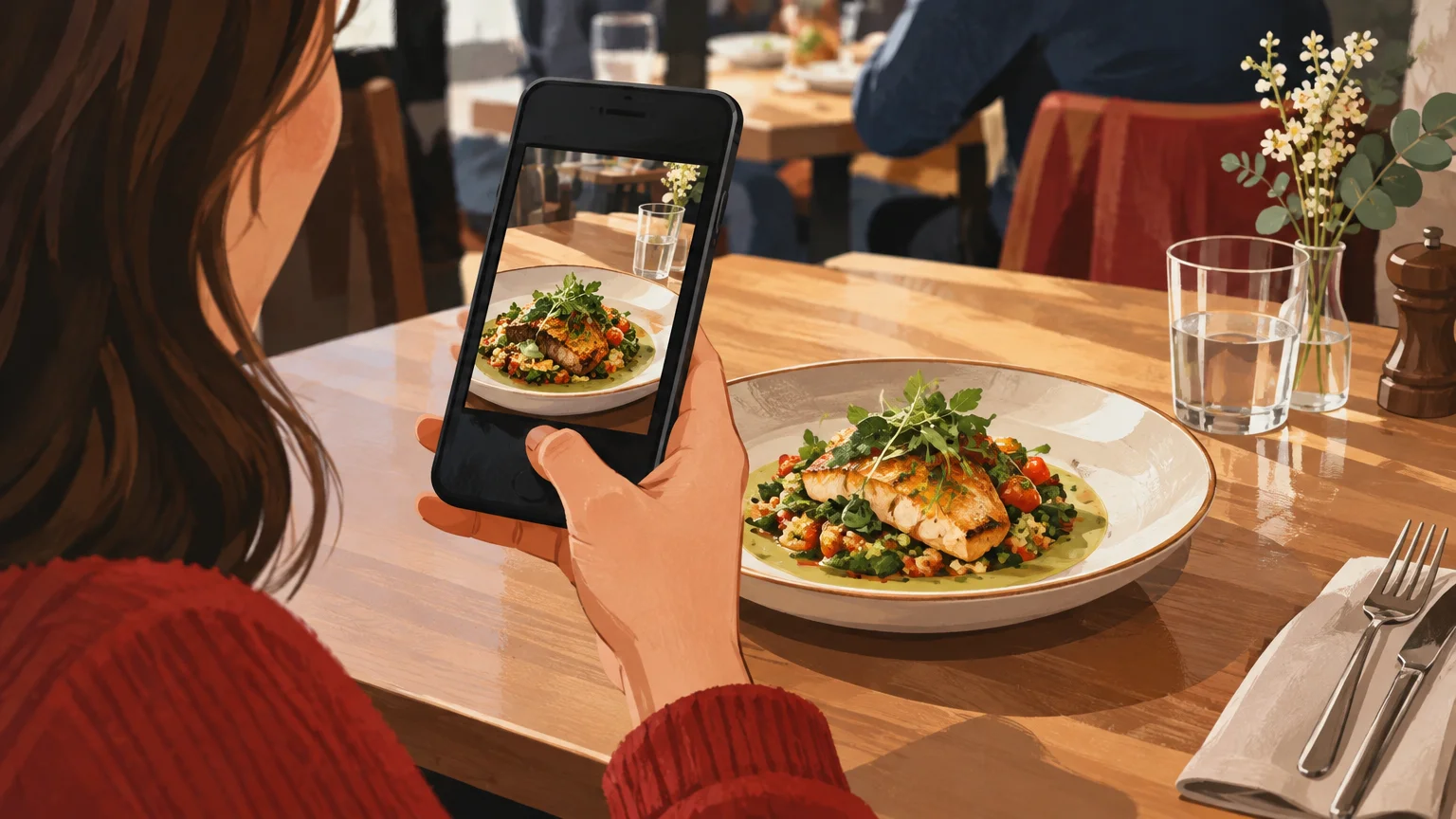
A customer who photographs their dish creates a visual record of their experience. Other formats show the atmosphere, the service, a signature dish or a reaction on tasting. For a restaurant, it helps to choose the subject according to what a future customer wants to know: what the dish looks like, what the atmosphere is like or how a meal there unfolds.
Spontaneous customer content and a video shot with a creator are not planned in the same way. The first depends on the customer's initiative and cannot be fully controlled. The second lets you frame the message, the shots and the format, but must not be presented as a real customer's spontaneous testimonial. To structure this production, we present Our video solutions for the restaurant sector.
Also adapt the format to the channel and the moment of decision. A short vertical video can showcase how a dish is prepared or the atmosphere of a dining room. A photo accompanied by a review can answer a specific question about the menu or the experience. In both cases, favour a scene that faithfully reflects what the customer will actually find on site.
How can you link a video to visits or bookings?
A video that whets the appetite must also point to the next step. For a neighbourhood restaurant, that might be opening the menu, checking opening hours, getting directions or making a booking. Make this action simple and visible, for example by adding a relevant link to your social profile or inviting people to book through the usual channel.
If you publish several versions, note their date, format, subject and call to action. Use tracked links or distinct codes where possible. You can then compare the clicks, enquiries and bookings attributed to each post. To explore this lever further, read How vertical video can bring customers into your restaurant.
However, avoid treating a rise in bookings as automatic proof of a video's effect. Good weather, a local event or a promotion can also change footfall. Compare similar periods and offers, and ask new customers how they discovered the restaurant. This helps you interpret campaign data more accurately.
What rights and rules should you plan for before publishing?
As soon as a creator promotes a service in exchange for payment or a benefit in kind, the post must clearly state its commercial or advertising nature. The French Ministry of the Economy sets out this obligation for content falling under commercial influence. A free invitation or a meal given in exchange for a post therefore calls for transparent framing.
Before reposting a photo or video found on a customer's account, ask for their explicit consent and keep a record of their reply. Specify where the content will be used, for how long and whether it will also appear in paid advertising. The fact that a post is visible online is not enough to establish that you can reuse it in your own campaigns.
Also protect the authenticity of reviews. You can invite customers to share their experience, but do not make any benefit conditional on a positive rating. If you provide something in return for creating a post, describe the commercial relationship clearly and do not present that content as a spontaneous review.
How do you measure results beyond views?
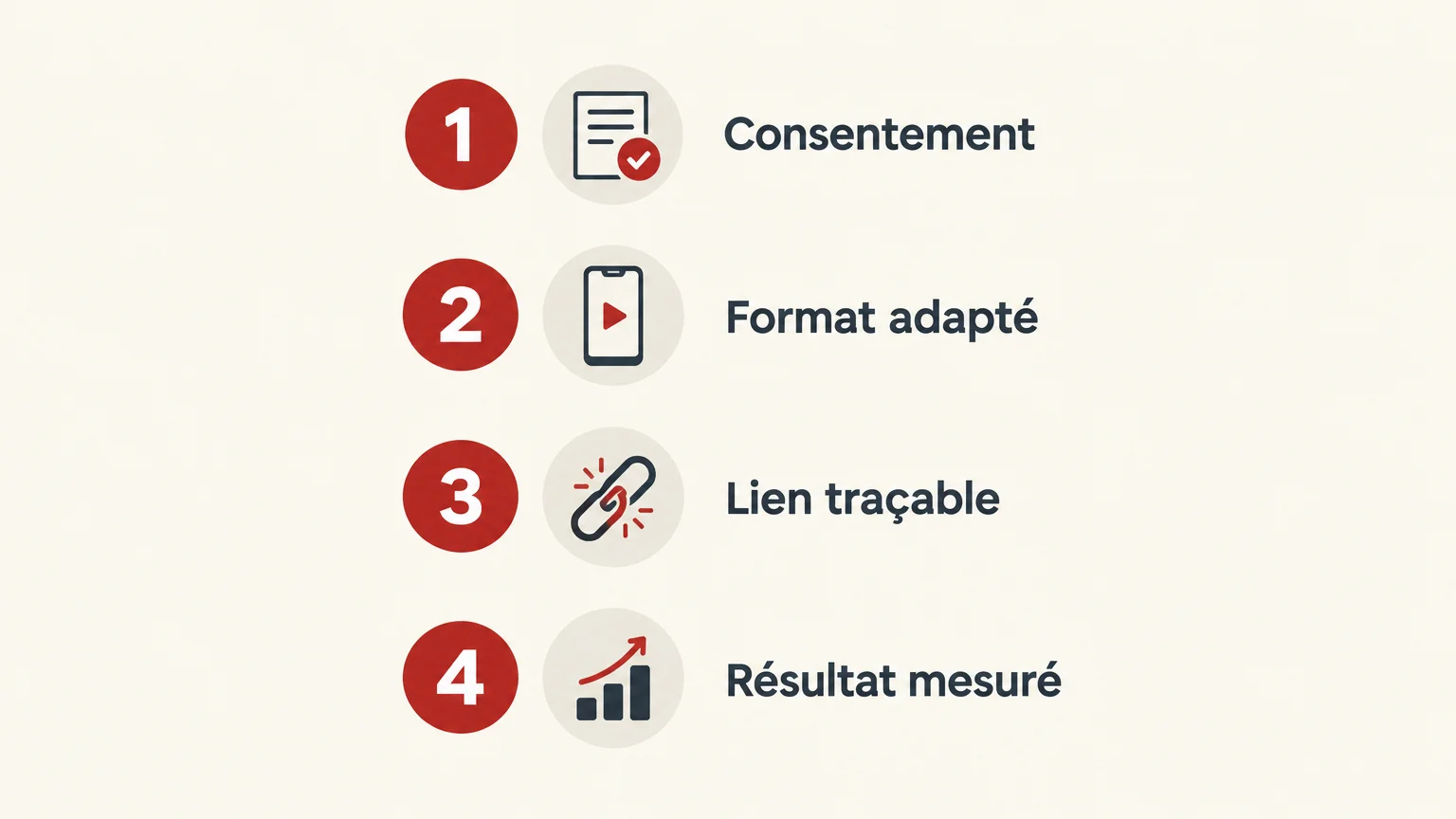
Start by choosing one main goal: making people aware of the restaurant, encouraging a booking or prompting a visit. Then measure the appropriate metrics. Views and retention tell you about attention; shares and comments, about interactions; clicks, enquiries and tracked bookings, about progress towards an action.
A study published in 2024, covering reviews of 300 restaurants, linked a higher share of reviews with images to a subsequent increase in review volume and length. It found no significant effect on the average sentiment of reviews. This result, from the University of Surrey study, suggests treating images as a driver of engagement, not as a guarantee of better ratings or sales.
For a practical test, select a few pieces of content around the same goal, then track their results over a set period. Compare the posts against each other and check whether clicks actually lead to a booking or a visit. At Esekai, the metrics we track vary according to goals and may include views, retention, engagement, clicks and conversions.
Making UGC a Useful Lever for Your Restaurant
Customer-generated content helps showcase dishes, atmosphere and a lived experience. To make it a useful lever, distinguish spontaneous posts from paid productions, check permissions before any reuse and link each piece of content to a measurable action. Views can signal attention, but clicks, enquiries and bookings provide benchmarks closer to your goals.
Structure Your Restaurant Videos
Would you like to create videos tailored to your restaurant, without confusing spontaneous testimonials with content produced with creators? We support brands across several sectors, including food service, and have worked with more than 350 brands in total. This figure covers all the sectors we support, not just restaurants.
We can handle the scriptwriting, shooting and editing of UGC videos with actors, ad creatives or organic content for social media. Metrics are defined according to your goals, whether visibility, engagement, clicks or conversions. To discuss your needs, discover our Video agency for restaurants.
Frequently Asked Questions
What is UGC for a restaurant?
It is content created by customers, such as photos, videos or reviews of their experience. A video commissioned from a creator can adopt UGC conventions without being a customer's spontaneous post.
How do you encourage customers to share content?
Offer them an experience that is easy to talk about and invite them, without pressure, to share their moment. Never make a benefit conditional on posting a positive review.
Can you repost a photo shared by a customer?
First ask for their consent and specify the intended uses, especially if you plan to run the photo in an ad. Keep a record of this permission.
Do you have to disclose a free meal given to a creator?
Yes: when promotional content is created in exchange for a benefit, its commercial nature must be clearly indicated. This transparency helps the audience understand the context of the post.
How can Esekai help a restaurant?
We produce UGC videos shot with actors, as well as organic content and ad creatives. The format and metrics are defined according to the restaurant's goals.