

How can an organisation make its voice more tangible in a feed of short videos? By showing people, skills and decisions, rather than reproducing a corporate presentation. Bringing TikTok into your corporate communications requires a clear editorial direction and content tailored to the platform. To frame this approach, see our page on corporate communications on TikTok, which presents how we support organisations in this area.
In France, a practical guide updated in 2025 by France Num reports figures attributed to TikTok: 67% of French users surveyed say they have seen content from SMEs on the platform, and 82% say they have discovered a previously unknown small business there. These figures do not guarantee the same result for any given organisation, but they illustrate one possible use: introducing your activity through accessible videos with a human face.
What Role Should TikTok Play in Your Corporate Communications?
Imagine an organisation that wants to explain a profession that is hard to sum up in a brochure. A short demonstration filmed on site can make its expertise easier to grasp, while a team portrait can give its message a human face. Start by defining your communication objectives: awareness, education, employer branding, dialogue with stakeholders or showcasing expertise.
This presence does not replace your other channels. It extends them into video, provided you choose a priority audience and a clear editorial promise. A study by Oxford Economics published in 2024 estimated that 53% of French SMEs surveyed in the sectors covered used TikTok at least once a month for advertising and marketing purposes, as part of its five-country survey. This result describes professional use within that scope, not the effectiveness of corporate communications in particular. The Oxford Economics report provides context, not a target to hit.
What Content Makes an Organisation's Voice Credible?

An industrial company might show a stage of its manufacturing process, while a public institution might simply explain the role of a public service. In both cases, convincing branded content starts from an observable reality: a person, a place, a frequently asked question or an area of expertise. The video does not try to make every subject spectacular. It makes it clear, concrete and suited to the conventions of short-form video.
Build a few recurring formats rather than a string of unconnected posts: an answer to a question, a tour of a role, an expert explanation or a behind-the-scenes glimpse. Specify the tone, vocabulary, topics to avoid and the people authorised to speak. We can help you define an editorial line for social media to turn these choices into a coherent publishing framework.
How Should You Organise Production and Approvals?
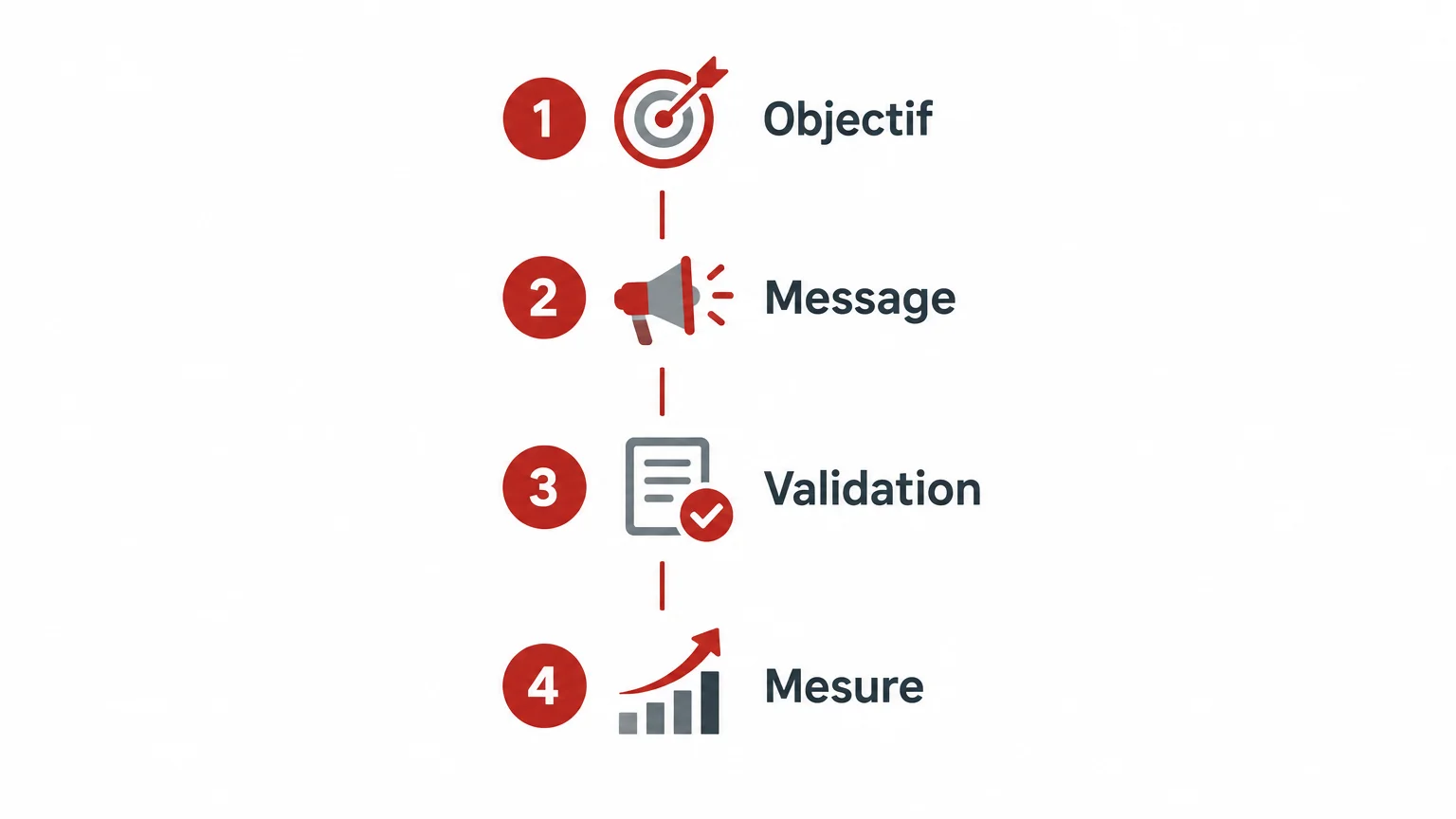
When an expert agrees to film a video between two meetings, a light process avoids wasting time on back-and-forth. Prepare a short brief, a flexible script and approval rules that everyone knows before the shoot. Identify topics requiring legal, HR or institutional sign-off, then appoint one person responsible for final approval.
A simple workflow follows four steps: define the objective, prepare the message, check the content and measure the response. Also plan for the consent of the people filmed, image usage rights and a procedure for correcting inaccurate information. To keep a realistic pace, batch your shoots and break one area of expertise down into several angles, without posting the same video more than once.
How Can You Engage Your Community Without Losing Control of the Message?
The conversation often begins after publication: a question about the job, a request for clarification or criticism of a decision. Reply in the agreed tone, provide useful information and distinguish between questions the team can answer and those that require internal approval. This discipline makes interactions more consistent without improvising on sensitive topics.
Organise moderation with simple guidelines: who replies, how quickly, which comments call for a public response and which should be passed on to the relevant department. A recurring question can become the subject of a new video, provided the answer is checked and easy to understand. We outline other strategies for engaging a community on TikTok when the goal is to sustain this relationship over time.
When Should You Add Advertising to Organic Content?
When a video already clearly meets a need and you want to show it to a more specific audience, a paid campaign can complement organic posting. First define the result you are after, such as qualified views, visits to a page or sign-ups. The media budget remains separate from the cost of producing the videos.
When your communications involve creators or commercial partners, formalise the message, usage rights and publication terms. On 18 February 2026, the Autorité de la concurrence (French Competition Authority) published its review of relations between creators, audiences, commercial partners and platforms, calling in particular for greater transparency in these relationships. Its February 2026 press release underlines the value of handling these collaborations clearly. To coordinate content, scheduling and paid distribution, you can also develop a social media strategy with objectives and metrics defined in advance.
Track a few quality metrics consistent with your objective: retention and comments for an educational video, clicks or sign-ups for an action-oriented campaign. Compare results across similar content, then adjust the hook, pacing or topic. Analysis should inform your next editorial choices rather than reduce success to a single view count.
Key Takeaways
Corporate communications on TikTok rely on a recognisable voice, concrete topics and an approval framework suited to the organisation. Start with a precise objective, choose a few repeatable formats and listen to your audience's questions. Then measure the signs of understanding or action that genuinely matter for your project.
Structuring Your Corporate TikTok Presence
If you want to move from an editorial framework to videos that are produced and managed over time, we can tailor our support to your objectives and your teams' resources. We have worked with more than 350 brands, from SMEs to major accounts, across a wide range of sectors, with an approach that connects strategy, creative and measurement.
Our team can handle TikTok strategy, scriptwriting, shooting, editing and account management, depending on the scope we agree together. Organic production and ad creatives can be combined or commissioned separately. To review your needs and the formats suited to your organisation, contact our TikTok agency for corporate communications.
Frequently Asked Questions
Is TikTok suitable for every organisation?
Not necessarily: it depends on the audiences you want to reach and the topics you can present on video. Check that the platform complements your other channels and that your team can maintain a regular presence.
What topics can an organisation cover on TikTok?
You can explain a job, answer a frequently asked question, present an area of expertise or show what goes on behind the scenes. Choose topics that can be verified and that suit the people who will be speaking.
Should you only post spontaneous videos?
No, authenticity comes mainly from a clear, credible voice. A prepared script can help get the right message across without making the video feel artificial.
What should you measure to evaluate content?
Link your metrics to the objective: retention and comments can shed light on how educational content is received, while clicks and sign-ups track an expected action. Compare videos with similar objectives to interpret the results.
Can an external team support both strategy and production?
Yes, the scope can include strategy, video production and account management. Our TikTok support is defined according to the content to be produced and the level of ongoing management you require.