

Is an approved script enough to produce a video that is ready to publish? Not always. Video production from script to delivery also depends on the format, shoot preparation and approvals. To frame these choices from the outset, you can prepare a clear video brief, with an objective, an audience, a message and a distribution channel.
The video production process does not end with the last shot. You also need to organise the shots, assemble the footage and sound, incorporate feedback, then check that each file matches its intended use. When these stages and the people responsible for them are defined upfront, you reduce improvised decisions and late changes.
What should you decide before writing the script?

Imagine a product presentation video intended for several social networks. Before writing, clarify its objective, its audience, the main message and the action you expect from the viewer. These decisions shape the tone, the length, the scenes to plan and the formats to deliver.
The video script then turns these choices into words and visible actions. For each sequence, state what the person says, what the camera shows and any on-screen text. A storyboard or shot list makes these requirements more concrete for the shoot crew.
At this stage, also pin down the scope of the project: number of videos, contributors, locations, props and any variations. These elements make it easier to estimate the time and resources required. To analyse the planned cost items before choosing a provider, you can compare video production quotes.
On shoot day, how do you keep the plan on track?
The shoot brings the script to life, but it is about more than recording the planned scenes. The crew organises the locations, contributors, framing, lighting and sound. A shared shooting schedule helps everyone know the order of takes and the time allotted to each sequence.
Before filming, check access to the locations, people's availability and any necessary permissions. On your premises, identify background noise, light sources and any confidential items visible in the frame. Also prepare the required products or props, then appoint someone authorised to answer questions and approve decisions on site.
Record a test sound take and check a few shots before moving the equipment. This quick check makes it possible to spot a framing, lighting or sound problem while the crew can still redo the take. For a series of videos, grouping scenes by set or contributor can also limit set-up changes.
What does post-production involve after the shoot?
Once the footage has been recorded, logging the rushes means viewing, sorting and selecting the usable takes. The edit then arranges them according to the script, adjusting the pace and transitions. This first cut reveals any passages that need clarifying or shortening.
Post-production generally includes work on the sound, colour and graphic elements planned for the project. Depending on requirements, the team adds a voiceover, subtitles, music or animations. Each addition must remain consistent with the message and the intended uses of the video.
Centralise feedback: gather it in a single document and state the sequence concerned, the change requested and, if possible, the reason for it. Contradictory comments or comments sent separately lead to extra back-and-forth. If the edit requires specialist support, you can choose a video editing agency.
How do you plan timelines and approvals?
A realistic schedule distinguishes preparation, the shoot, editing and approvals. Specify who supplies the materials, who gathers the feedback and who gives the final green light. Contributors' availability and the speed of approvals affect the schedule as much as editing time.
Published timelines are not always comparable, as they do not necessarily cover the same stages. In its Paris survey published in 2026, La Fabrique du Net noted that 159 video projects specified no timeline at all. For your project, ask for dates tied to concrete milestones, such as delivery of the first cut and final approval.
The quote should also specify the number of videos, the services included and the terms for changes. The media budget, if there is an advertising campaign, is separate from the production cost. With us, the quote depends on the volume of videos and the level of support required; the schedule is set during scoping according to the project.
Why define deliverables before the final export?
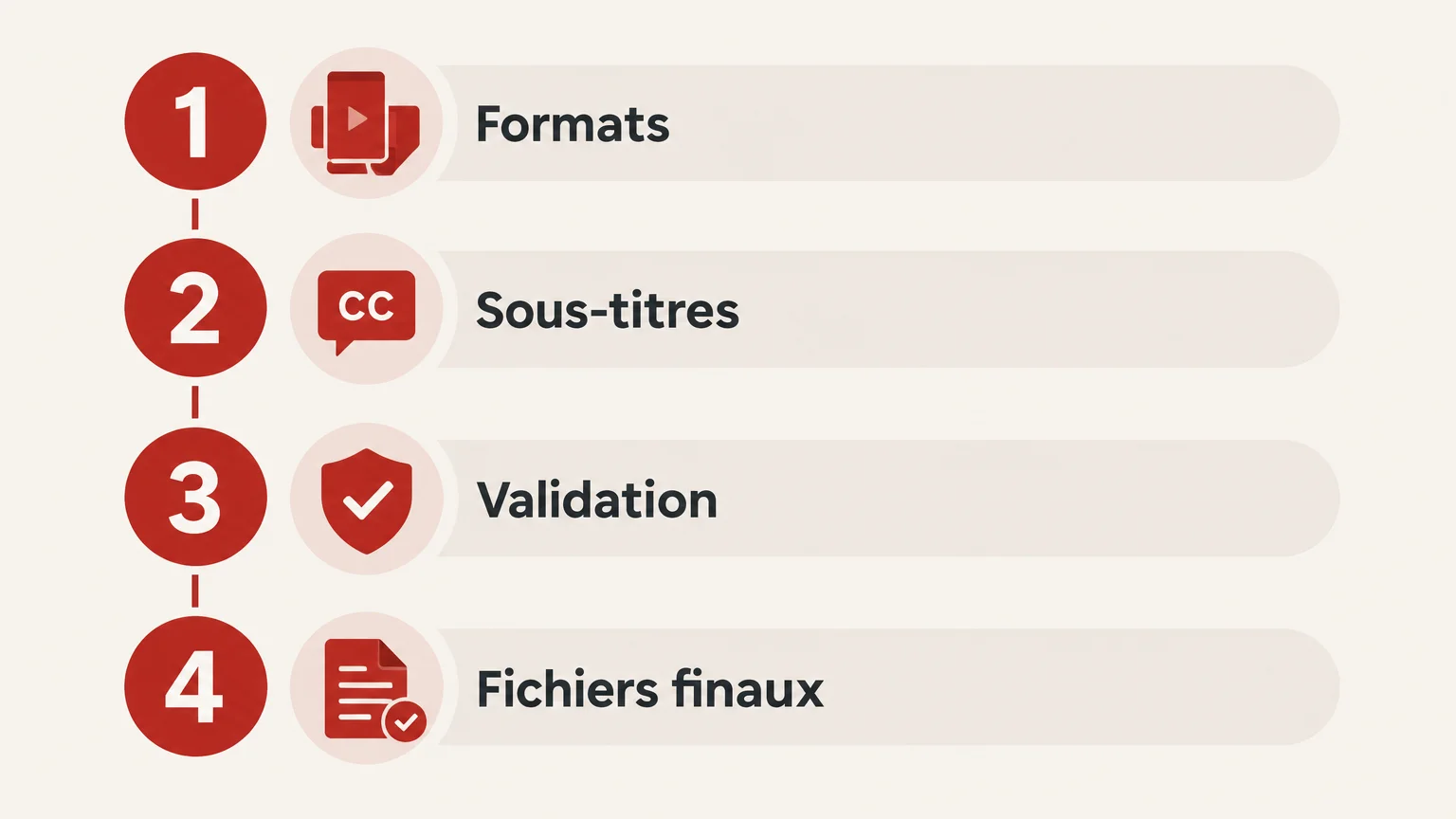
At export, the file must match its distribution channel. Define upfront the aspect ratio, resolution, length, whether subtitles are needed and the versions expected. For the same creative published on several platforms, check whether reframing or separate edits are needed.
A video production listing viewed in 2026 on Trustfolio, for video describes, among other things, content delivery after the shoot, the edit and the variations. This kind of example highlights the value of specifying the expected files and number of versions in the quote, rather than discovering them at export time.
Before sending, check the file names, playback, sound synchronisation and the legibility of on-screen text. Also confirm the usage rights set out in the contract, particularly for advertising or distribution across several media. To prepare these points with a provider, you can find out which deliverables to plan for with a video agency.
Key takeaways on video production
Video production, from script to delivery, runs more smoothly when the objective, script, roles, feedback and expected files are defined before the shoot. Draw up a schedule with clear approval points, then check exports against their distribution channels. This organisation helps limit rework and deliver videos ready for their intended uses.
Shape your next video project
Script preparation, the shoot, editing and variations call for consistent coordination. Our in-house team of strategists, videographers and editors supports brands from writing to delivery, with formats tailored to how social platforms are used.

We produce creative ads, UGC videos and organic content for TikTok, Instagram Reels and YouTube Shorts. The quote is based on the volume of videos and the level of management required, with a schedule set during scoping. Our experience spans more than 350 brands. To discuss your objectives and content, discover our video agency.
Frequently asked questions
What are the main stages of video production?
The process includes scoping and writing, shoot preparation, filming, editing, approvals and delivery. The exact stages depend on the format and the planned deliverables.
How long does it take to produce a video?
The timeline depends on the volume, type of production, availability and number of approval rounds. Ask for a schedule that specifies the first cut, feedback and final delivery.
Why approve the script before the shoot?
The script sets the message, the dialogue and the scenes to film. Approving it upfront reduces late changes that may require new takes or a different edit.
What should you specify for delivery?
State the formats, resolutions, lengths, subtitles and number of versions expected. Also clarify the permitted uses and the planned distribution channels.
What support does Esekai offer for these stages?
Our vertical video production service covers writing, shooting, editing and delivery. Formats can be adapted to TikTok, Instagram Reels and YouTube Shorts depending on the project.