What is embodied content?
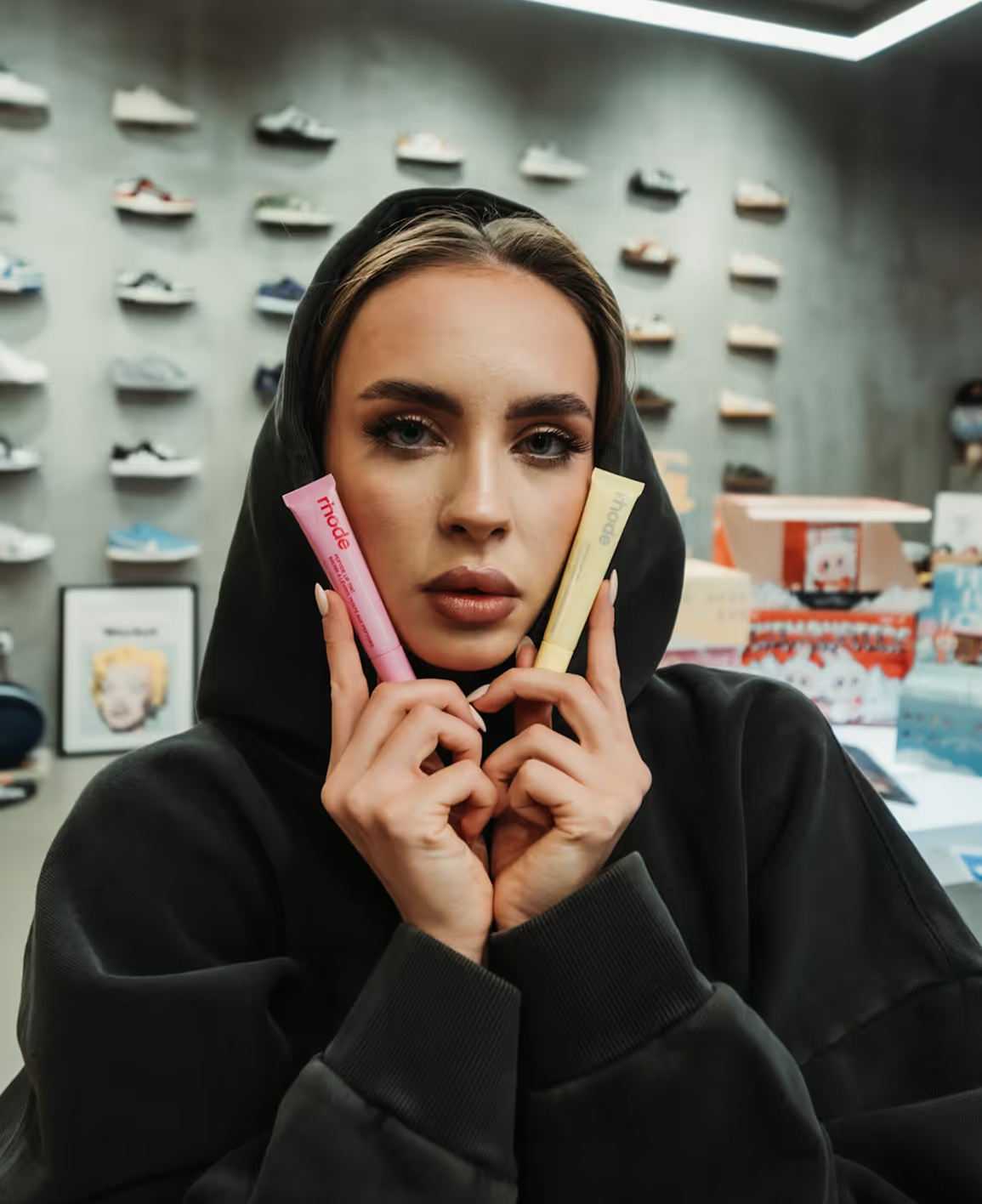
Embodied content consists in having a brand's messages carried by people: employees, managers, influencers or even customers. We no longer talk instead of, we make those who live the brand speak.
This can result in:
- Face camera videos on social networks
- Employee interviews
- Podcasts led by managers
-LinkedIn posts in personal storytelling
- Customer or partner testimonies
The idea is to create a stronger emotional connection, humanize communication and gain authenticity.
Why does it work?
People trust people
According to the Edelman Trust Barometer 2024 report, 61% of consumers trust individuals more than institutions. An employee who speaks on their behalf is often perceived as more credible than a corporate speech.
Identification creates commitment
A prospect will be more easily recognized in the testimony of another customer or in the career of an employee than in traditional advertising. It's social proof in action.
Algorithms favor humans
On LinkedIn, Instagram, or TikTok, “on-camera” content or personal publications generate more interactions, views, and shares. The algorithm values spontaneity.
Examples of brands that embody their communication
- Back Market: The founder Thibaud Hug de Larauze regularly speaks on LinkedIn with transparent and committed posts.
- Decathlon: Employees become ambassadors for their products on social networks, creating bridges between expertise and authenticity.
- Alan (health insurance): The product, HR or design team shares thoughts and feedback on blog or LinkedIn formats.
- B2B start-ups: More and more, founders or product teams are speaking up to tell the story behind the scenes of their development.
How to adopt it for your brand?
Identifying the right megaphones
Manager, marketing manager, account manager, HR, loyal customer... Not all voices are created equal, but each can embody a facet of your brand.
Training in speaking
Not everyone is born comfortable in front of a camera or on LinkedIn. Support, adapted formats, a natural tone: it is possible to bring out the right personalities.
Co-creating authentic content
The aim is not to write perfect speeches but to let the human person emerge: emotions, backgrounds, anecdotes, values. Authenticity takes precedence over perfection.
Vary the formats
Portraits, videos, stories, lives, podcasts, carousels... The embodiment can live on all channels, as long as it remains consistent with the platform and the audience.
Conclusion
The voice of a brand is also that of those who experience it on a daily basis. Embodied content is not a passing trend, it is a profound evolution in communication. In a world where everything has become a product, people create preference.
🚀 At Esekai, we help brands find their tone, choose their faces, and speak up with sincerity. Because the best communication is the one that really looks like the people who wear it.

.png)